Basic Inquiry:
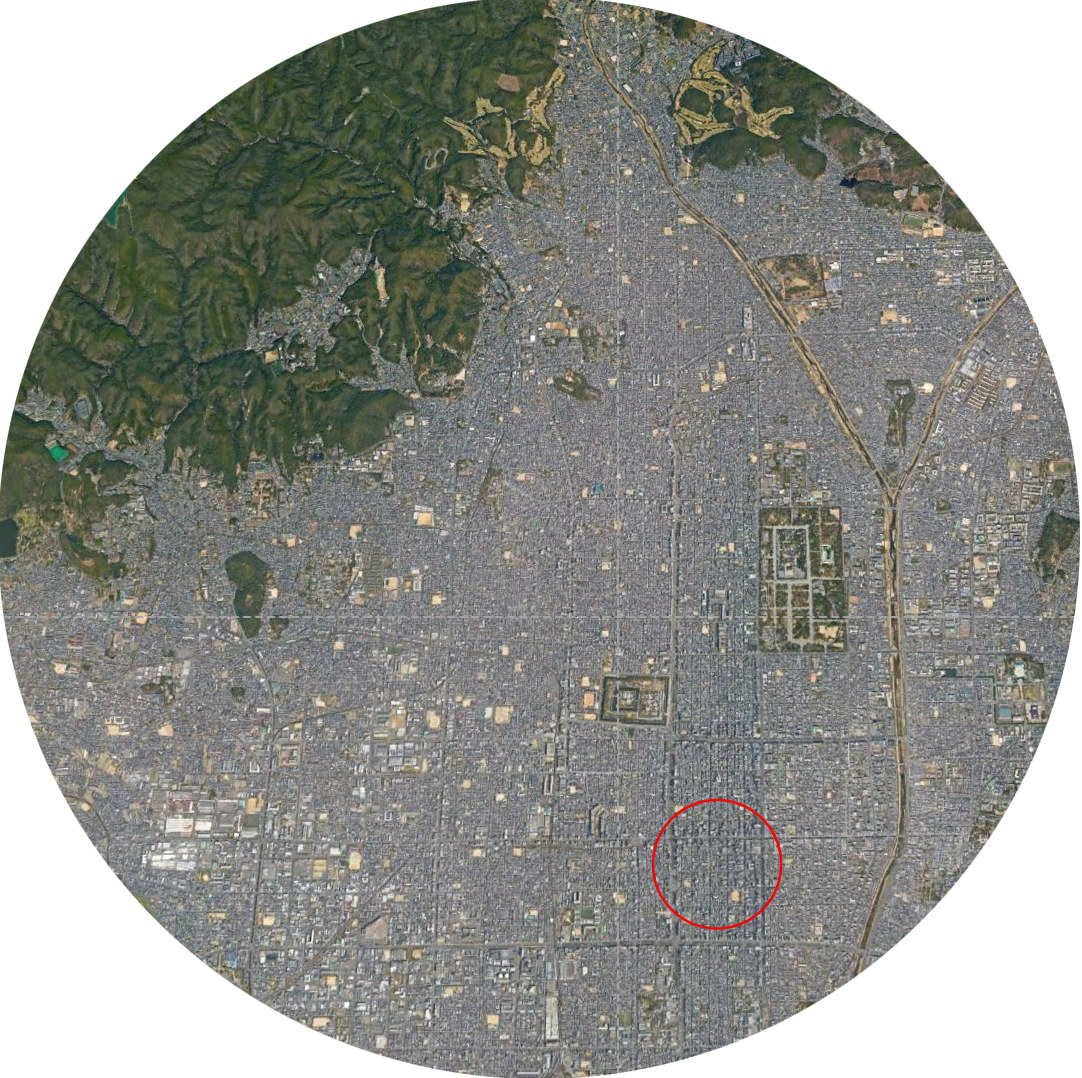
Kyoto Machiya Neighborhood: an Urban Lived-In Prototype 伝統的京町家の街区
Q: CONTINUITY?
Thousand-years
History Functioning Urban Fabric: Street & Neighborhood Block
Traditional Customs & Sustained esprit de corps
Q: TRANSFORMATION?
Who Lives Here
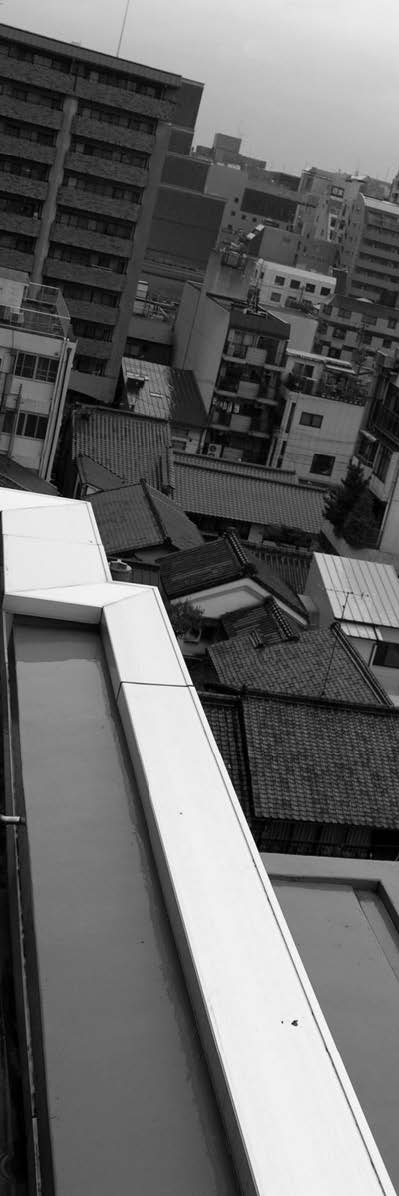
Low-Rise vs Medium-Rise Architecture
Pedestrian vs Vehicular
Tourism Economy
JDW Agenda/Actions:
Architectural propositions for Sustainable Neighborhood Form with resident community participation.
Basis of JDW Projects in Kyoto 京都町家
KYOTO Machiya 古都の京町家
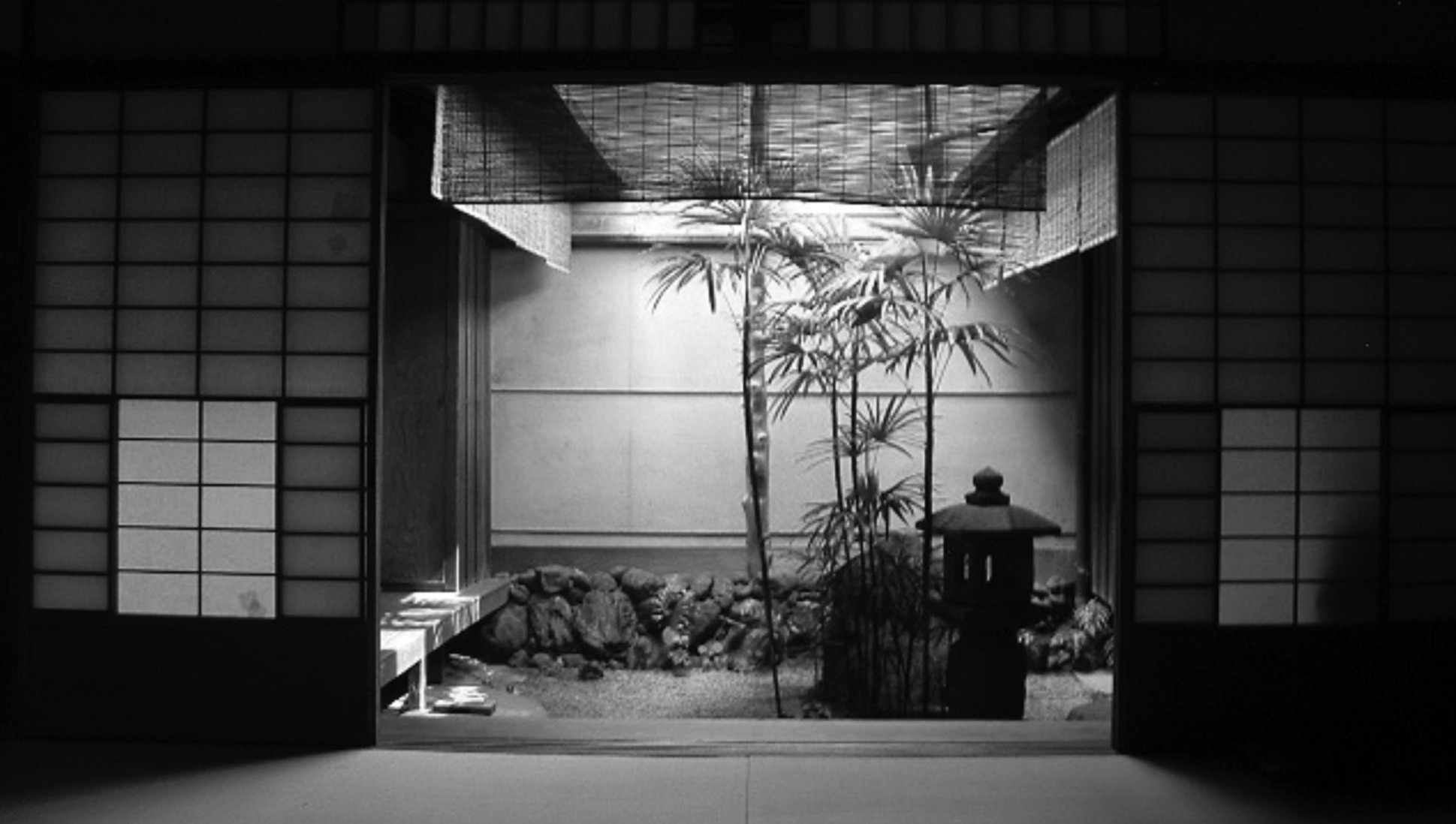
Jeff's Machiya
Machiya - the typical house type of Kyoto - is the fundamental unit of the cityscape. The workshop spent a day in a machiya which is owned by an alumni of the MIT architecture department. This short exercise is to let students to observe and experience the physical architectural composition of the machiya and the sensual experience of space within it.
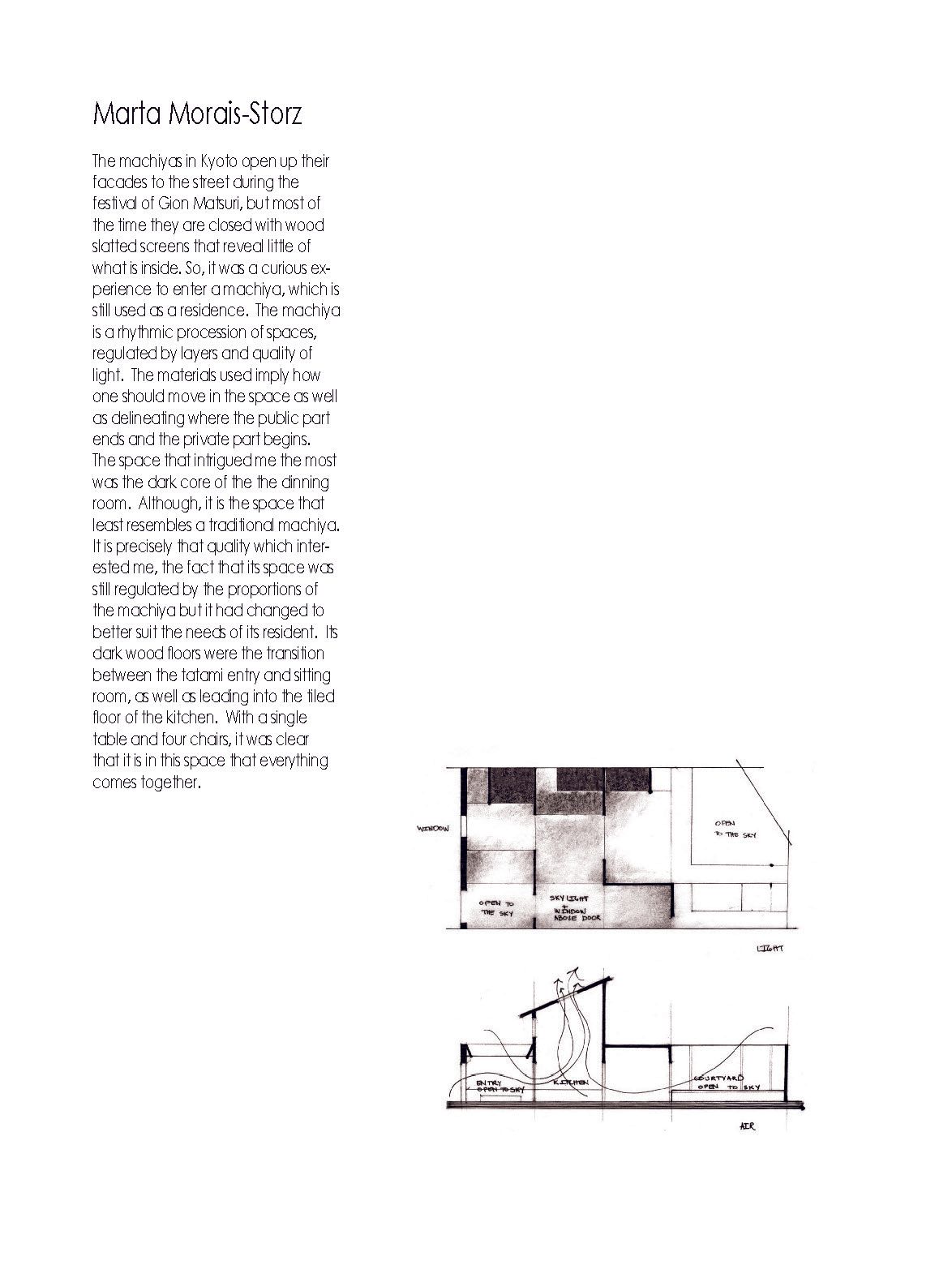
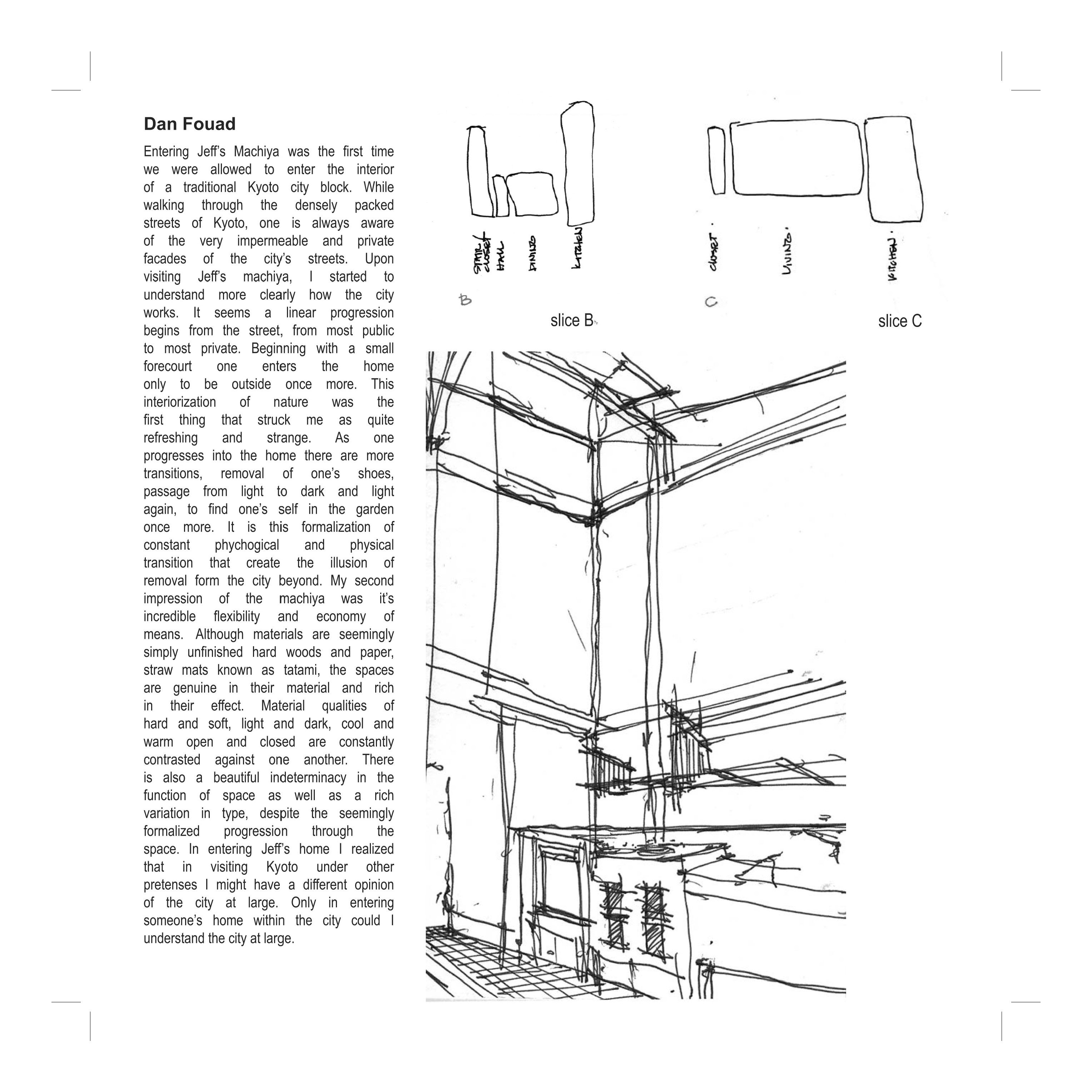
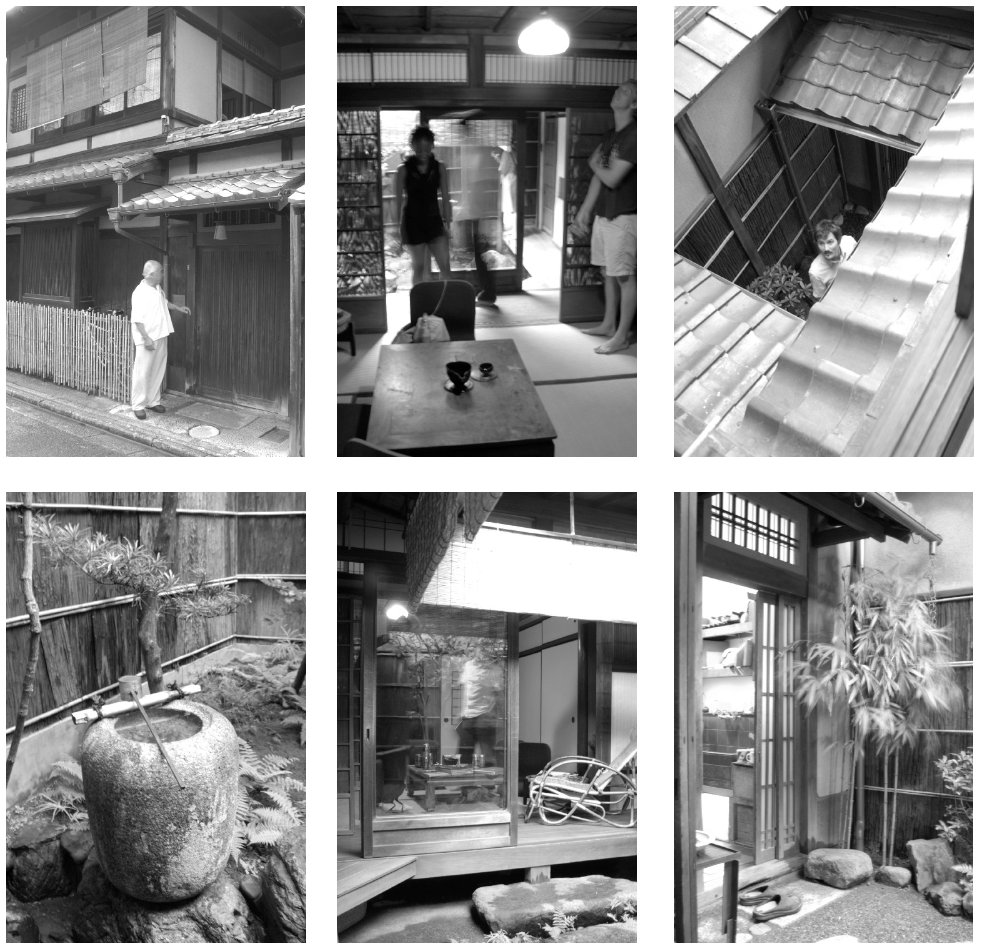
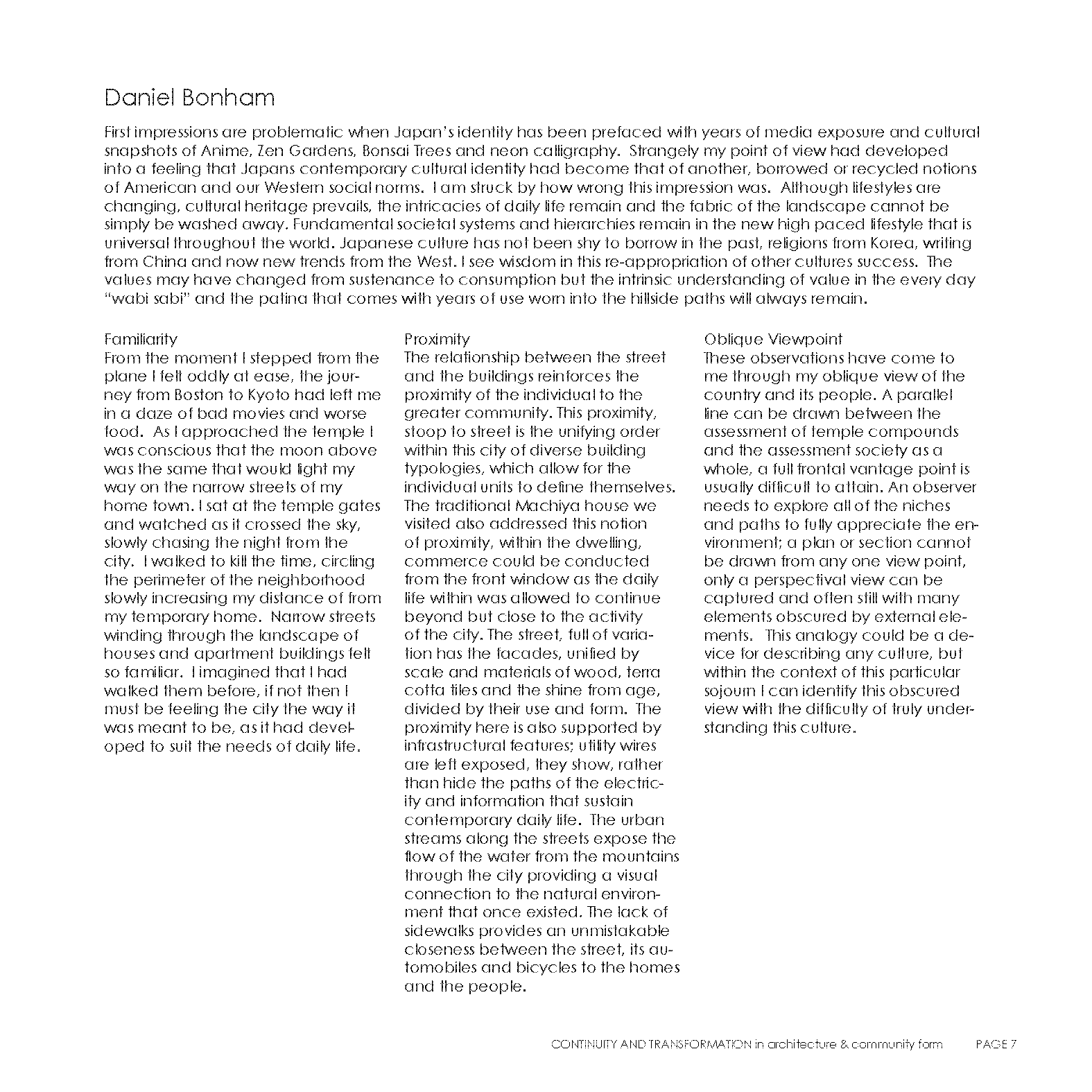
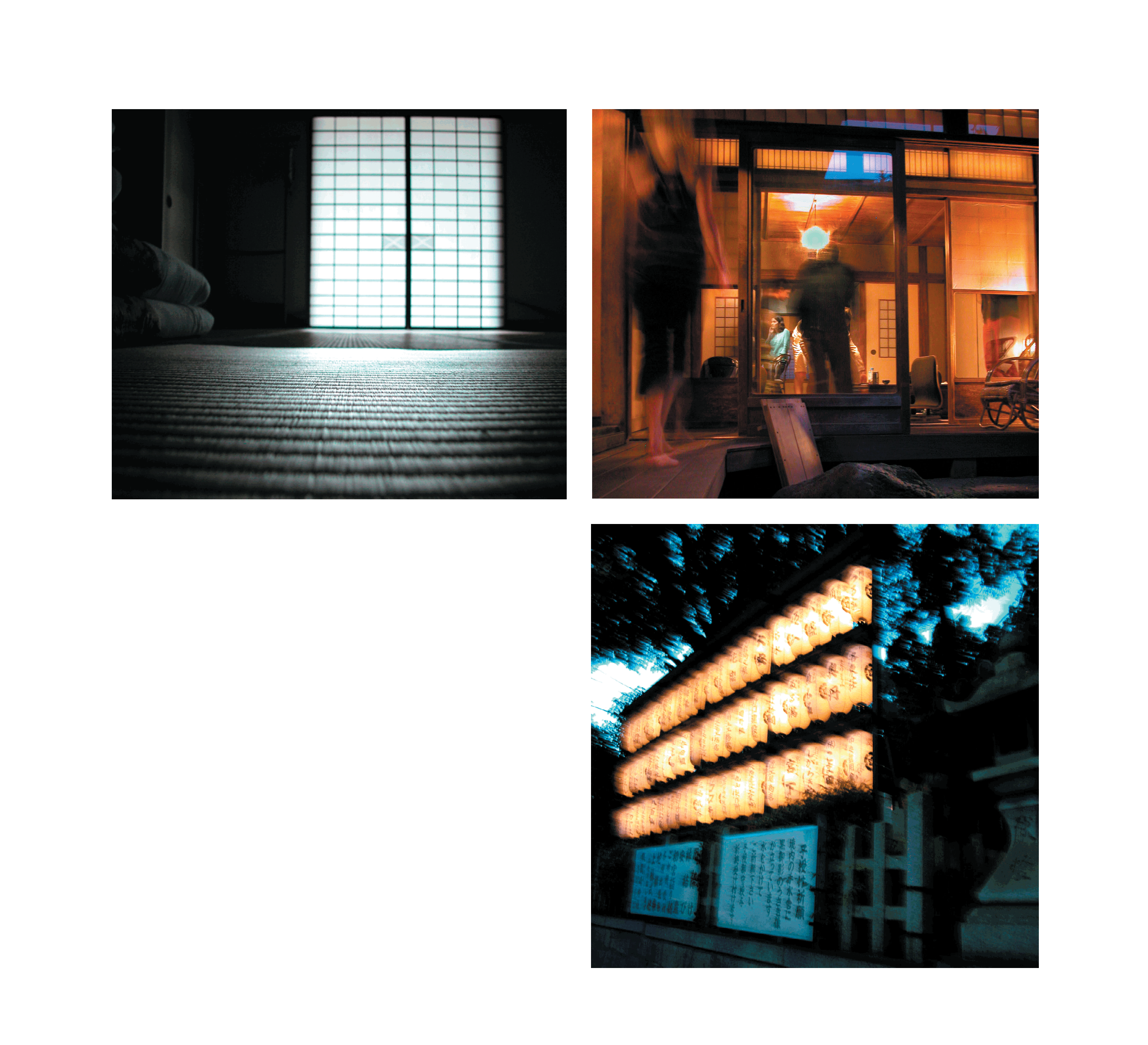
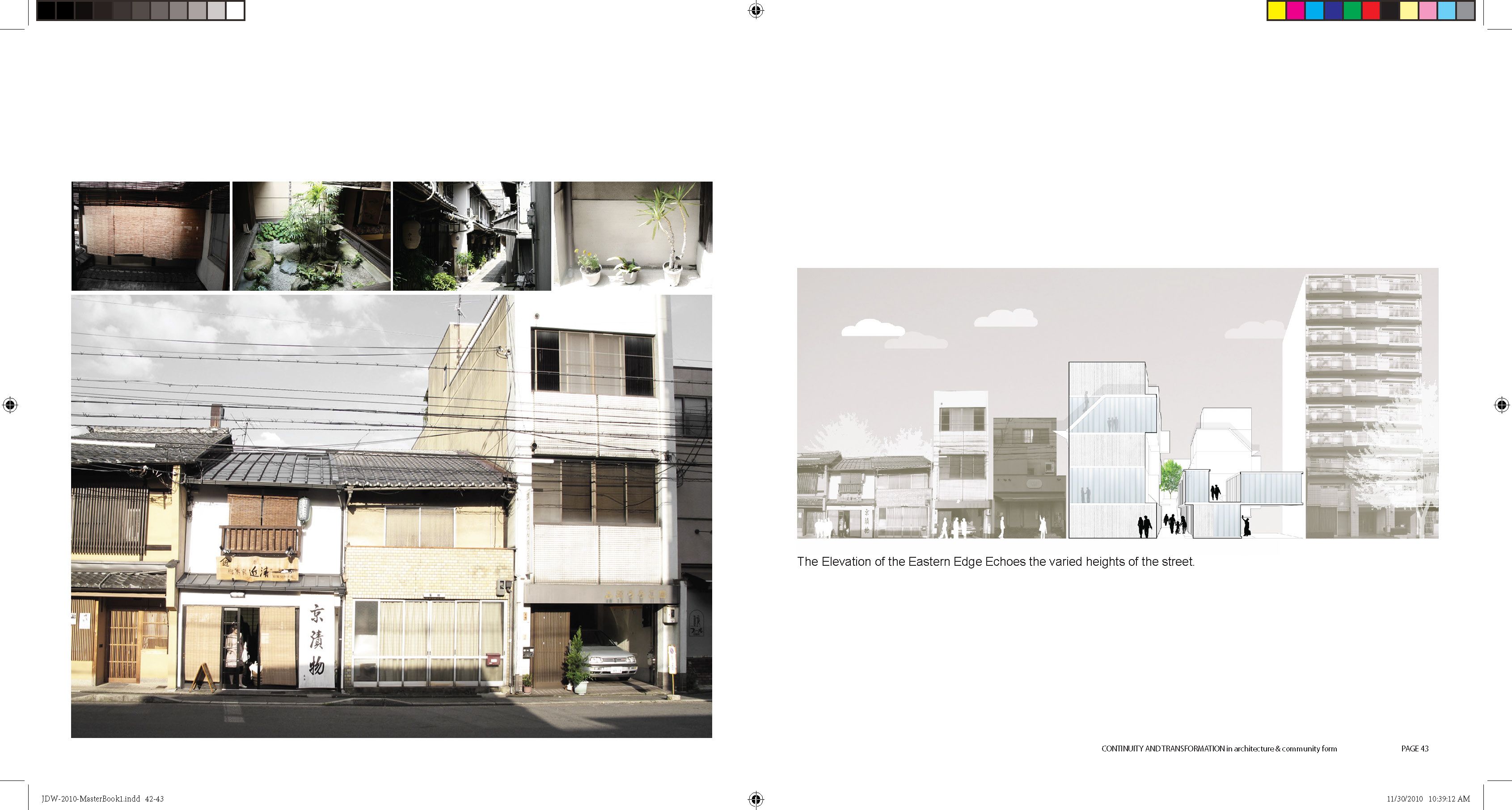
The concept of ‘layering’ is predominant in traditional Japanese architecture, and the Machiya house typology is without exception. Not only is there a strong sense of layering of materials, but the spaces themselves seem to unfold as layers. Entering Geoffrey’s Machiya house, I immediately find myself following a procession of entering spaces through carefully crafted thresholds. These thresholds do not manifest themselves in the typical architectural sense of the word. Rather, they are suggested by change of light quality, floor/wall material, ceiling heights, and texture between spaces.
“Have you ever been in a space so captivating that it made you forget about the passage of time, and you were afraid to realize, once you are outside again, that you have become an old man and everyone you once knew had already died ...?”
Junichiro Tanizaki
"In Praise of Shadows"
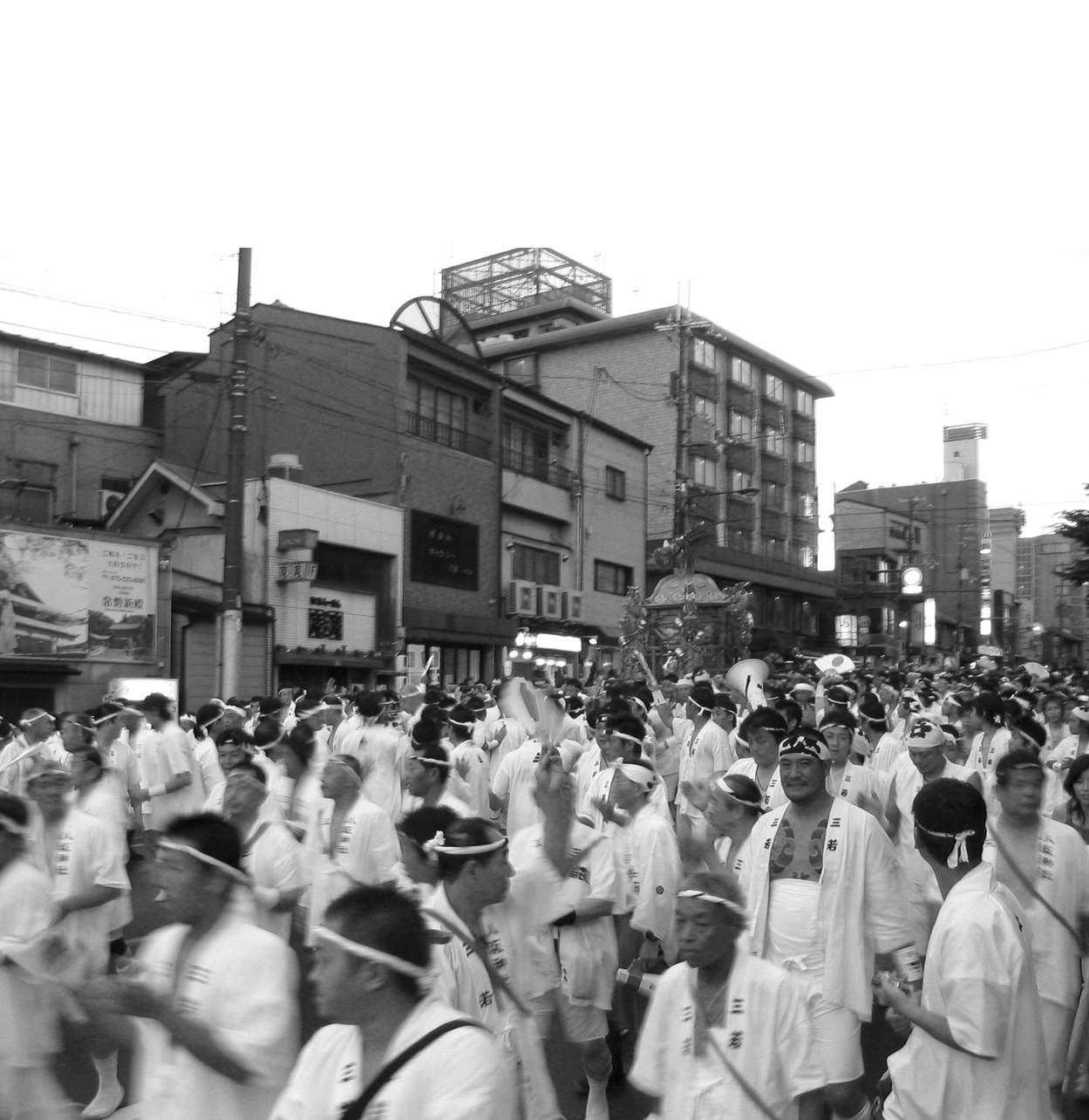
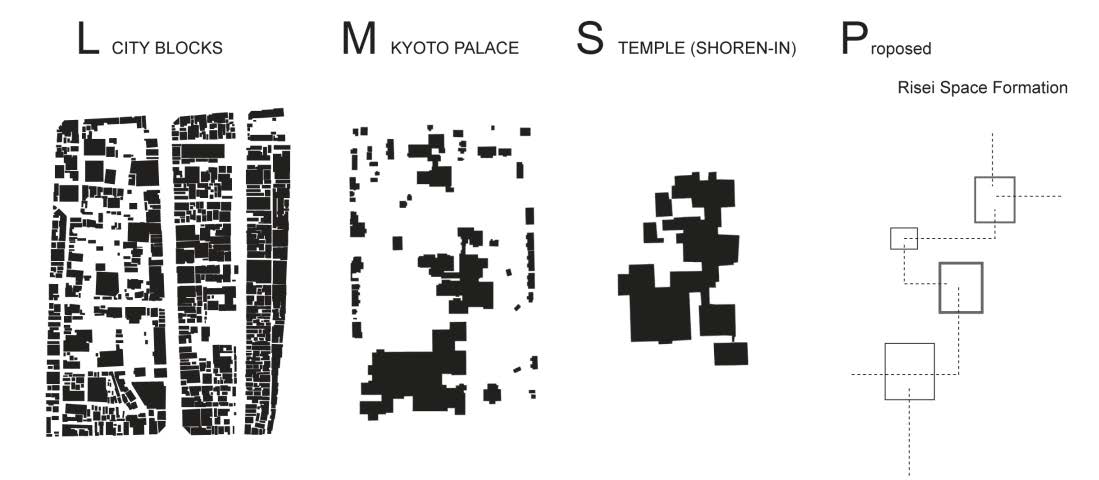
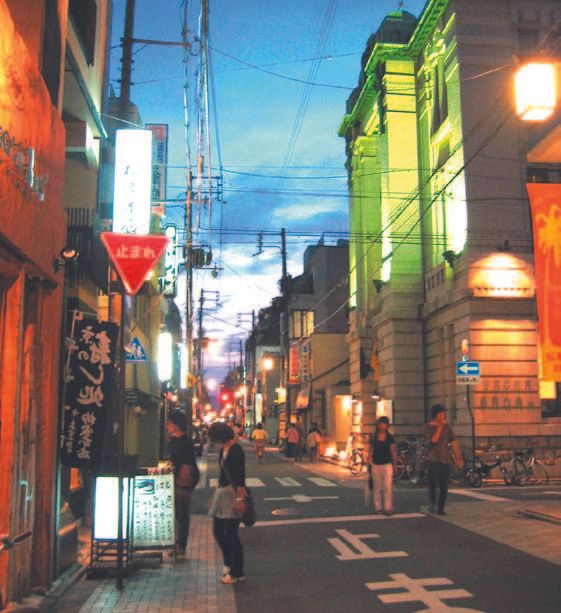
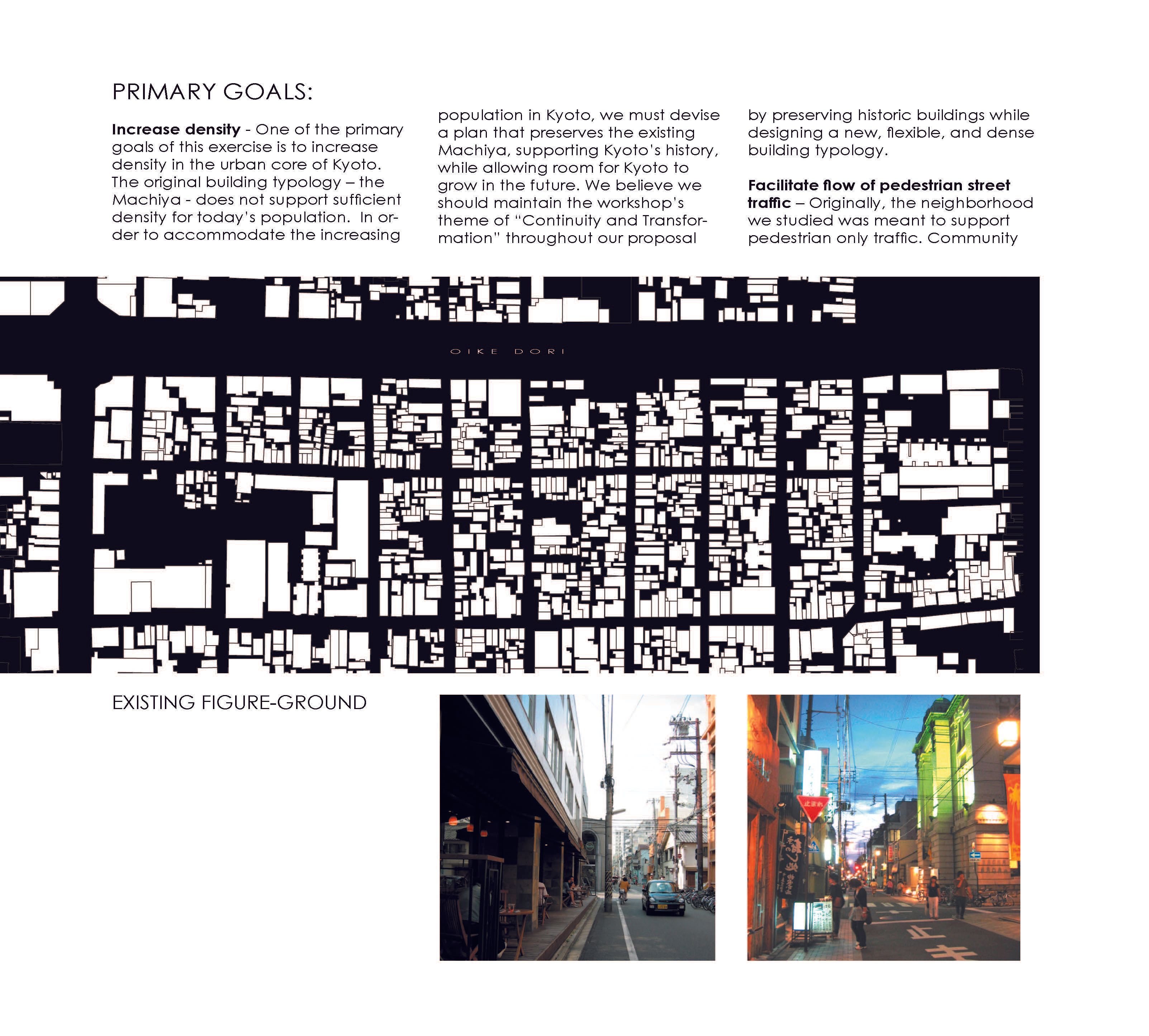
Primarily laid out in a grid pattern of urban blocks, the resulting close-knit community of the Machiya thrived over generations as an owner-occupied residential and mercantile mixed-use social fabric of old Kyoto.
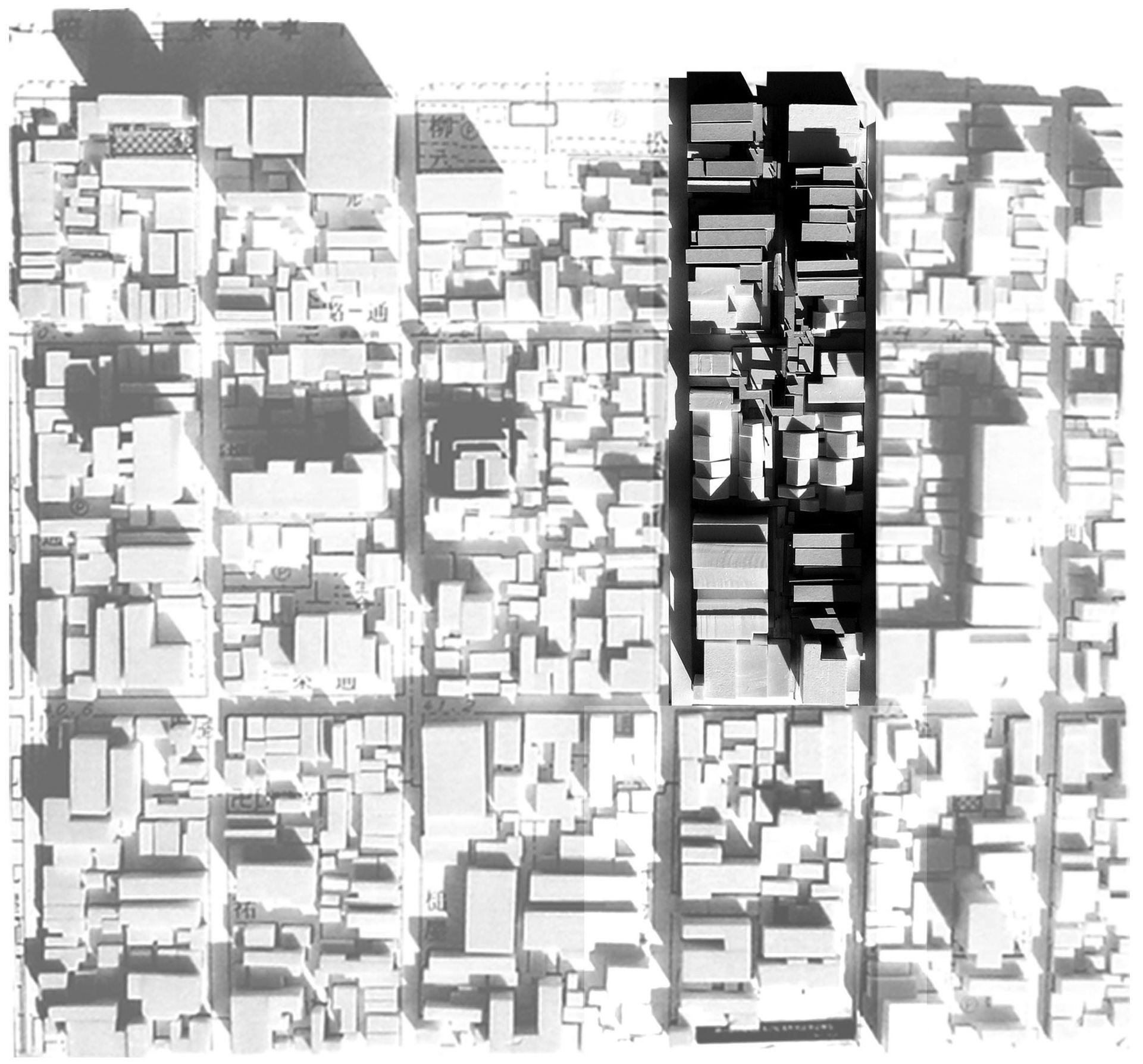
a city slice of historic Kyoto,
a slice of the Live/Work daily environment,
continuity in transformation, sustaining a sense of place...
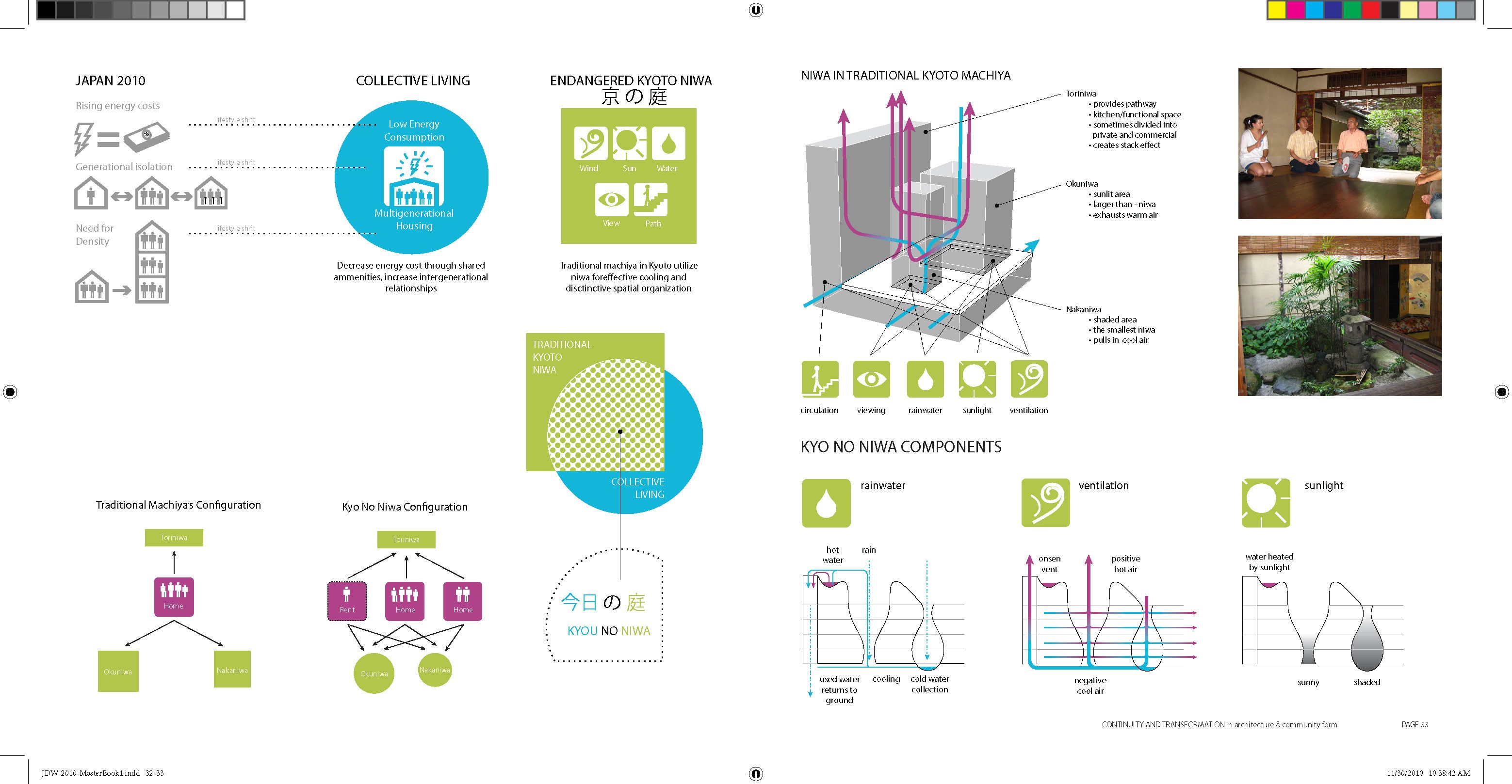
we found the breathing inner courtyard to be the “lung” of the traditional Kyo-machiya,
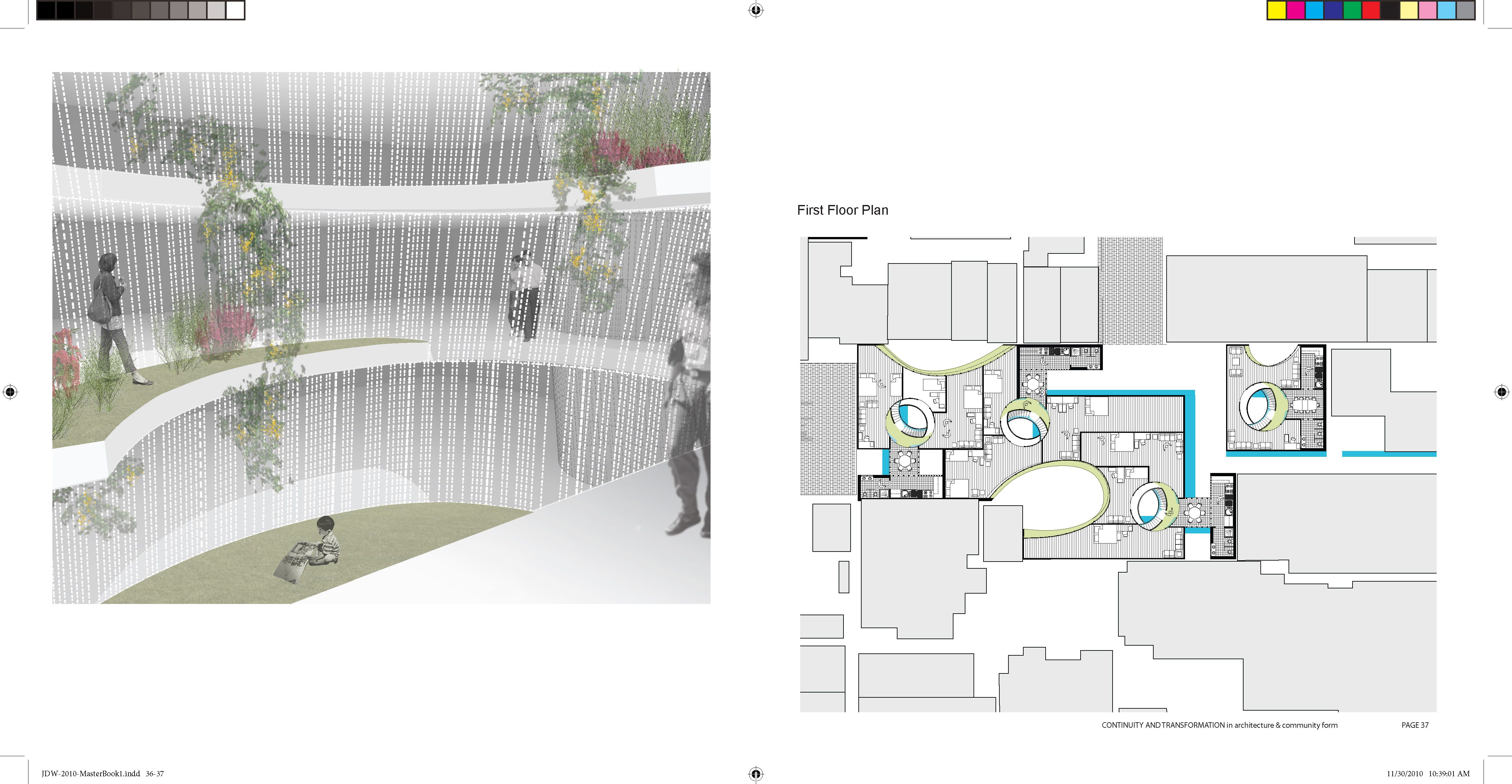
we need to design a “collective lung” for the Aneyakoji community... I realized
that your work this summer expertly speculated on such a possible future, was indeed a notable accomplishment,
I ask that what you learned from these insights remain with you over time...
Shun Kanda
呼吸する坪庭は「京町家」の「肺」だと知った、 姉小路街区が今後「共有できる肺」を 失うのではないか、 ◎そうならぬよう、私たちの設計企画作業が急ぐべきだと 気がついた。 学生諸君の今回のこのワークショップ成果には その未来のすがたが やや見えたのではないかと思った、 この思いを忘れてもらいたくない、私は願った。 神田駿
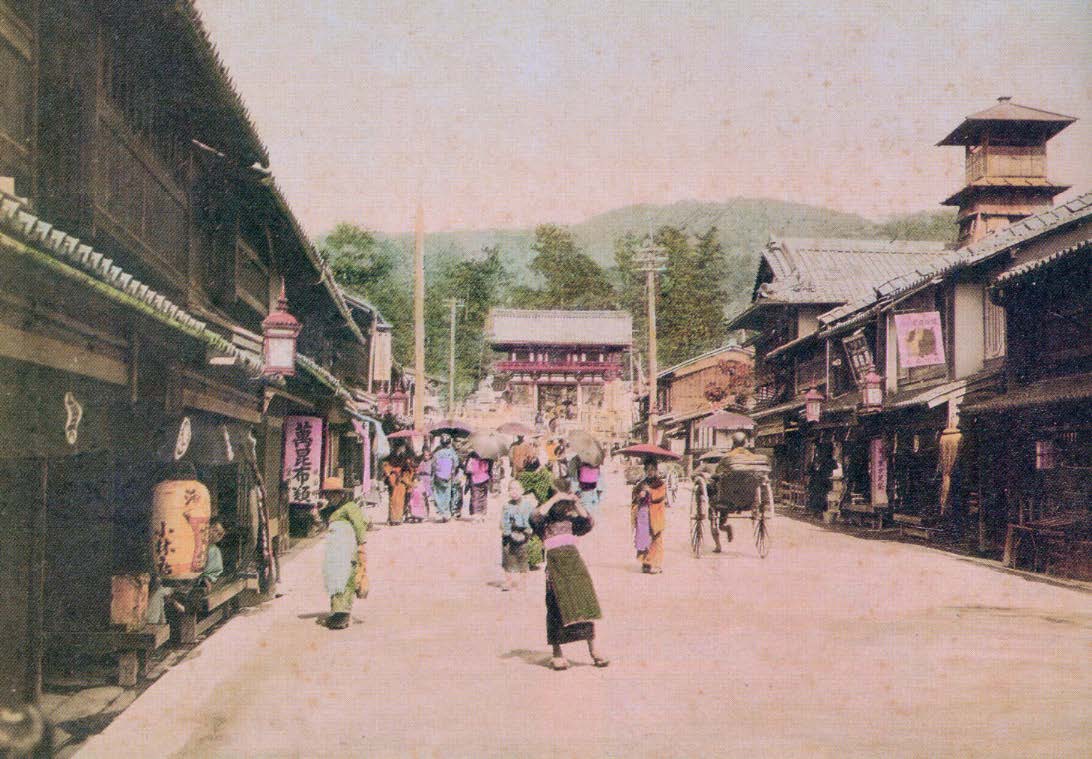
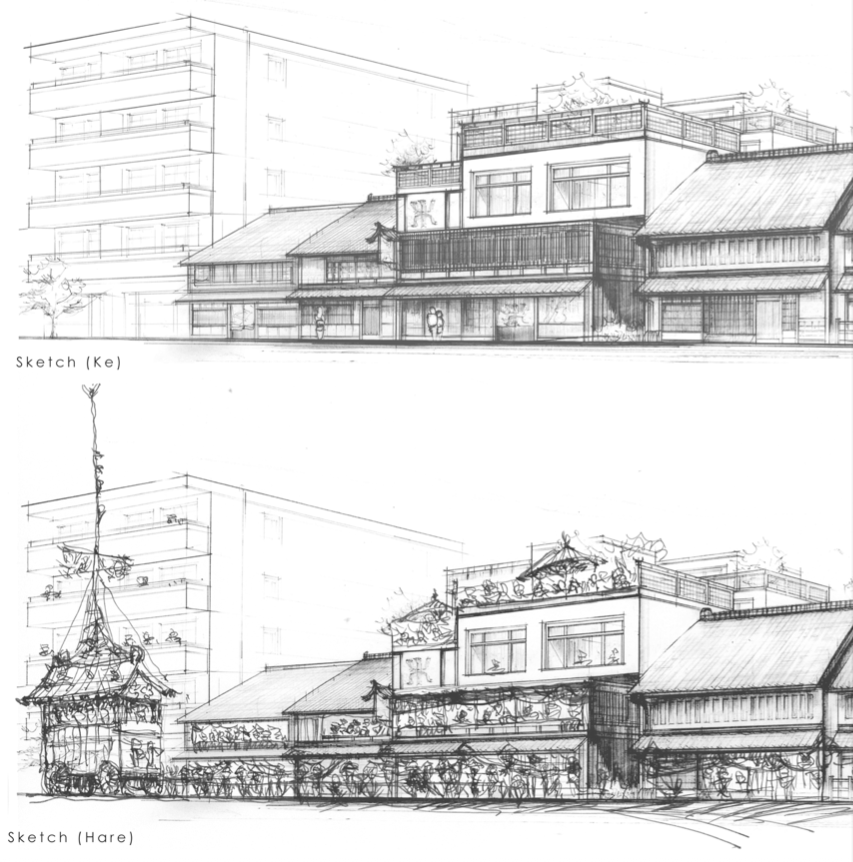
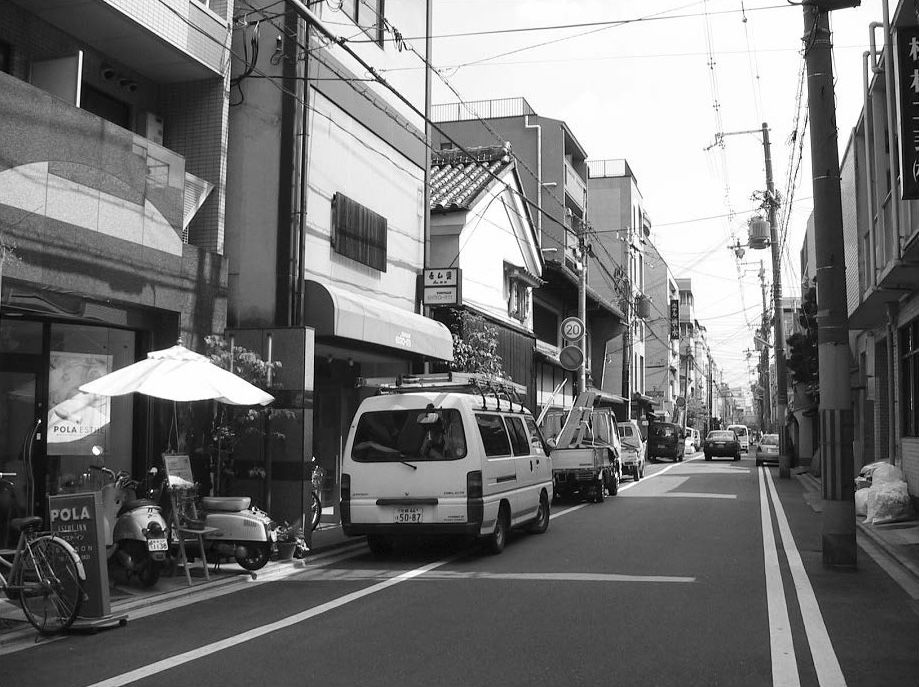
Today, the very nature of the area's attractive unique appeal has been usurped by the rampant business of tourism, creating an environment ultimately resembling that of theme parks.
ARRIVING AT RUKOU-IN
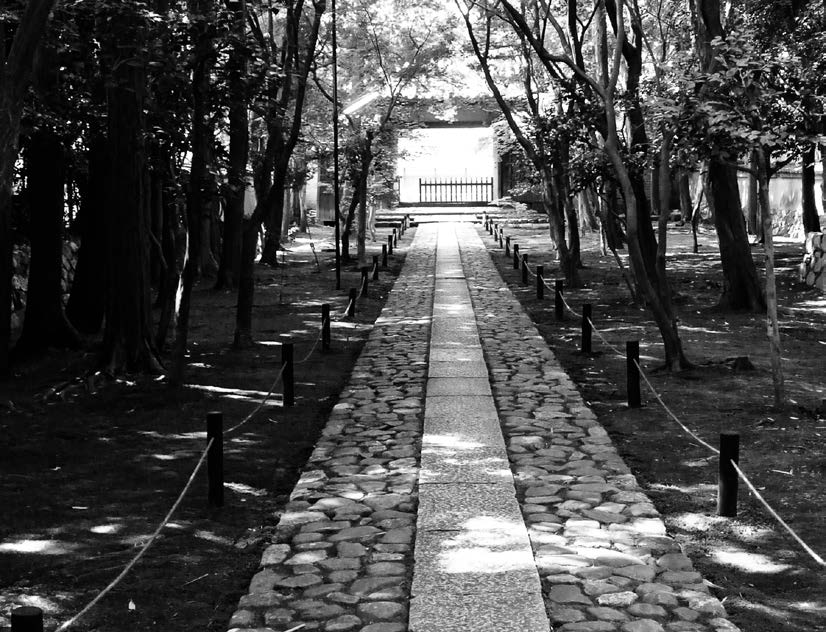
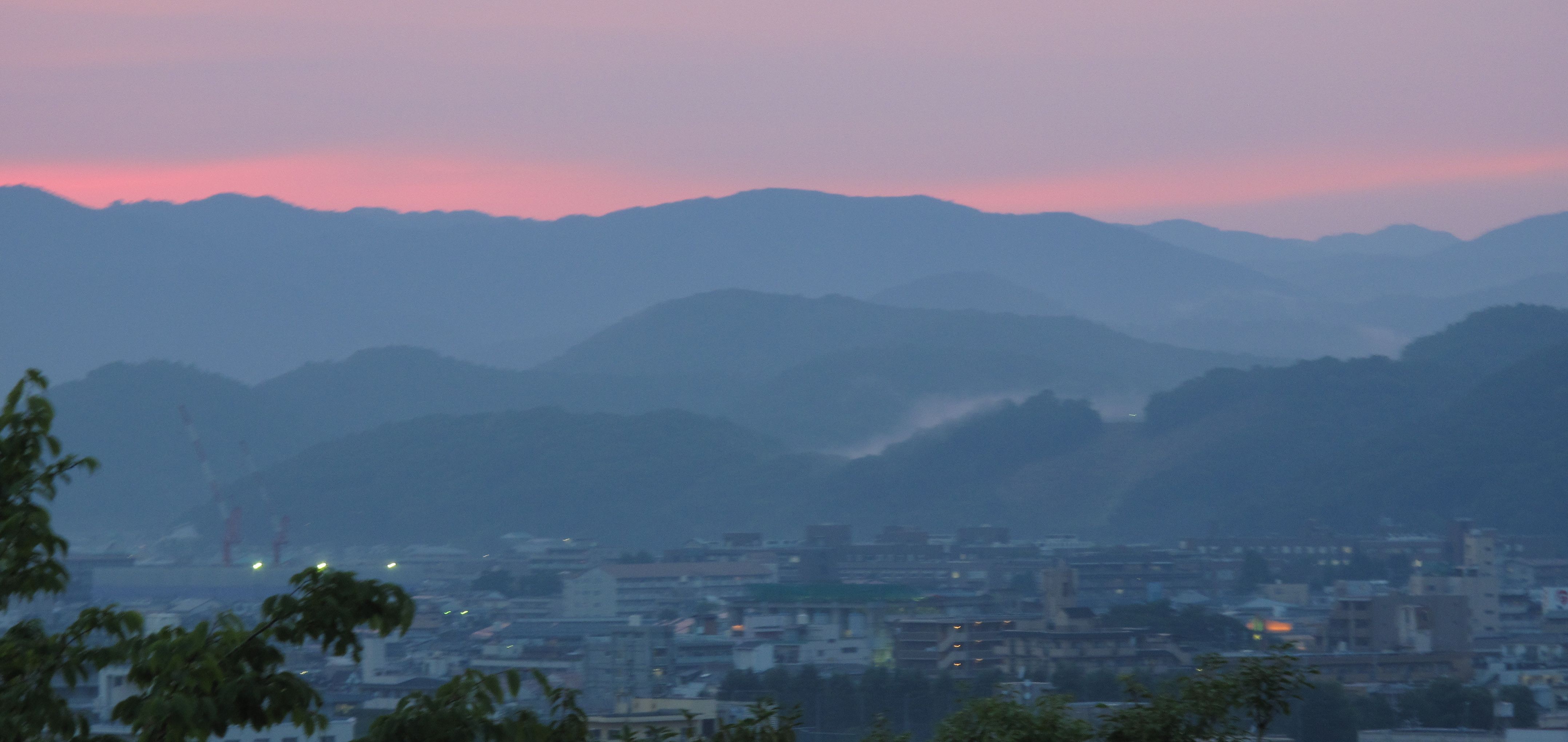
After arriving, students individually made their way to the hills of Arashiyama in Kyoto for the first meeting at Rokuo-in. This Buddhist Temple became our
place of stay for each night in Kyoto.
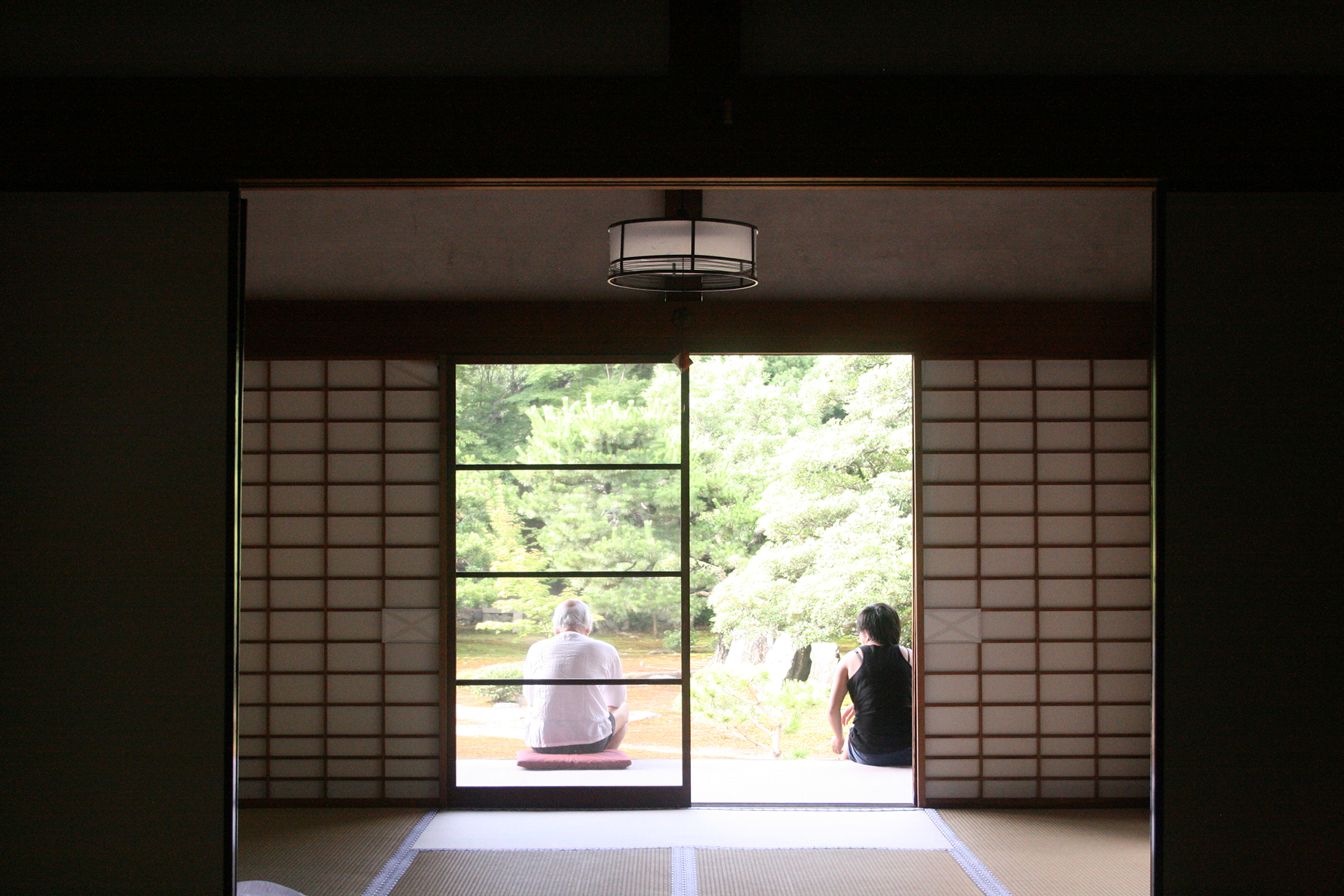
They are welcomed into the monk’s family home for their stay.
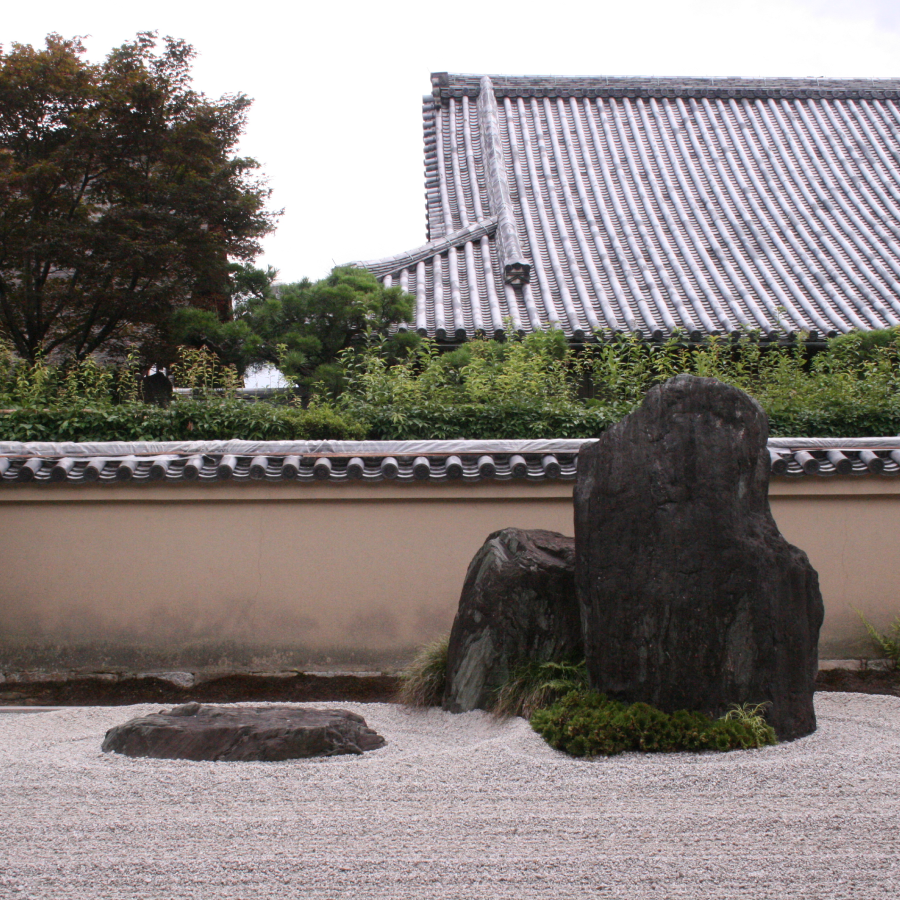
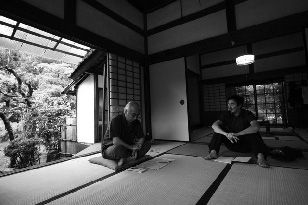
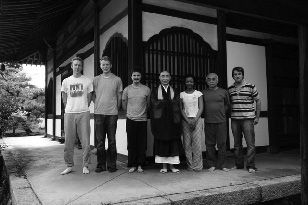
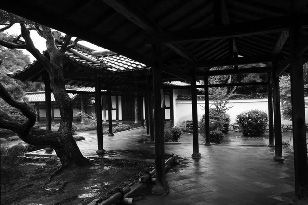
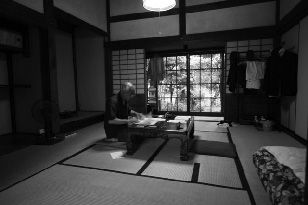
Staying at Rokuo-In gives the students an opportunity to experience Japanese architecture first hand. They are welcomed into the monk’s family home for their stay. The scent of traditional incense tells you that you are in the right place, and you wake up to the view of a spectacular Zen garden. The monk leads a morning meditation session, after which his family feed the students delicious homemade breakfast and share stories.
INITIAL IMPRESSIONS
Three Questions
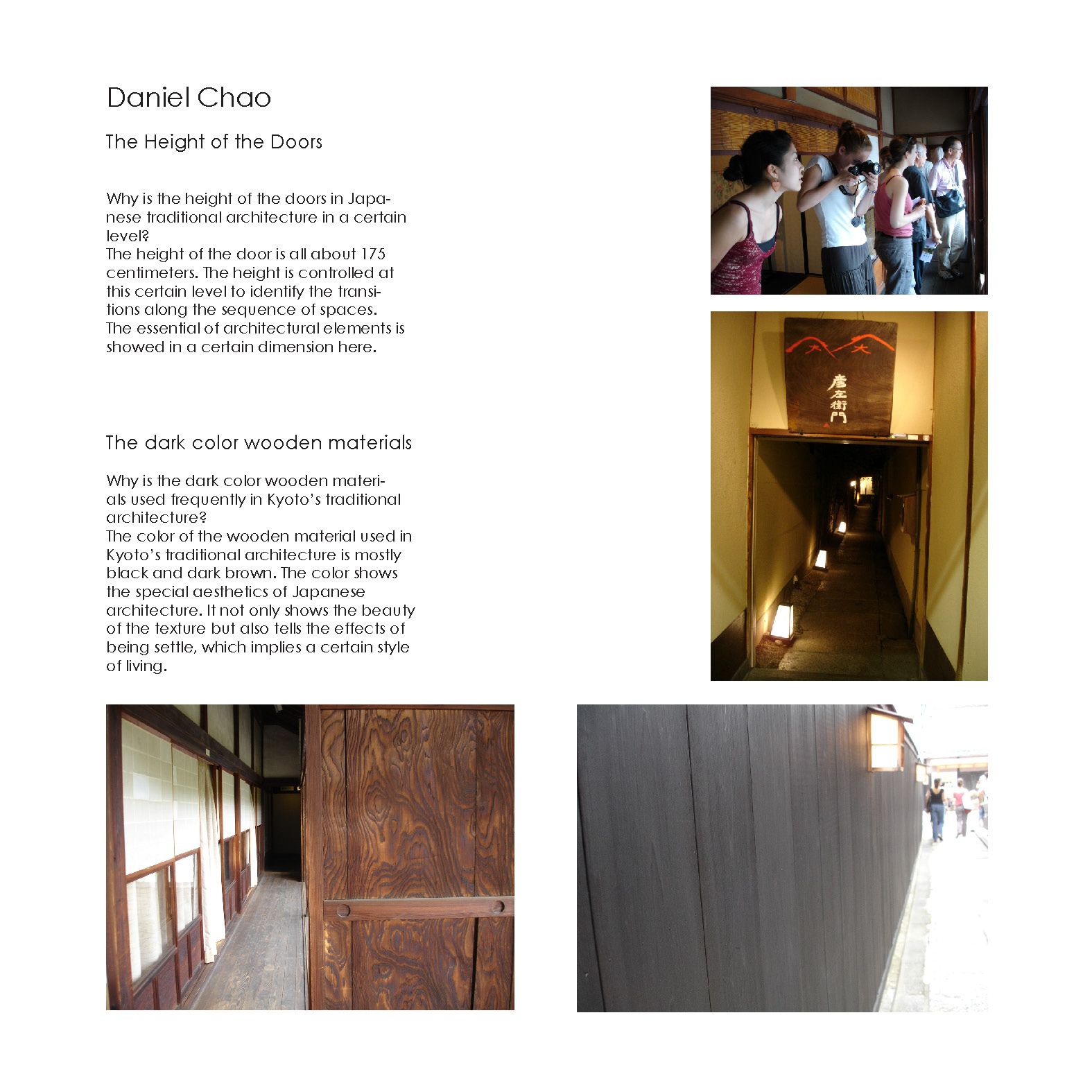
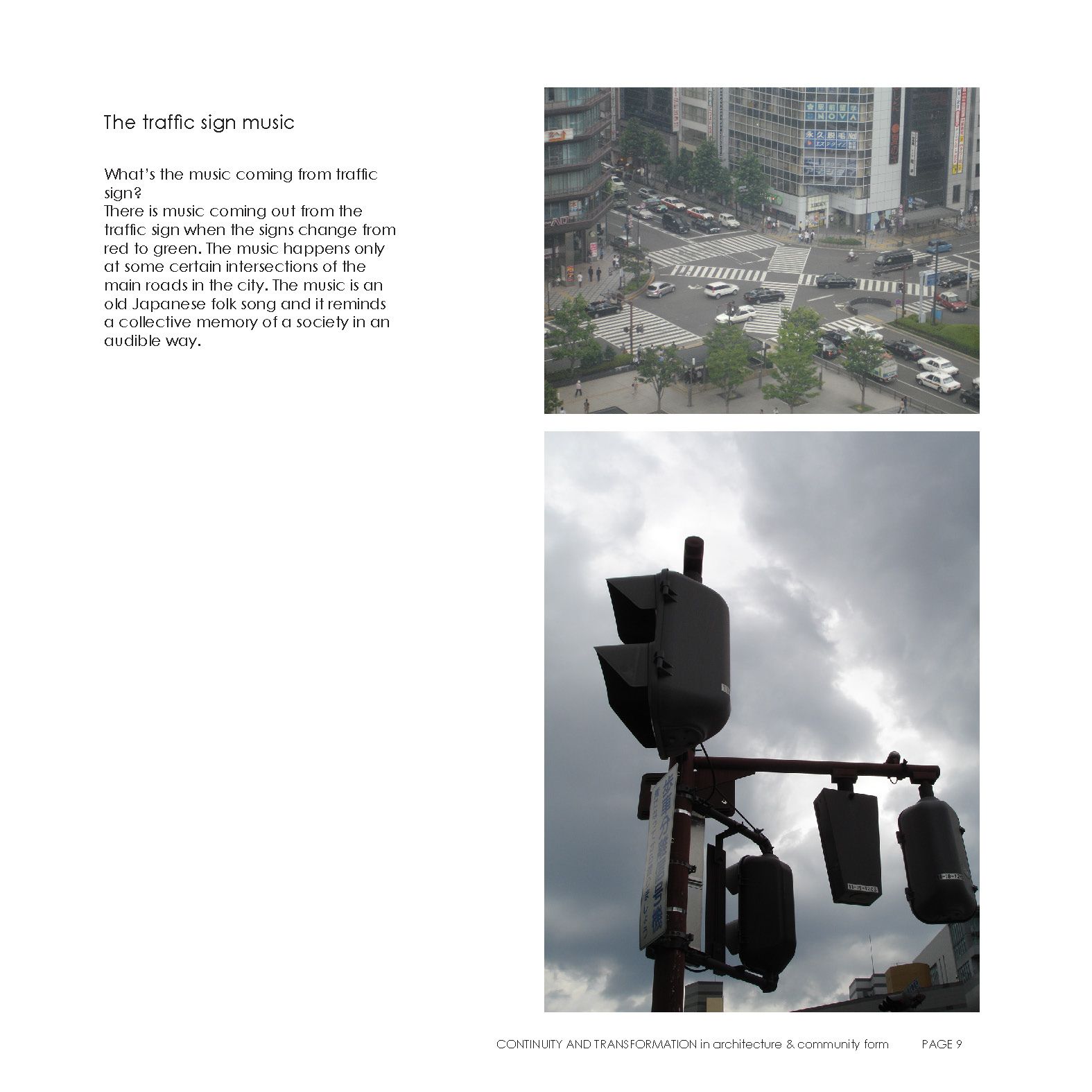
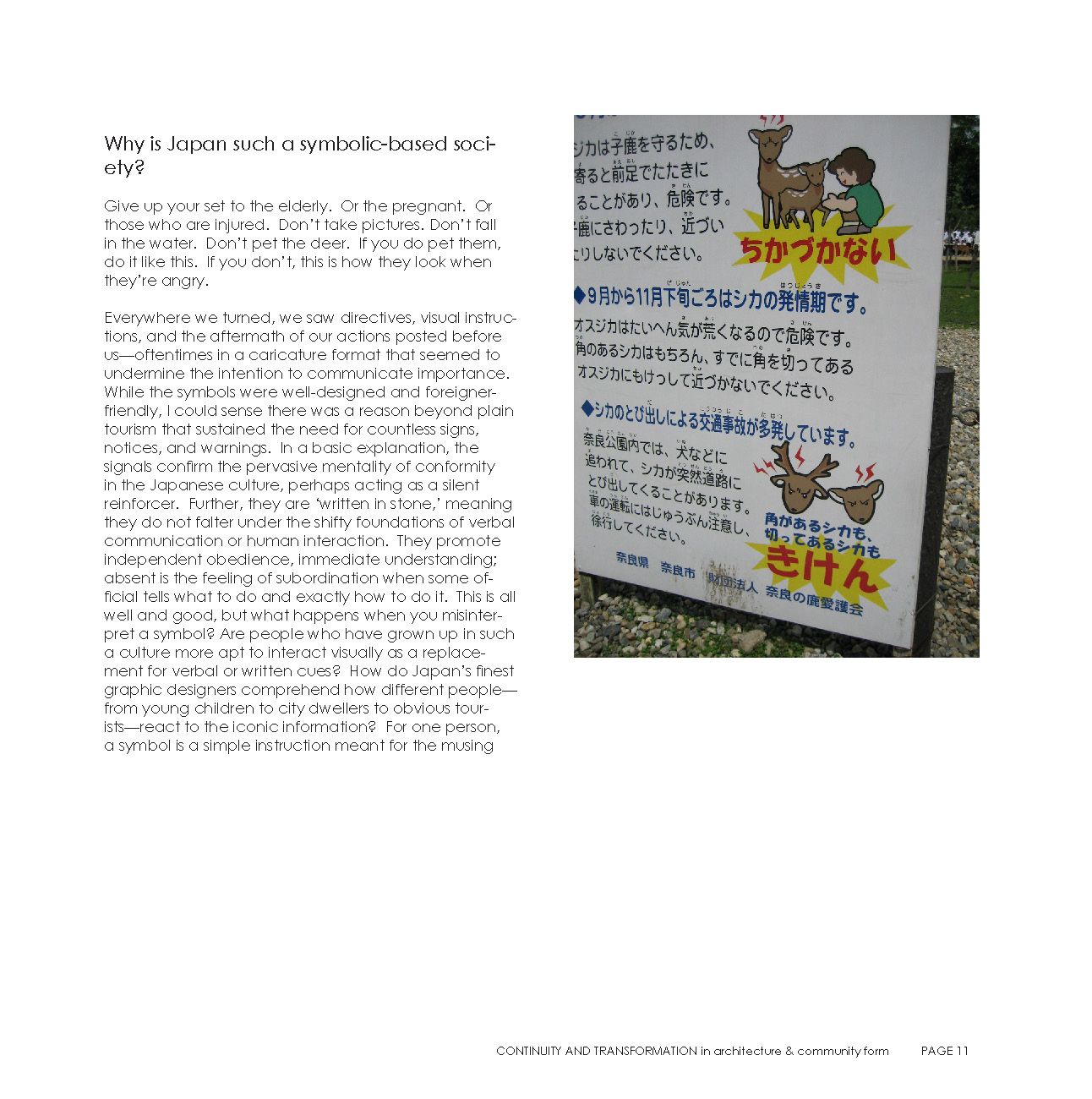
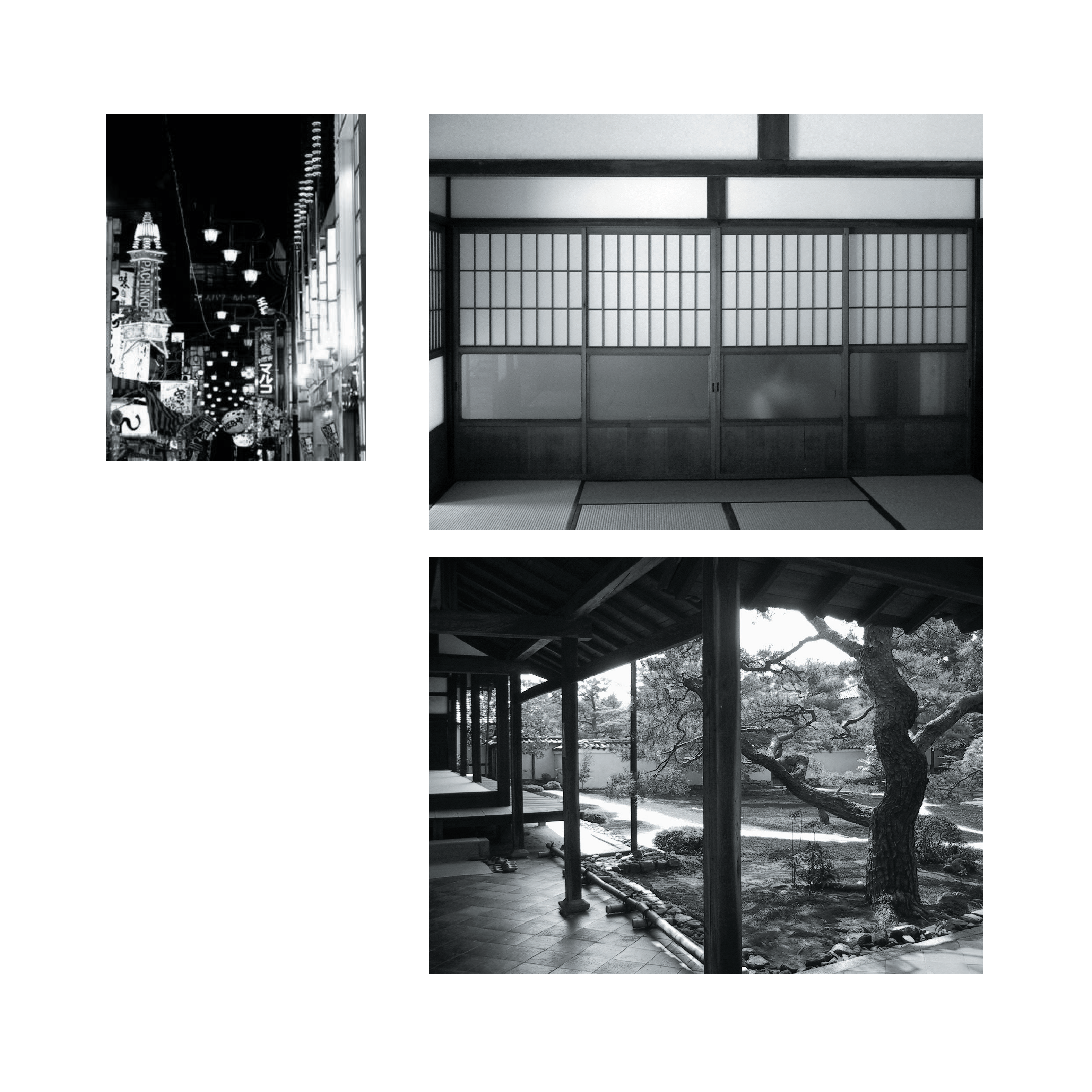
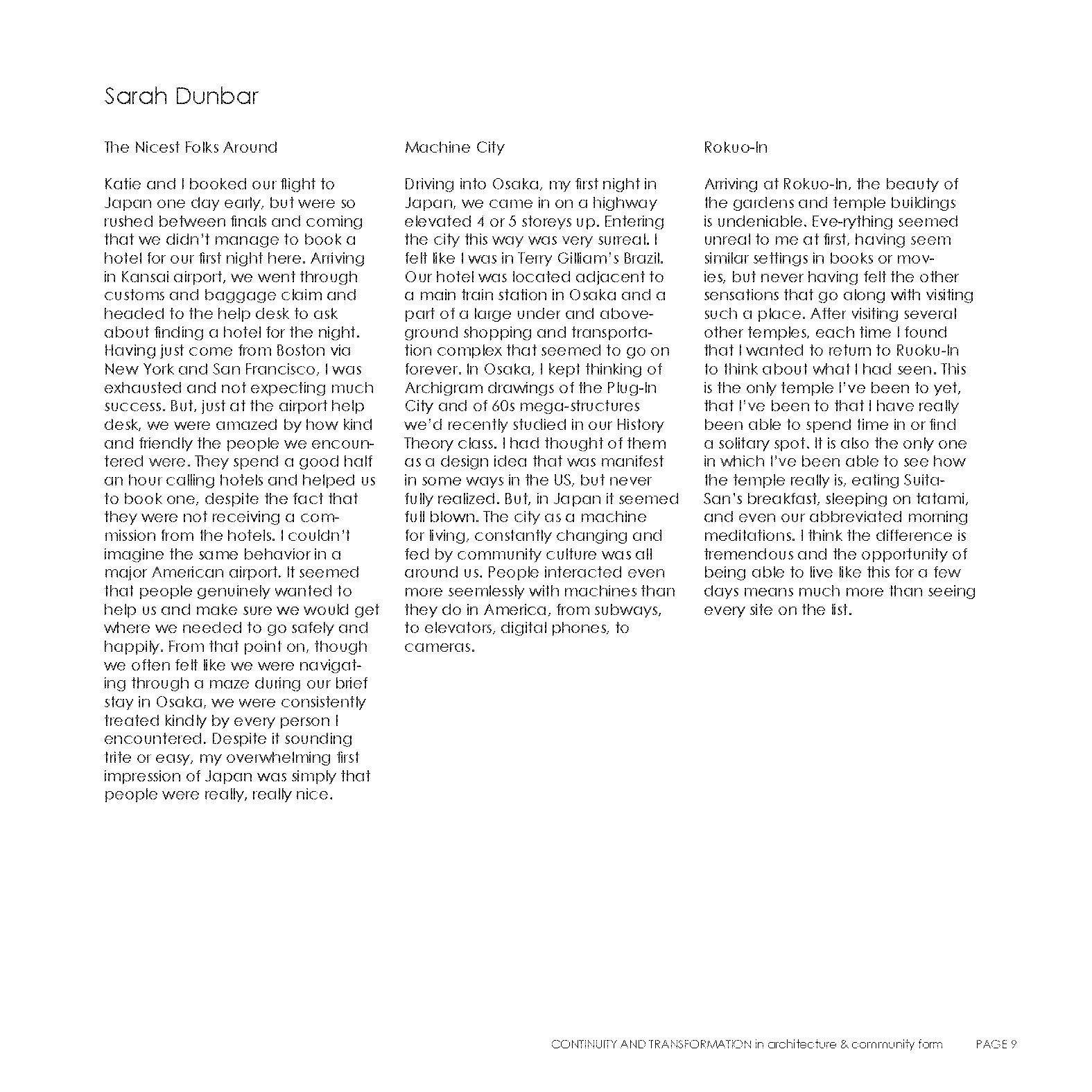
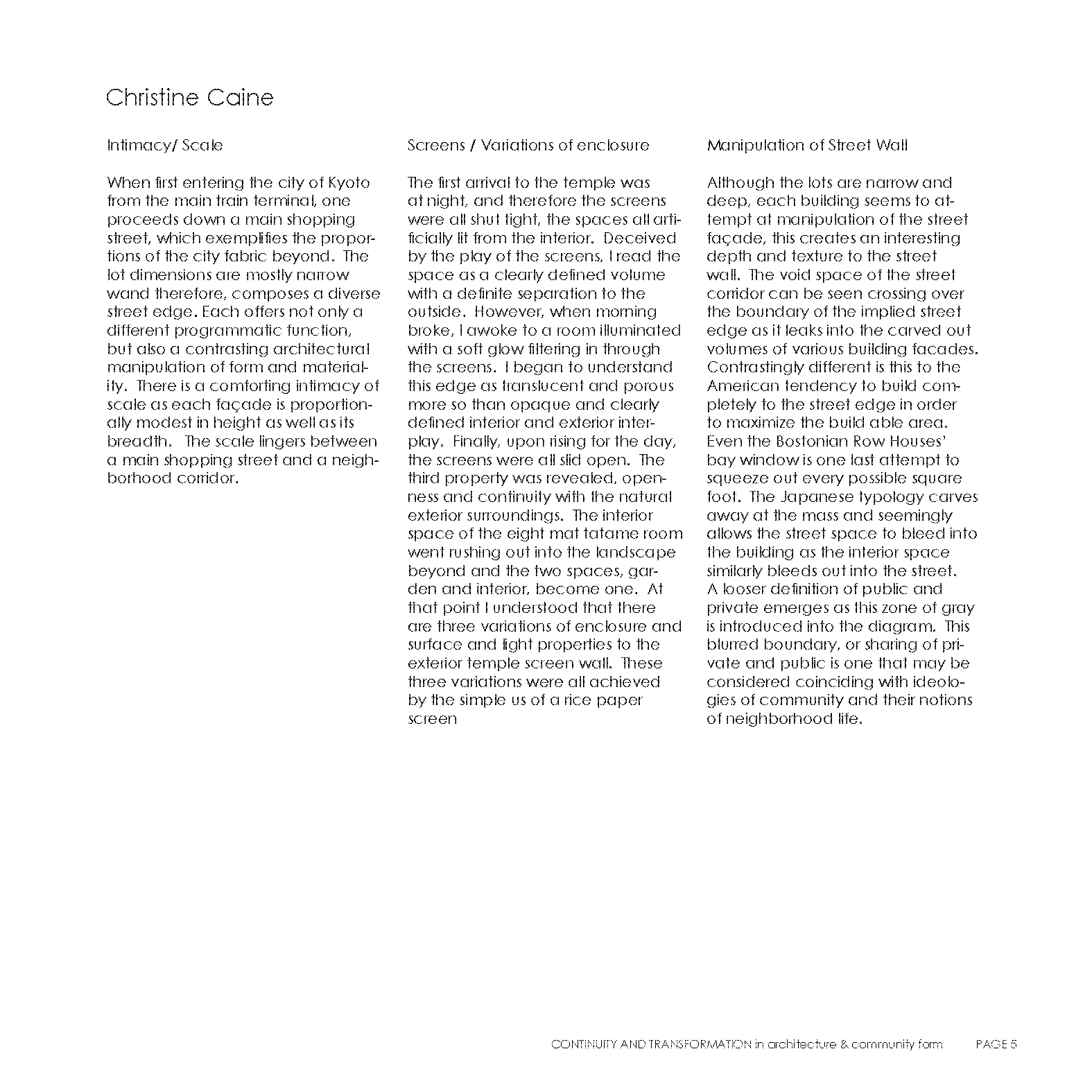
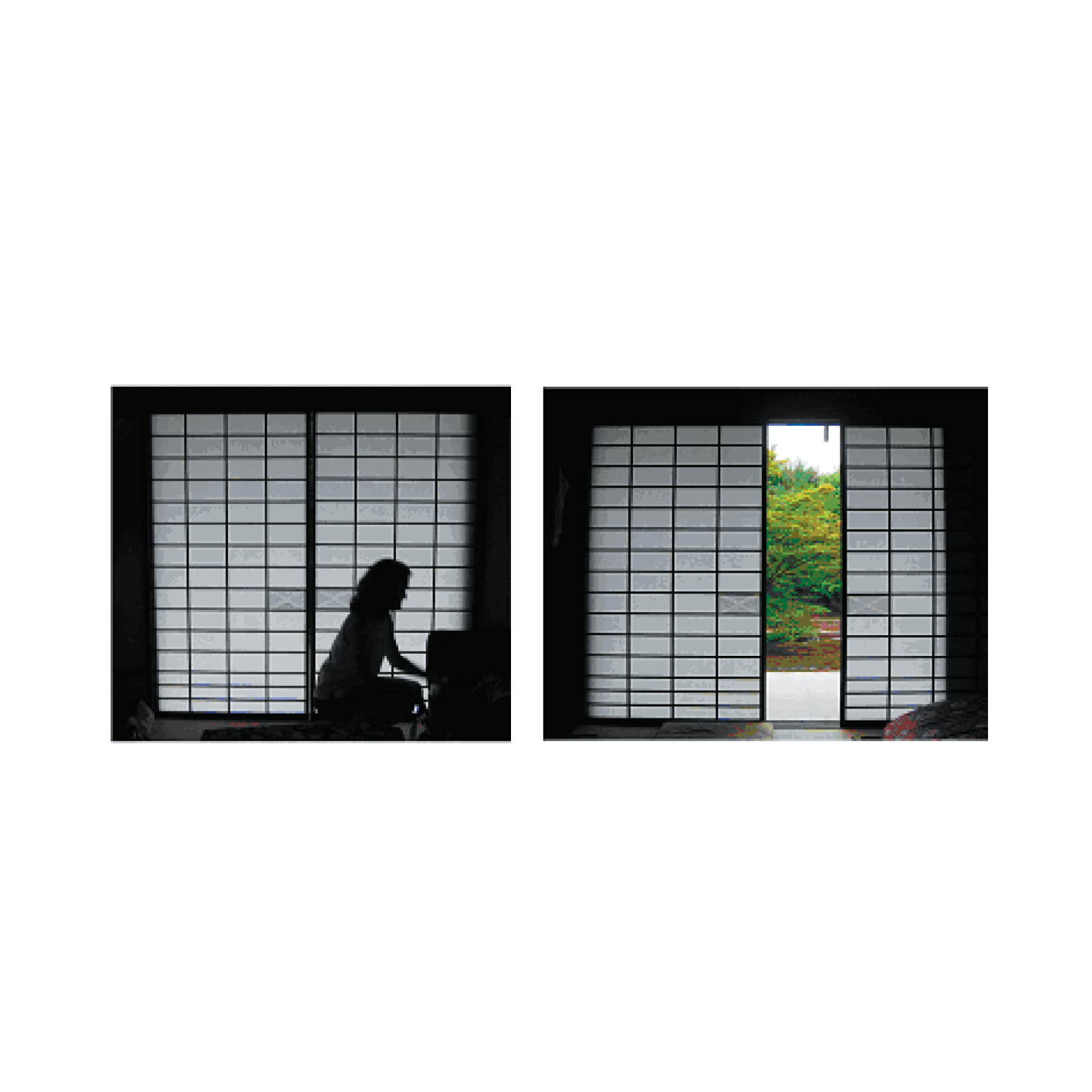
MIT / Kyoto University of Art and Design (Zokei)
Joint Charette
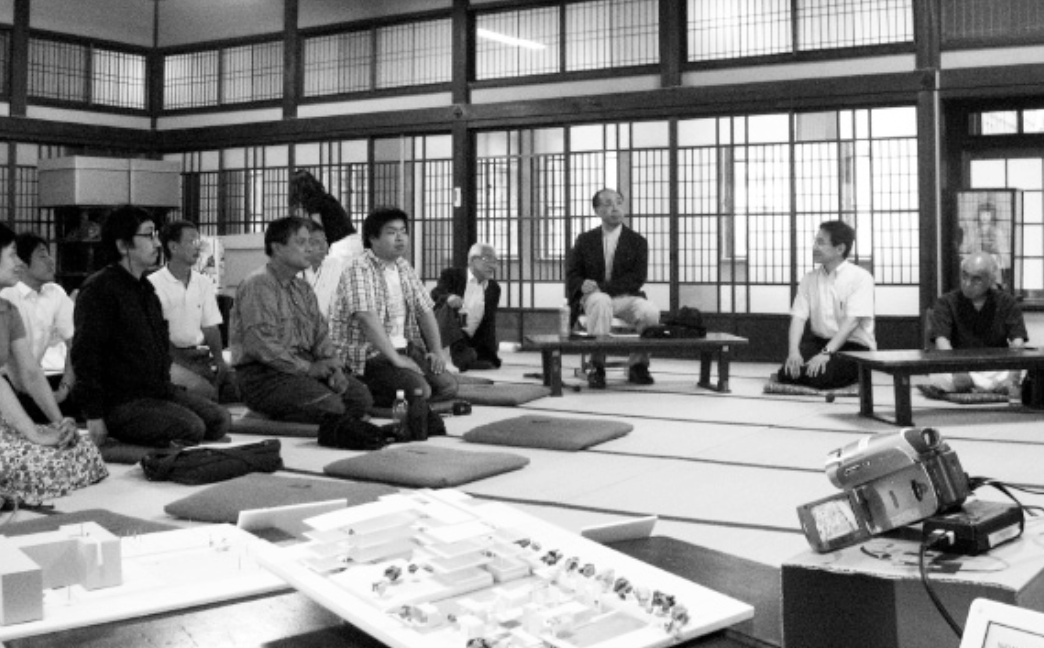
Reflections + Observations The workshop was a great way to get to know the city of Kyoto and its people. We began to understand the historic fabric of the city, upon entering Kyoto’s Machiyas. In studying the machiya type, which is facing increasing rarity, the city allowed us to see into family homes and see rooms we would never be familiar with as a foreigner.
The schedule of the charrette forced us to make quick perceptions and undertake rapid processes of assimilation to Japanese culture.
Interacting with resident students from the Kyoto University of Art and Design was also a wonderful and privileged way to get to know our city and home. However, with the limited duration of the workshop, we all would have liked to know more about each other and the place we were inhabiting.
It seemed to us that policy would have much if not more influence on the future of the city of Kyoto than that of an architectural vision or master plan.
We were excited to learn about the social dynamics and realities of living in a traditional Japanese city like Kyoto.
In general, this year’s Japan Workshop was a great challenge for us: surveying a large city of many historical layers, trying to put forward a vision for its future, and understanding the complexities involved in imagining a future for the city.
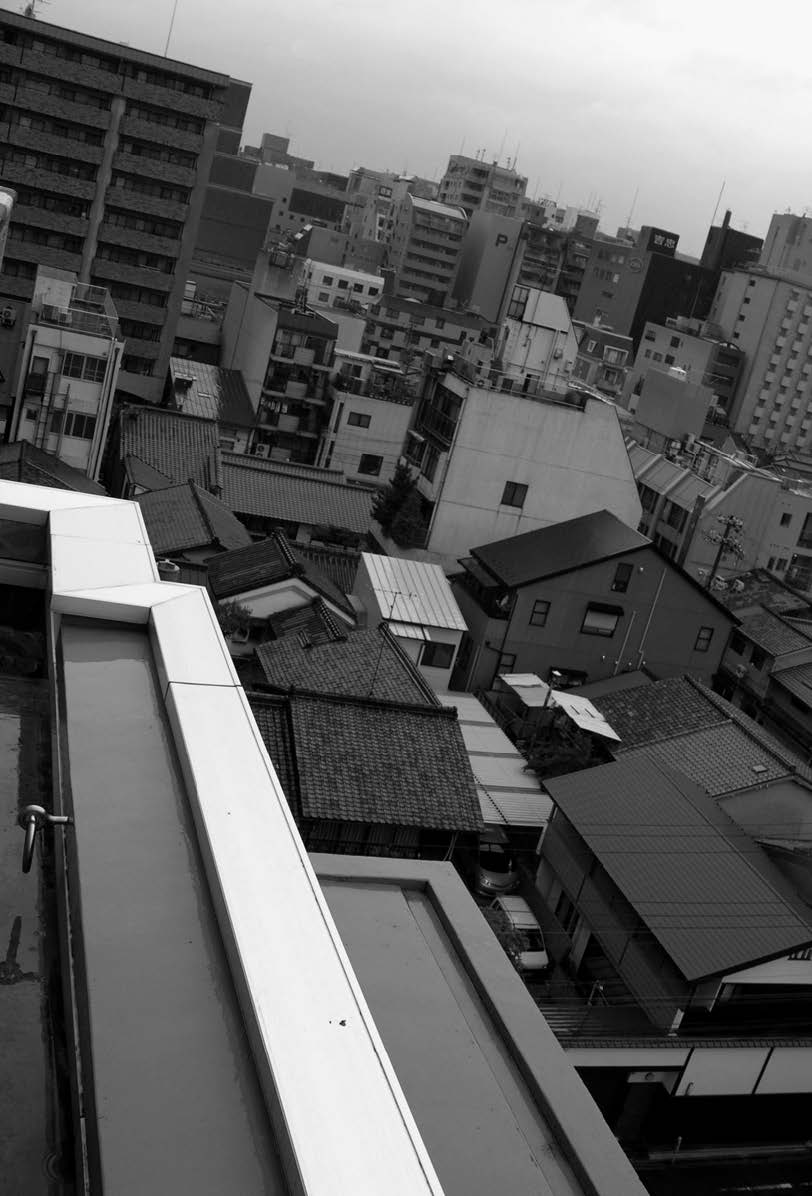
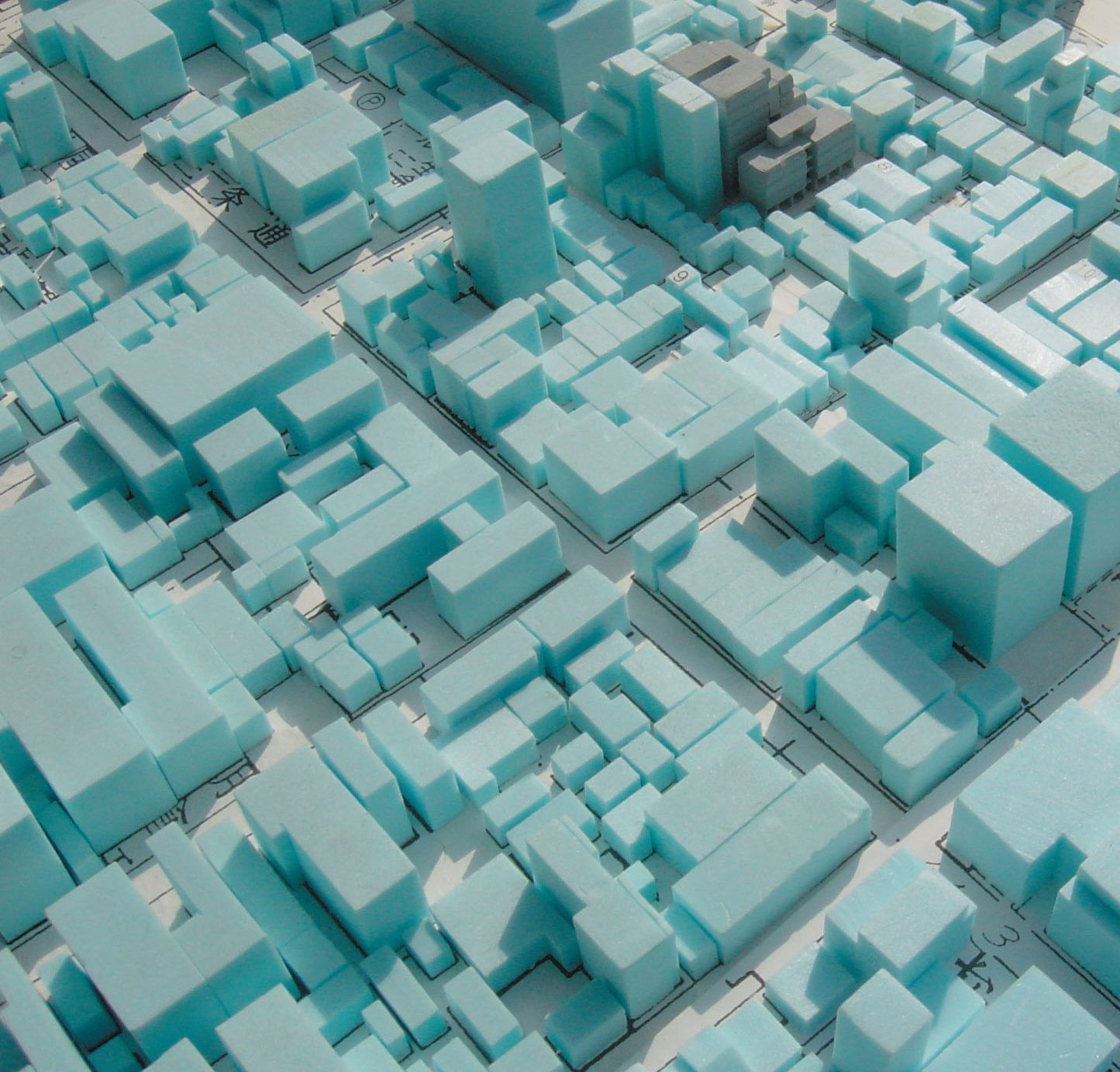
Maintaining Community The neighborhood of Aneya-koji Dori is one of contrasts in many senses. Once largely inhabited by long-term residents in the typical Kyoto machiya, one sees today machiyas inhabited by short-term residents or sometimes vacant and decaying. The larger-scale machiya buildings were mostly housing textile manufacturing spaces in various buildings, now largely scale mansion buildings.
In our opinion, in order to preserve community, even within Japan’s rapidly changing urban landscape, city policy would have to address the possibility of the location of the site for new development and the desirability of its location to the large-scale developers. This would be done through limiting the height of the new buildings from that of the older generation, long-term machiya dwellers to that of the shorter-term younger condominium dwellers.
However, we believe that the community will continue to retain its mix of the two for another hundred years from now if city policy maintains its height restriction. In taking a look forward and across the globe, this context and the image of traditional machiyas will be able to survive in the two categories:
the new low-scale buildings
the very tall large-scale structures.
It seems that the city has retained this towards the end of the Edo Dori (roughly two to three stories) and very tall towers that have already set precedent in some areas. Over the next 100 years of change it would be important to introduce a medium scale of mixed use building type to the site.
Some buildings will maintain their present scales and survive into the future, but will inevitably undergo further transformation, while others will take on a new type. Perhaps this is the first image for the next 100 years of Kyoto: maintaining the scale for some buildings and increasing it for others.
The question becomes: is this new image the one that city policy is willing to maintain? With Kyoto’s rapidly increasing Marathon proximity to Osaka, the speculation about city’s potential new location of textile production from between to be relocated is becoming more distant. It is possible to imagine a better balance between older and newer buildings, one in which the new additions do not overpower the older, yet the newer additions will also fulfill the needs of their original parts.
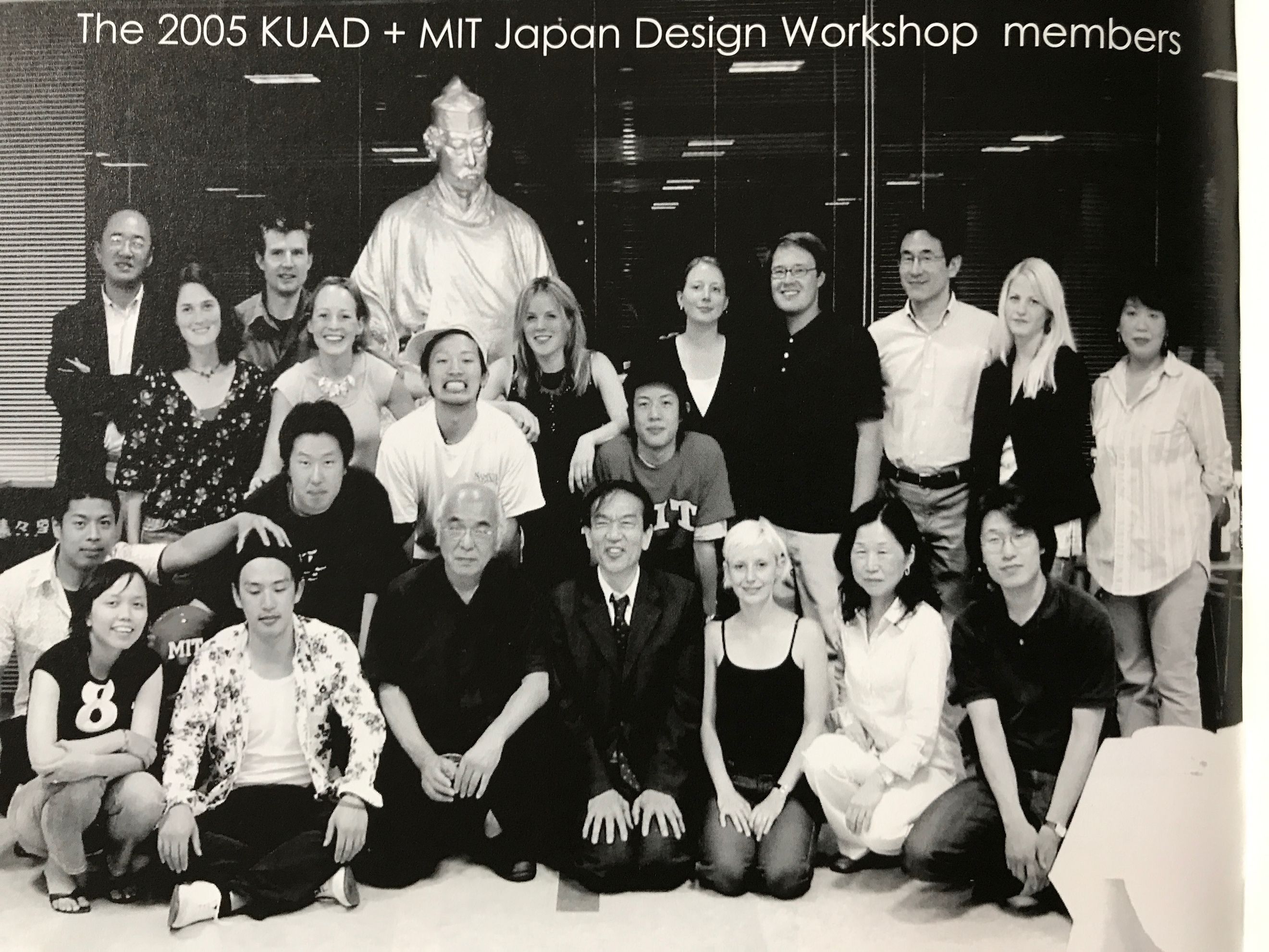
MIT Faculty: Shun Kanda
Zokei Faculty: Toshihito Yokouchi, Ken Kawai, Yoji Sasaki, Isamu Nakamura
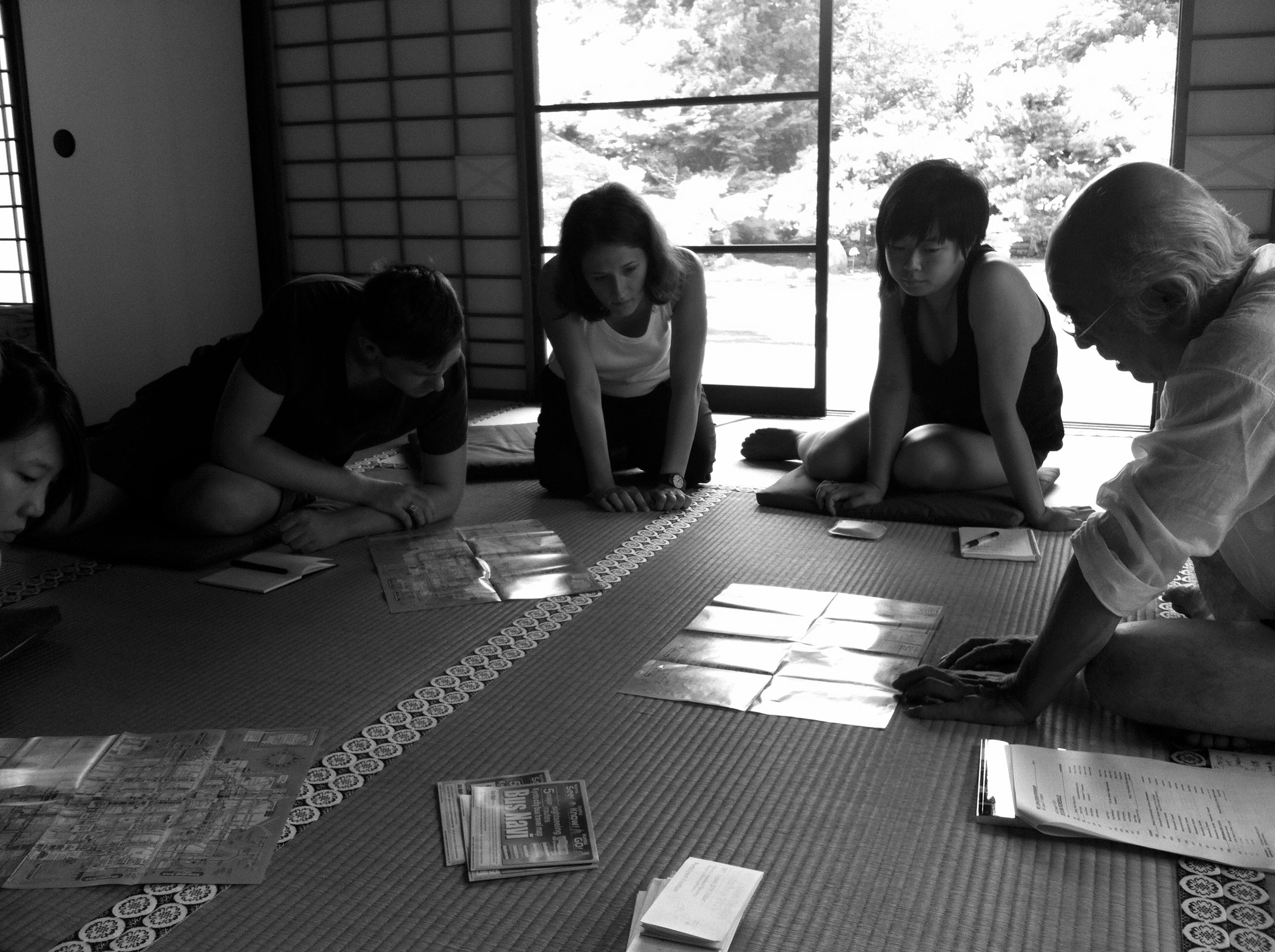
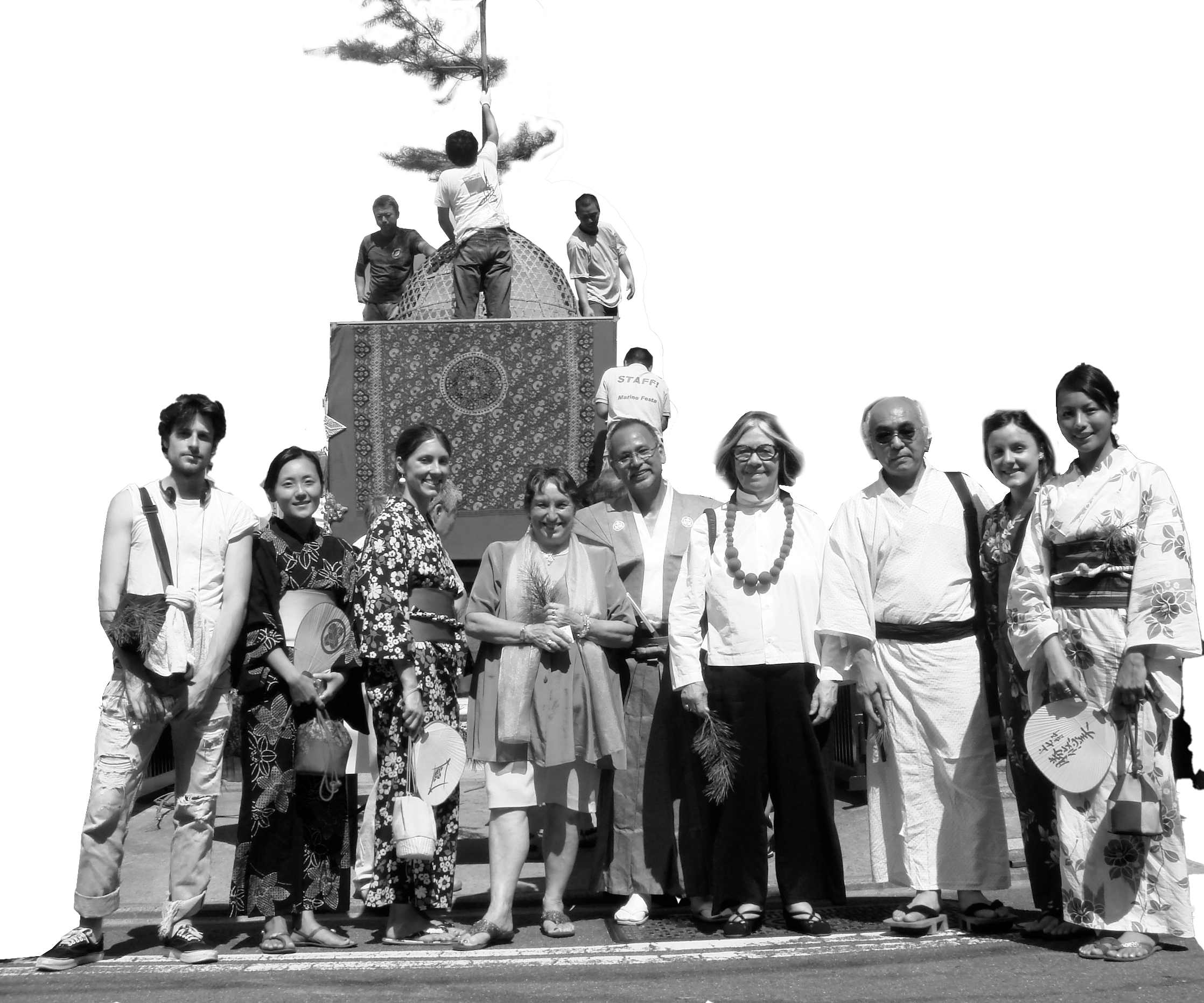
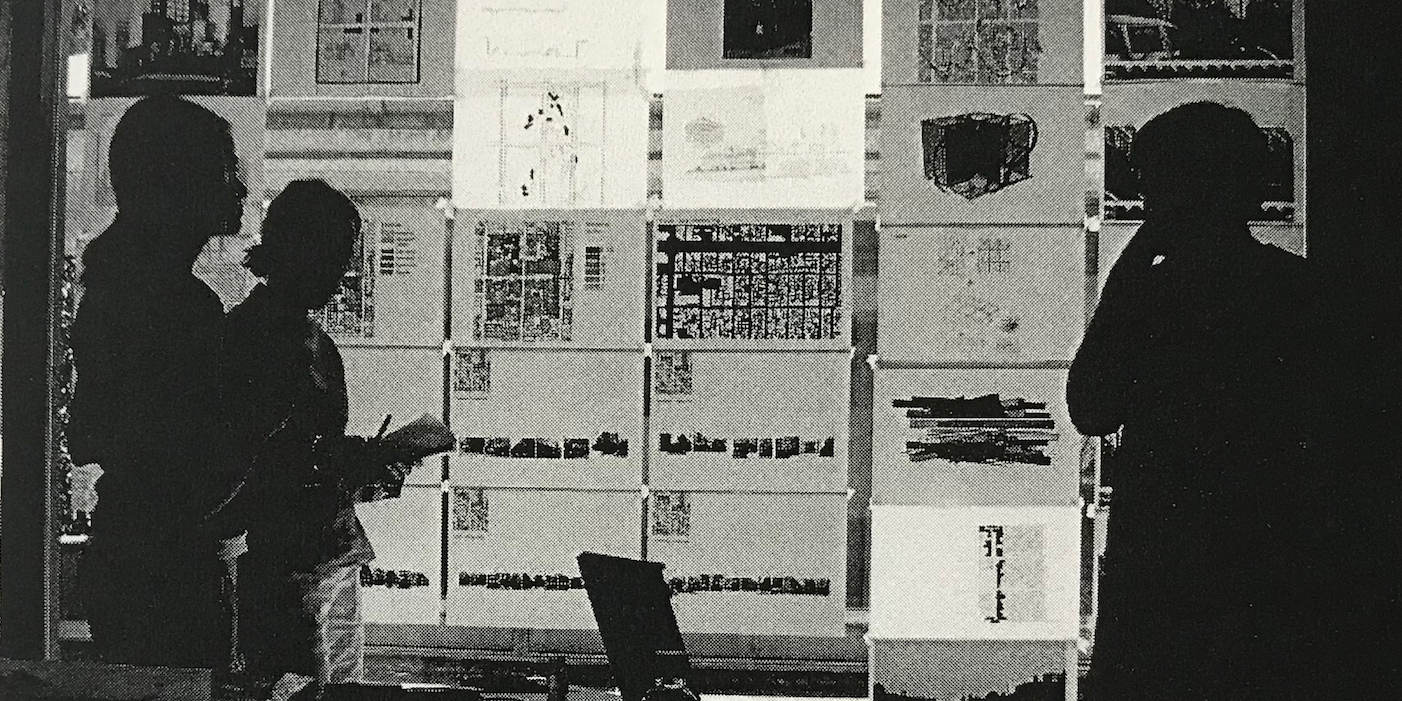
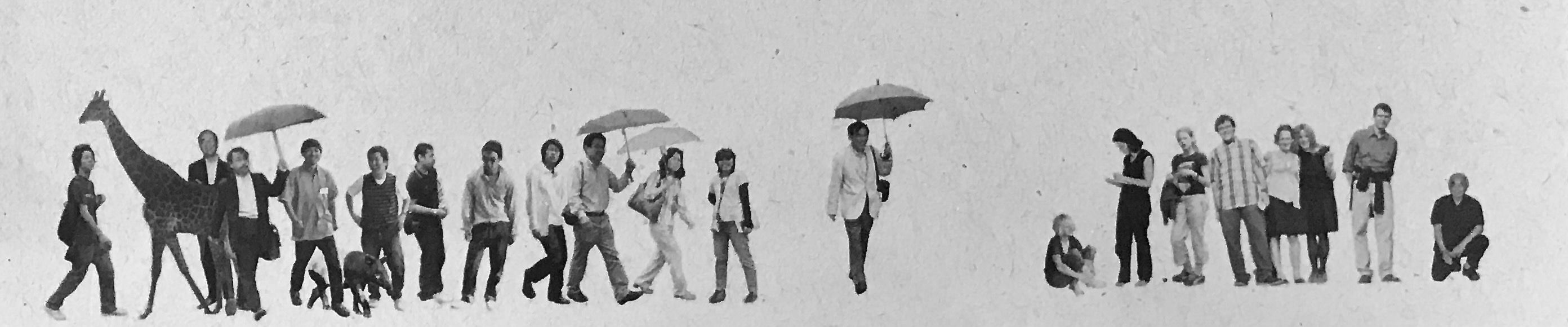
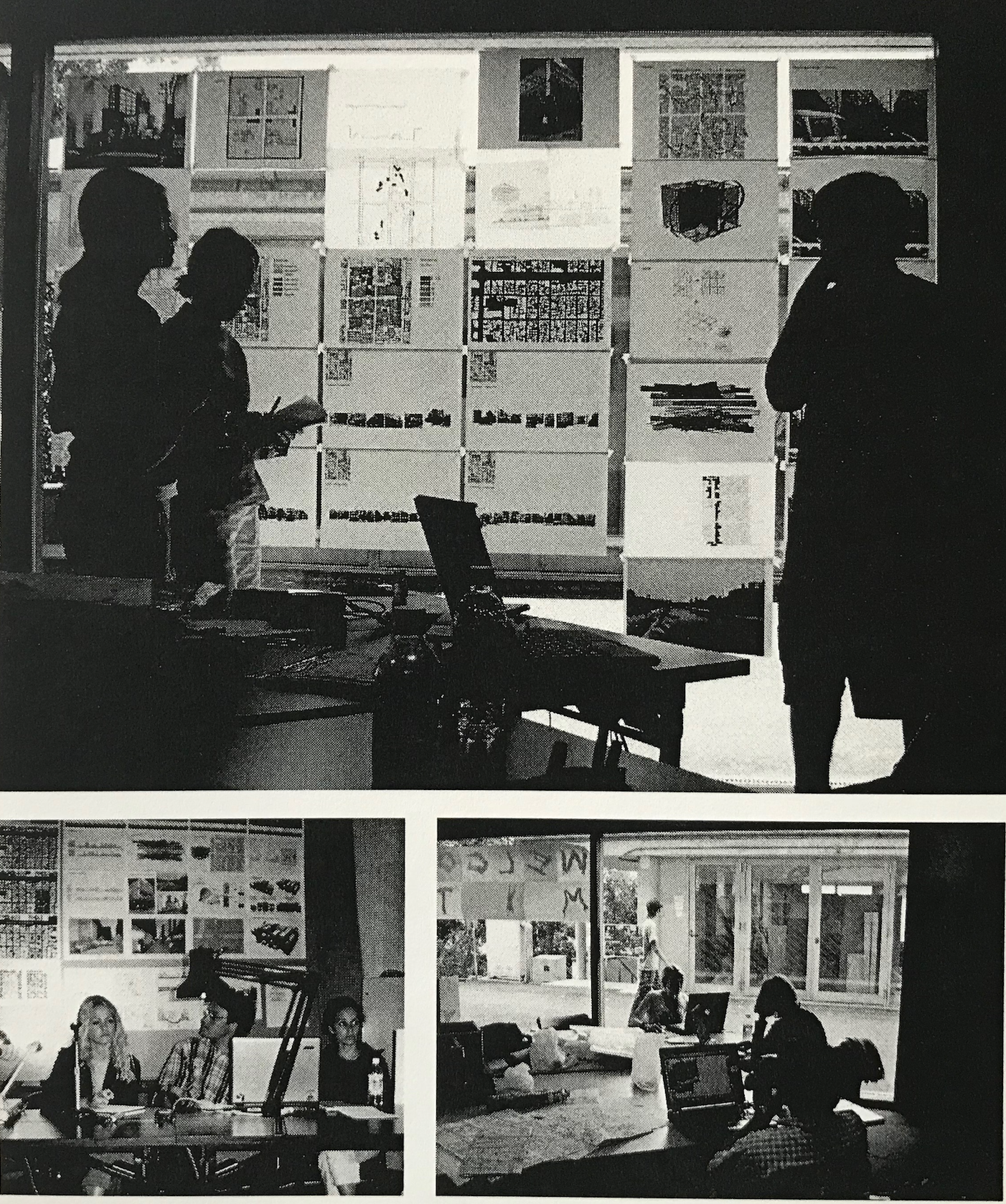
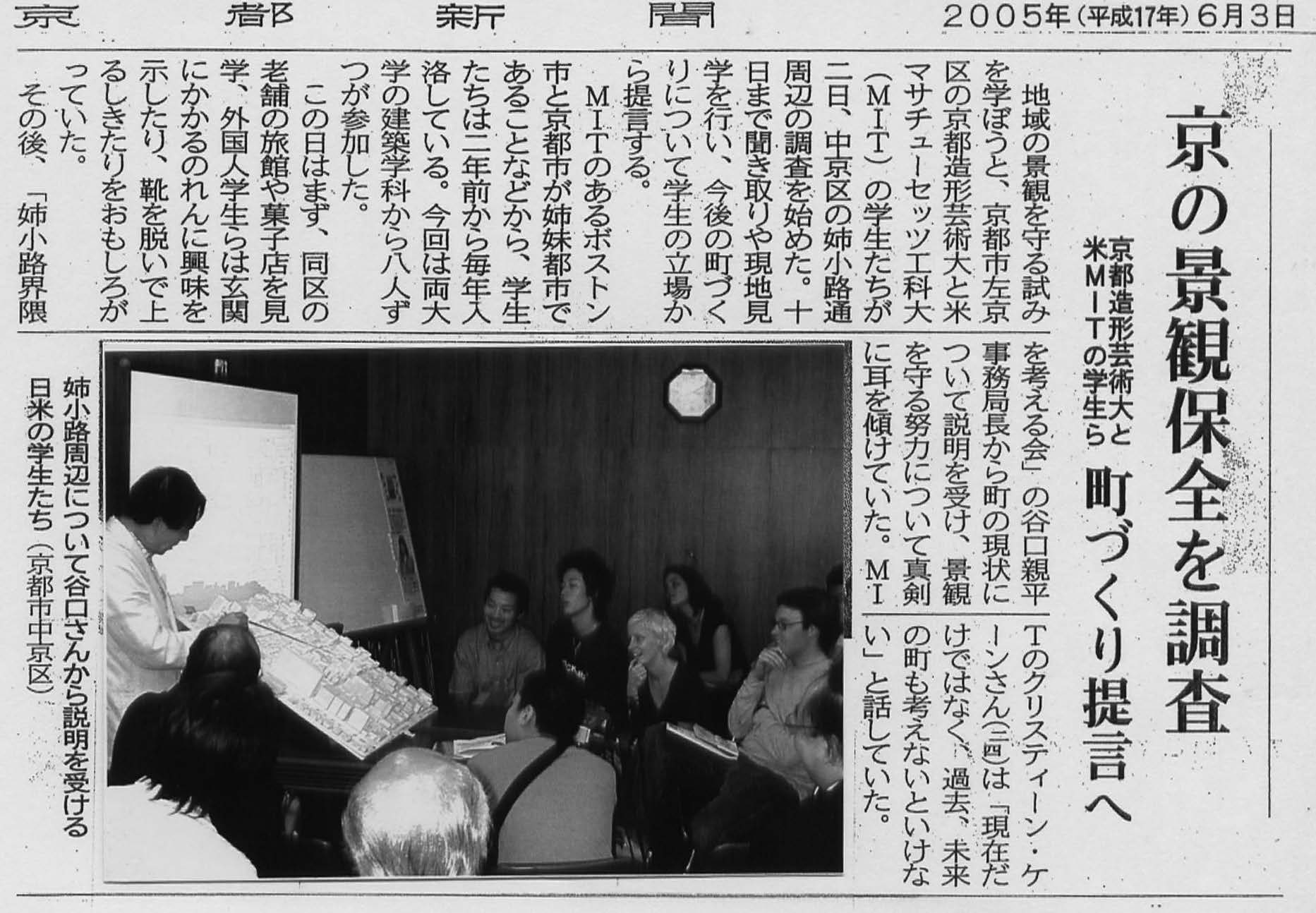
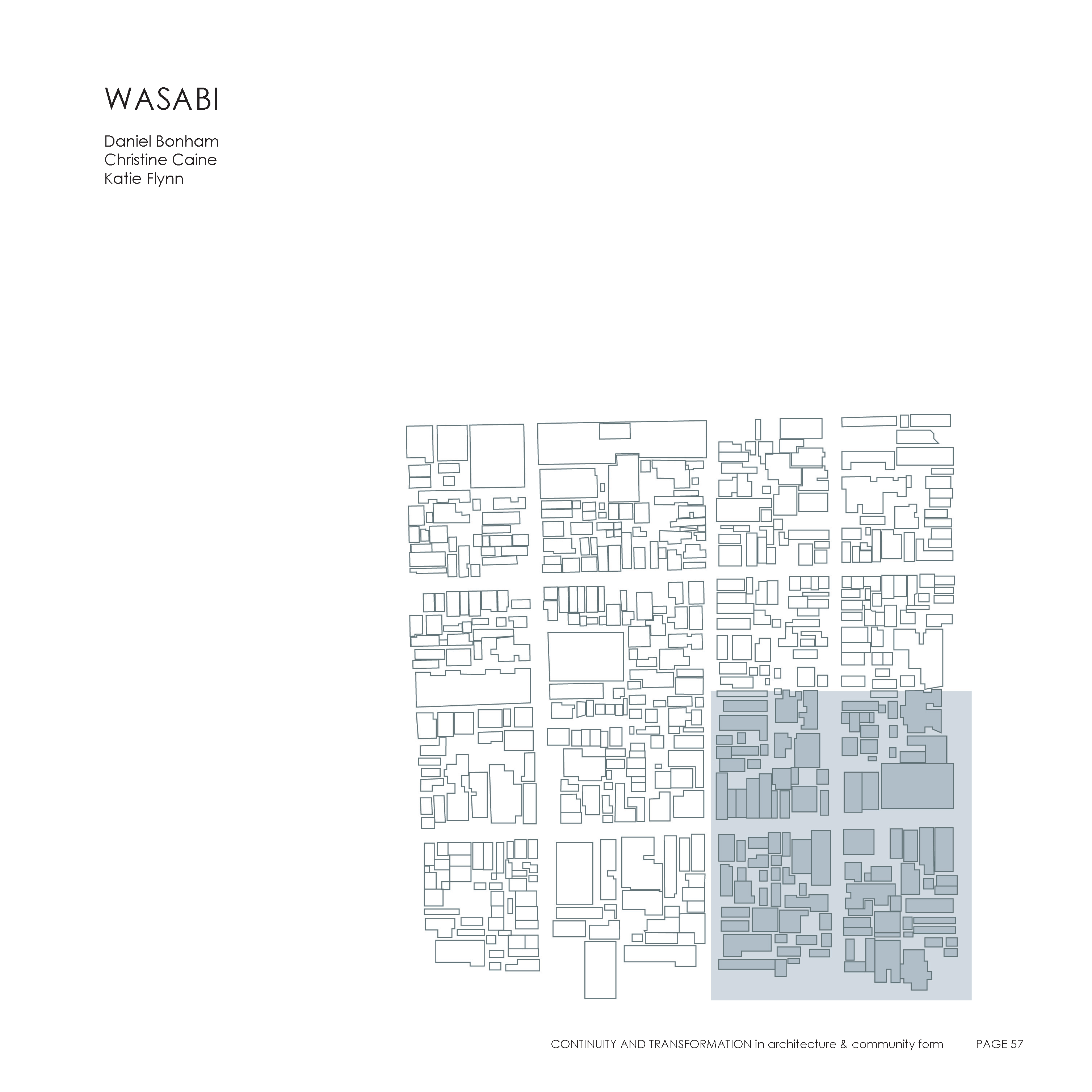
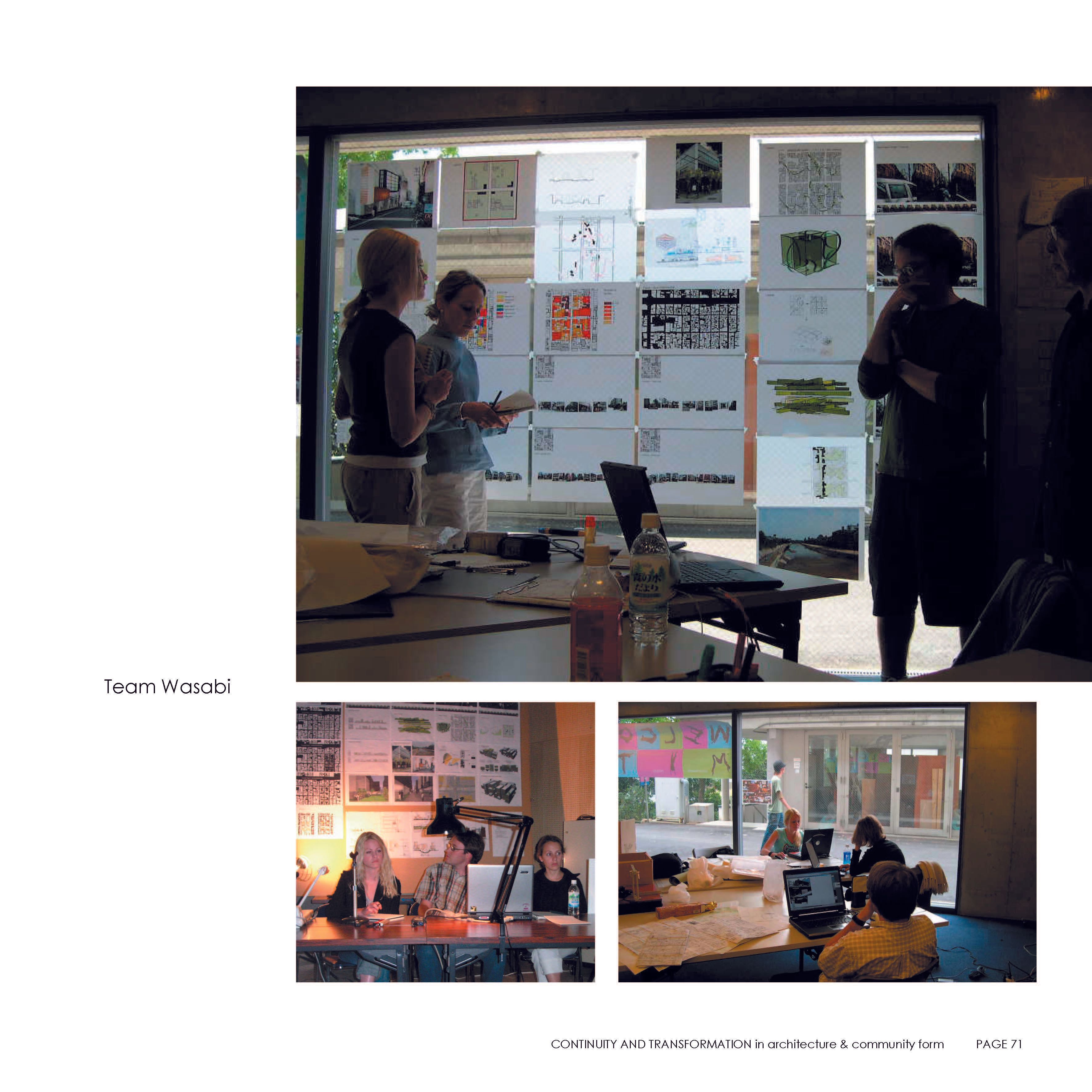
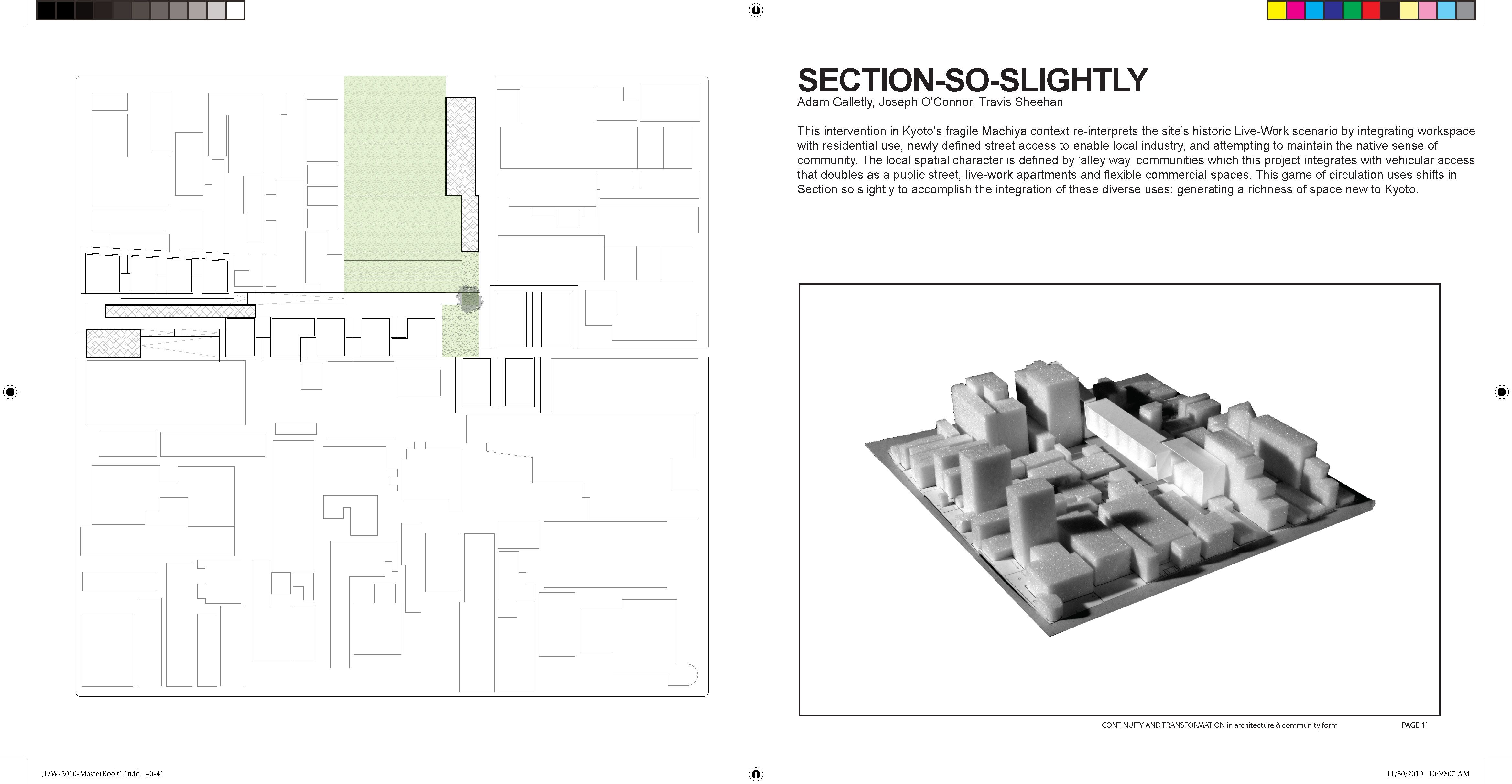
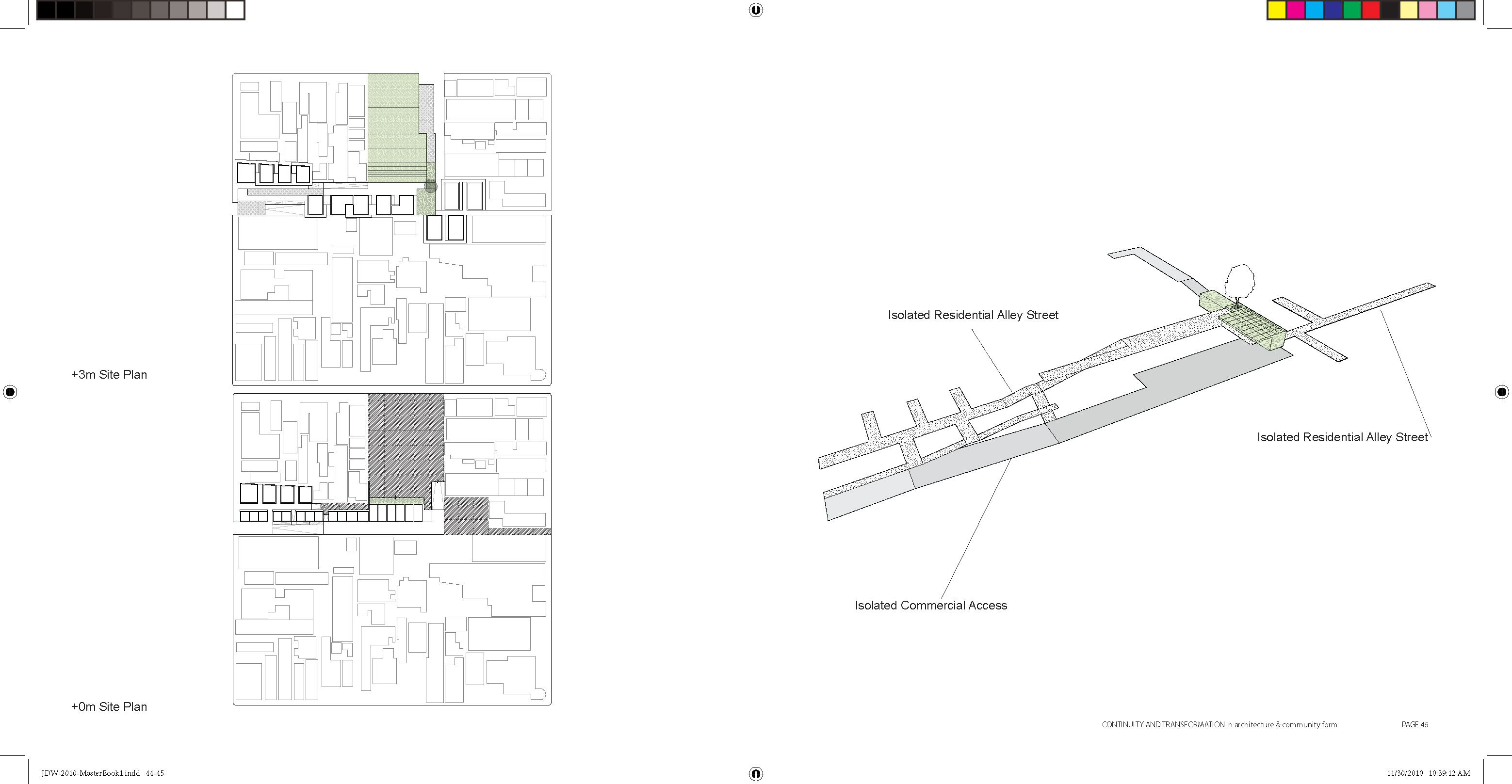
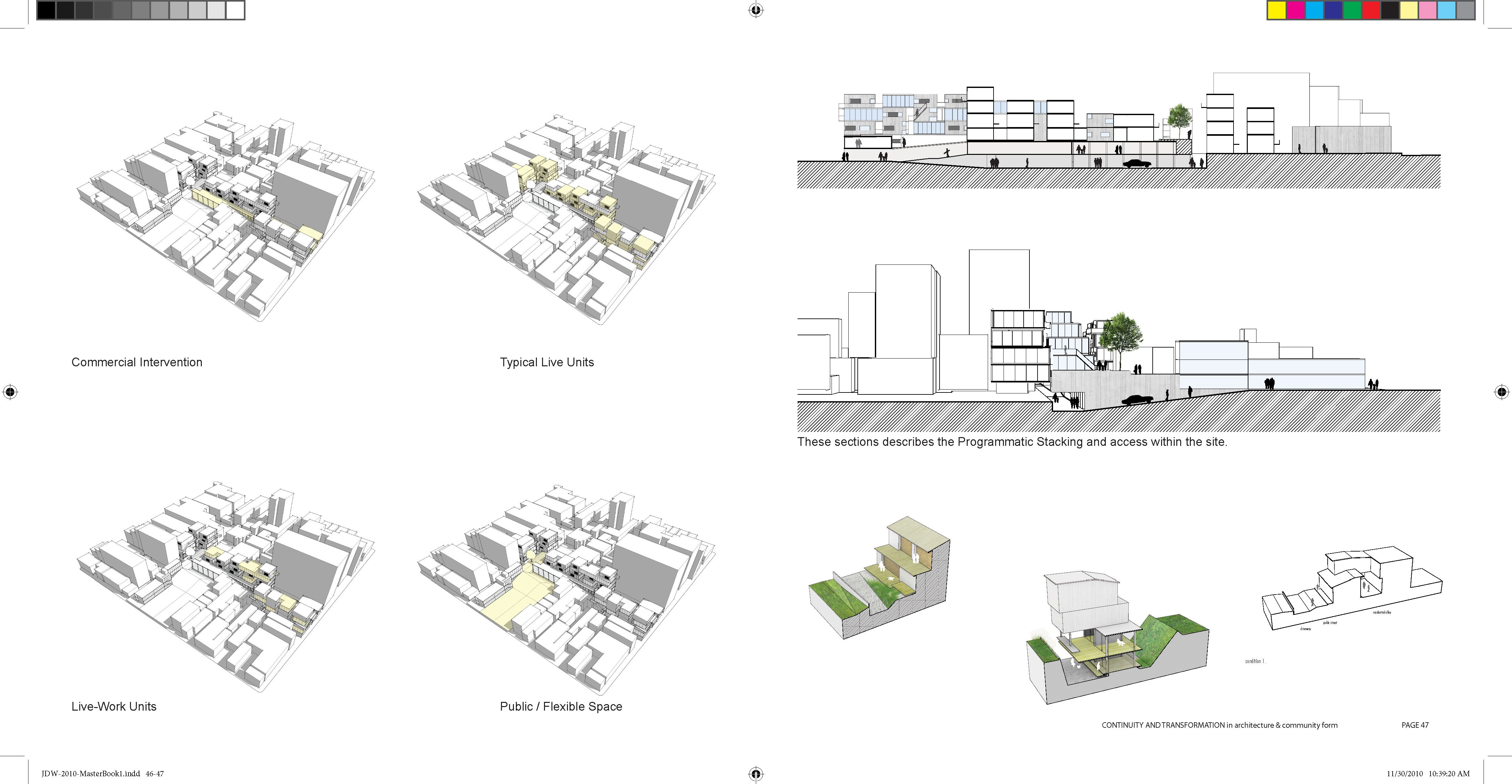
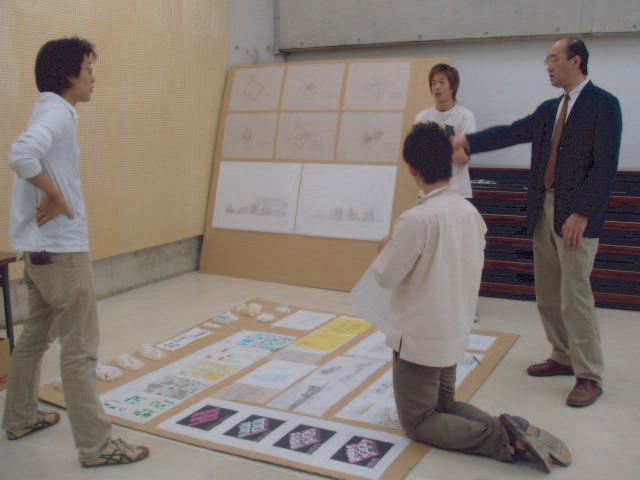
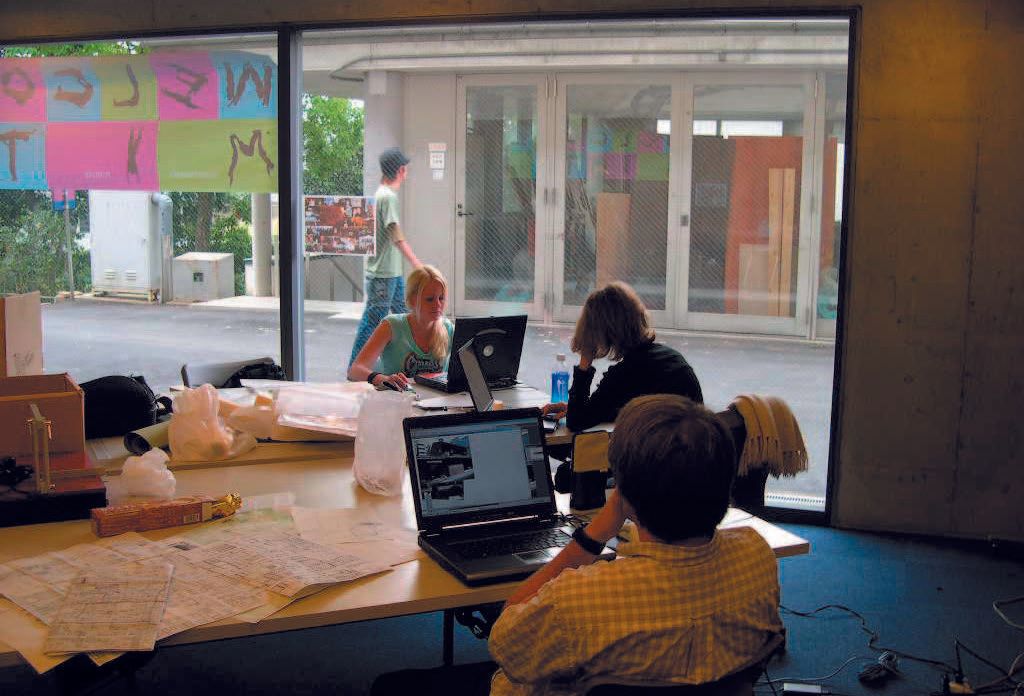
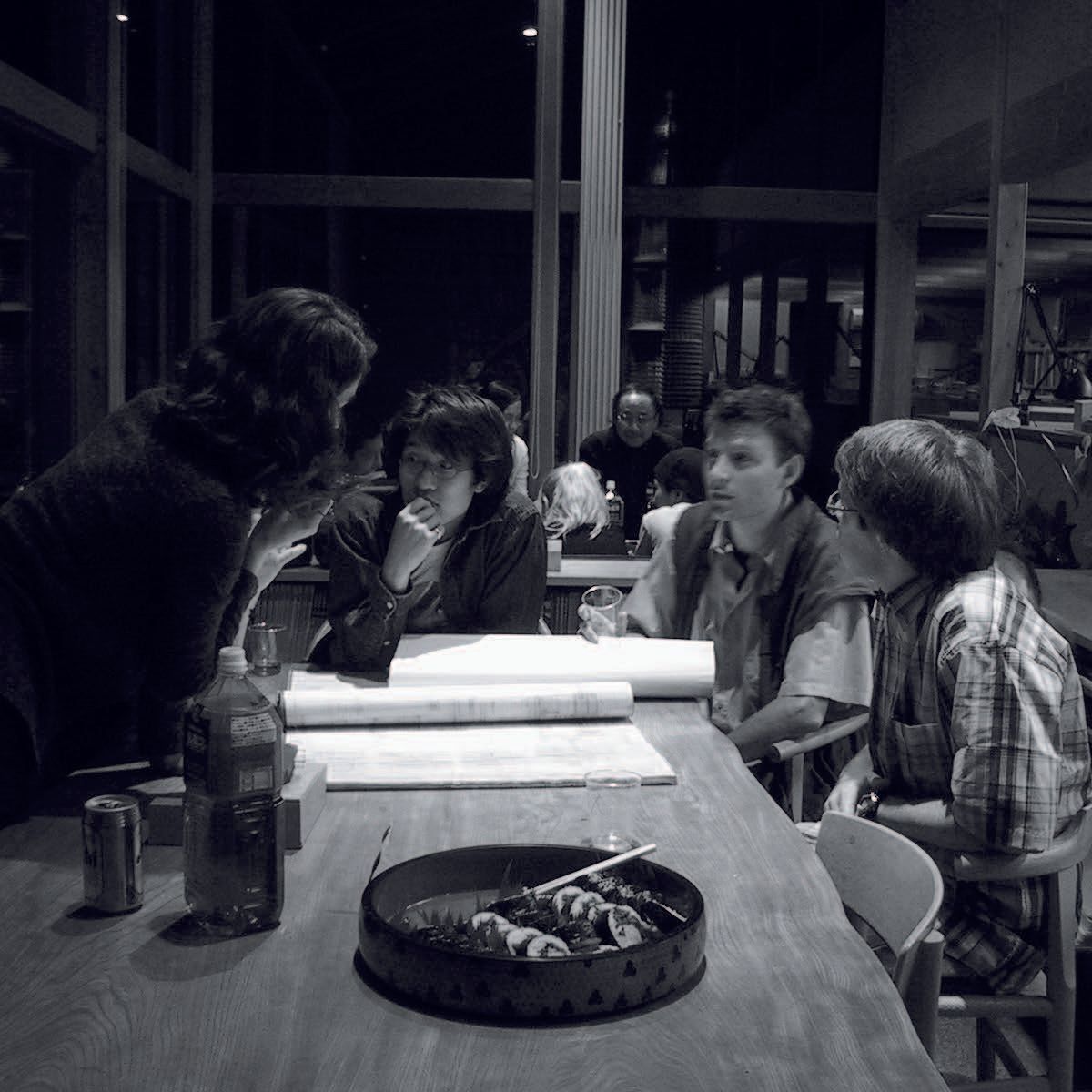
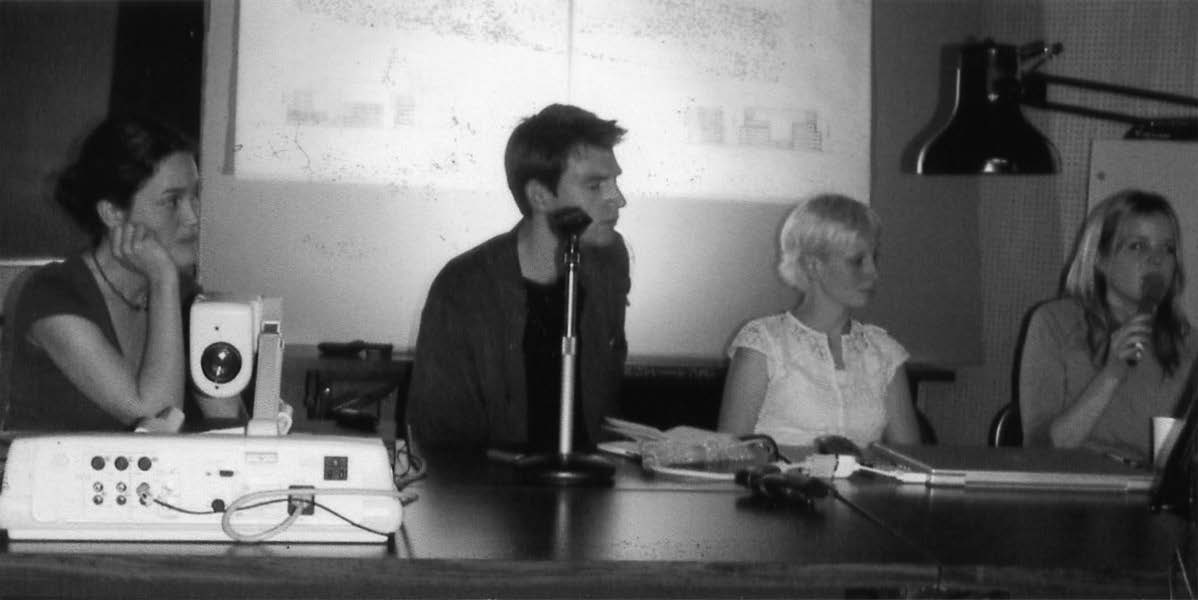
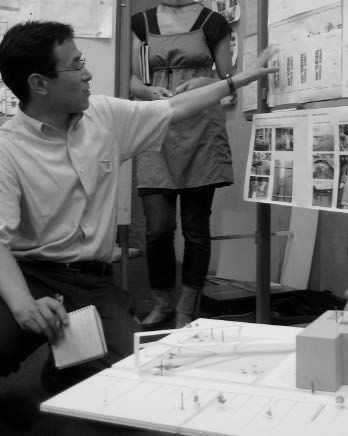
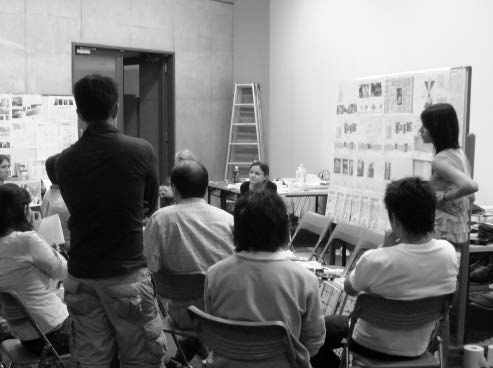
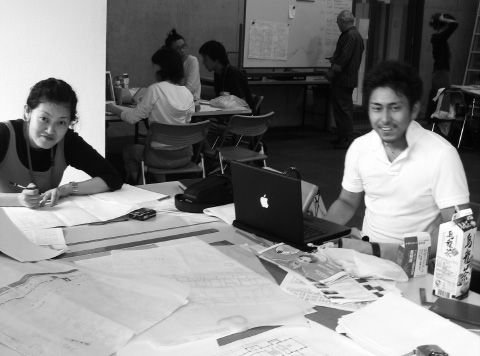
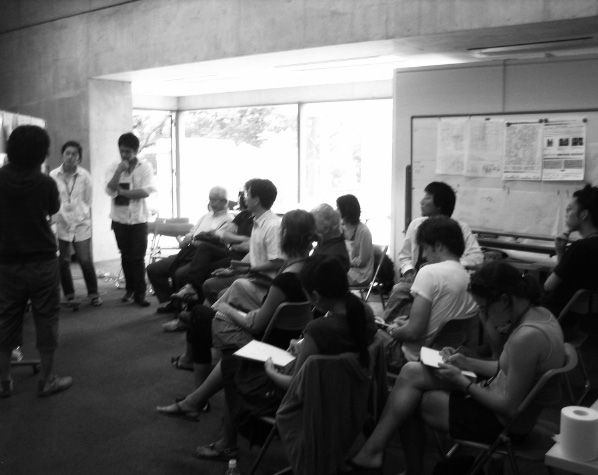
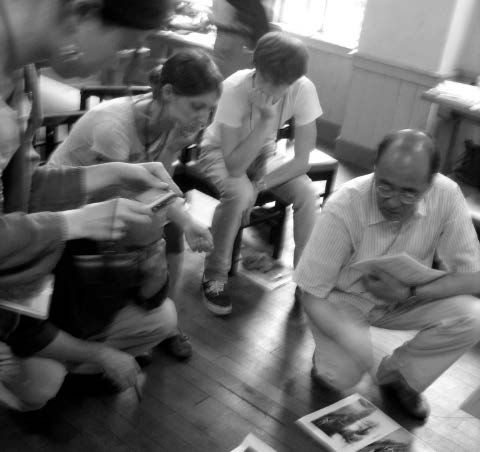
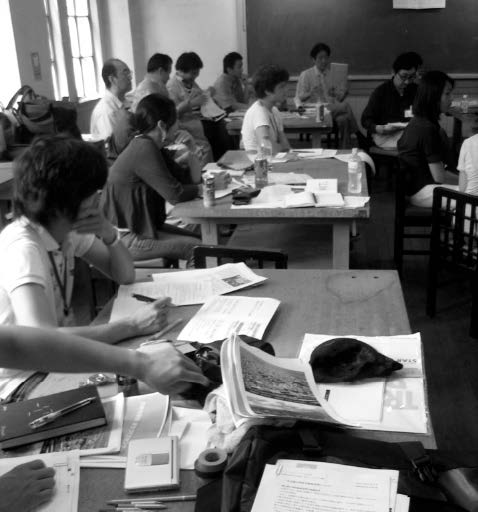
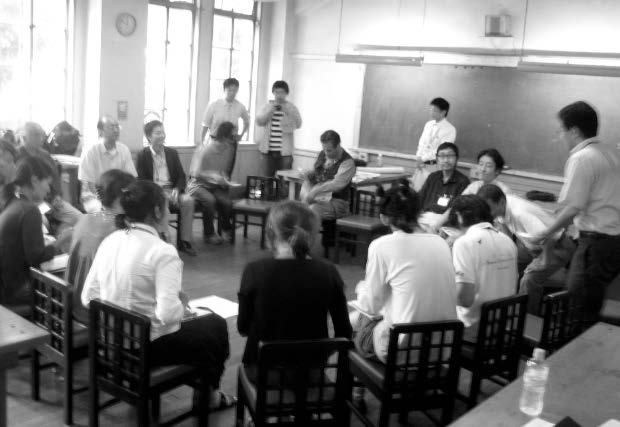
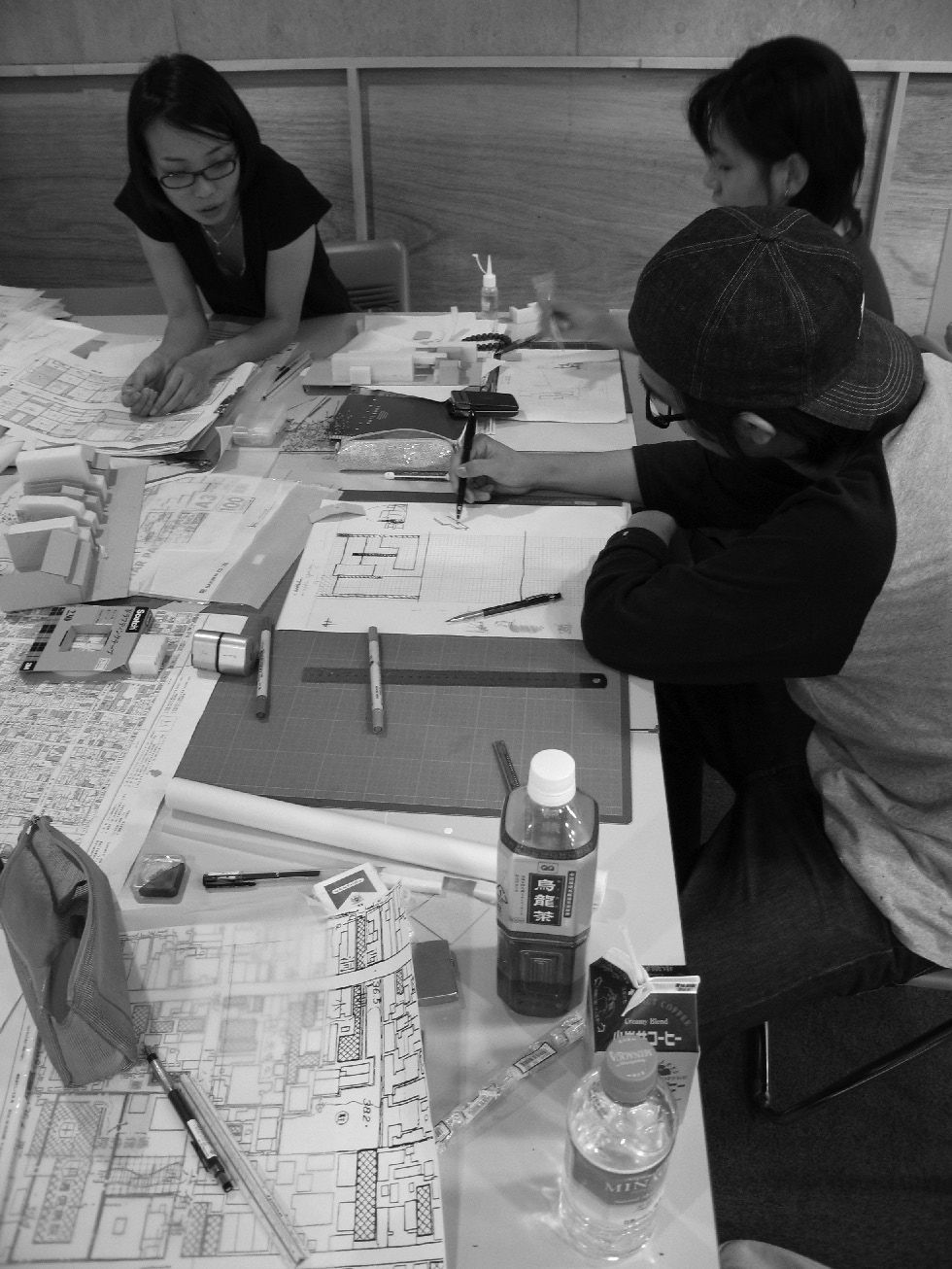
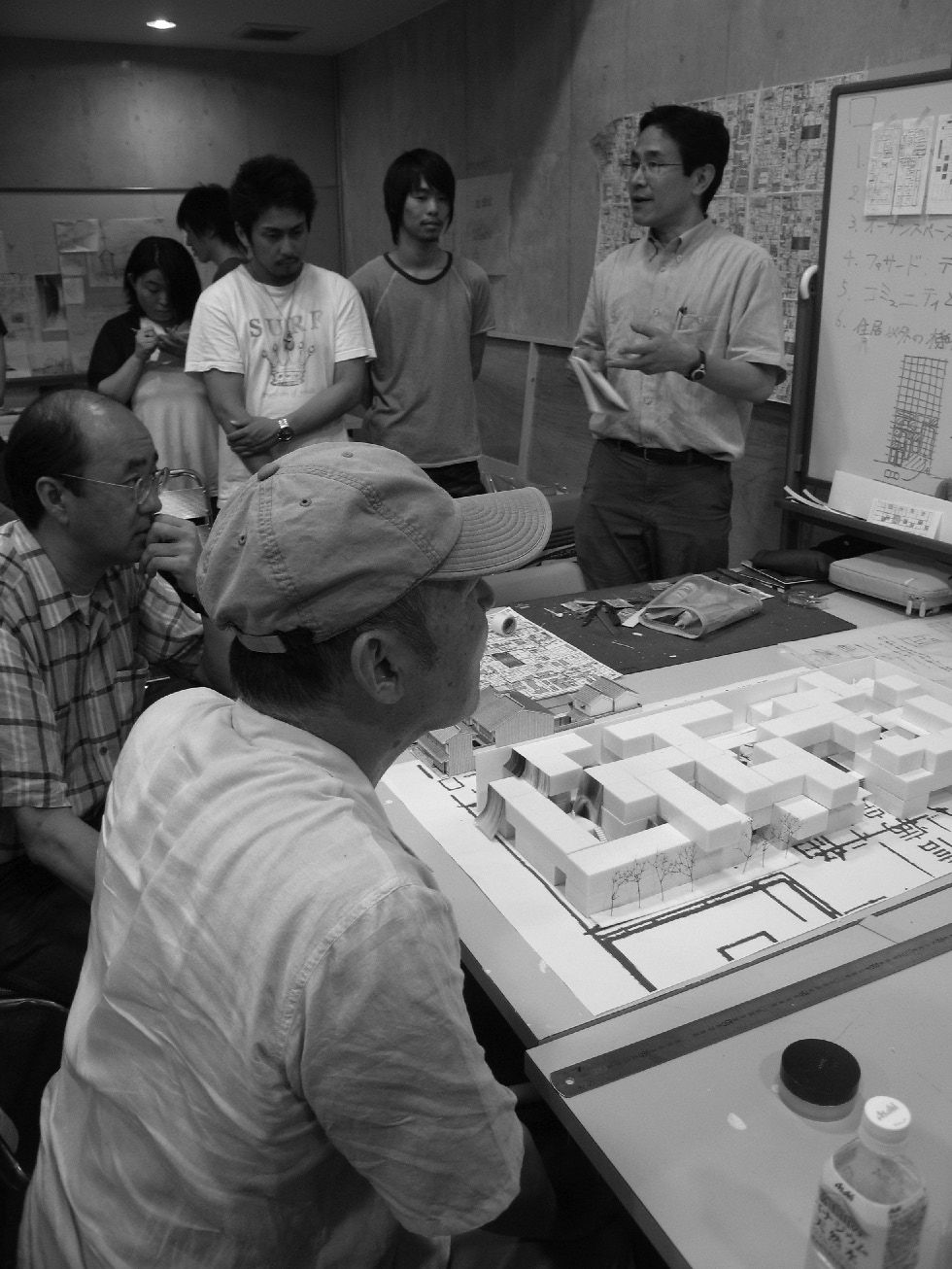
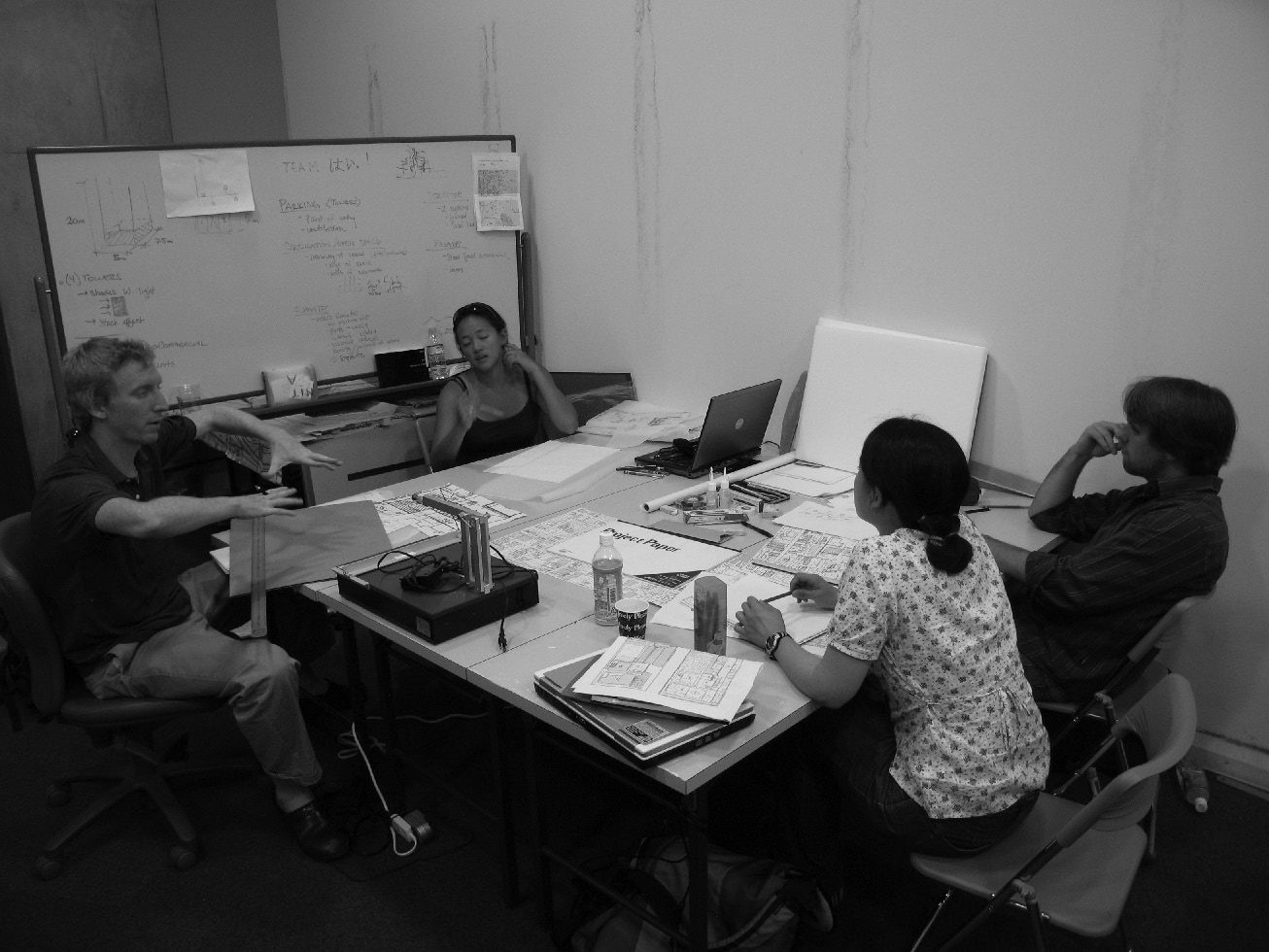
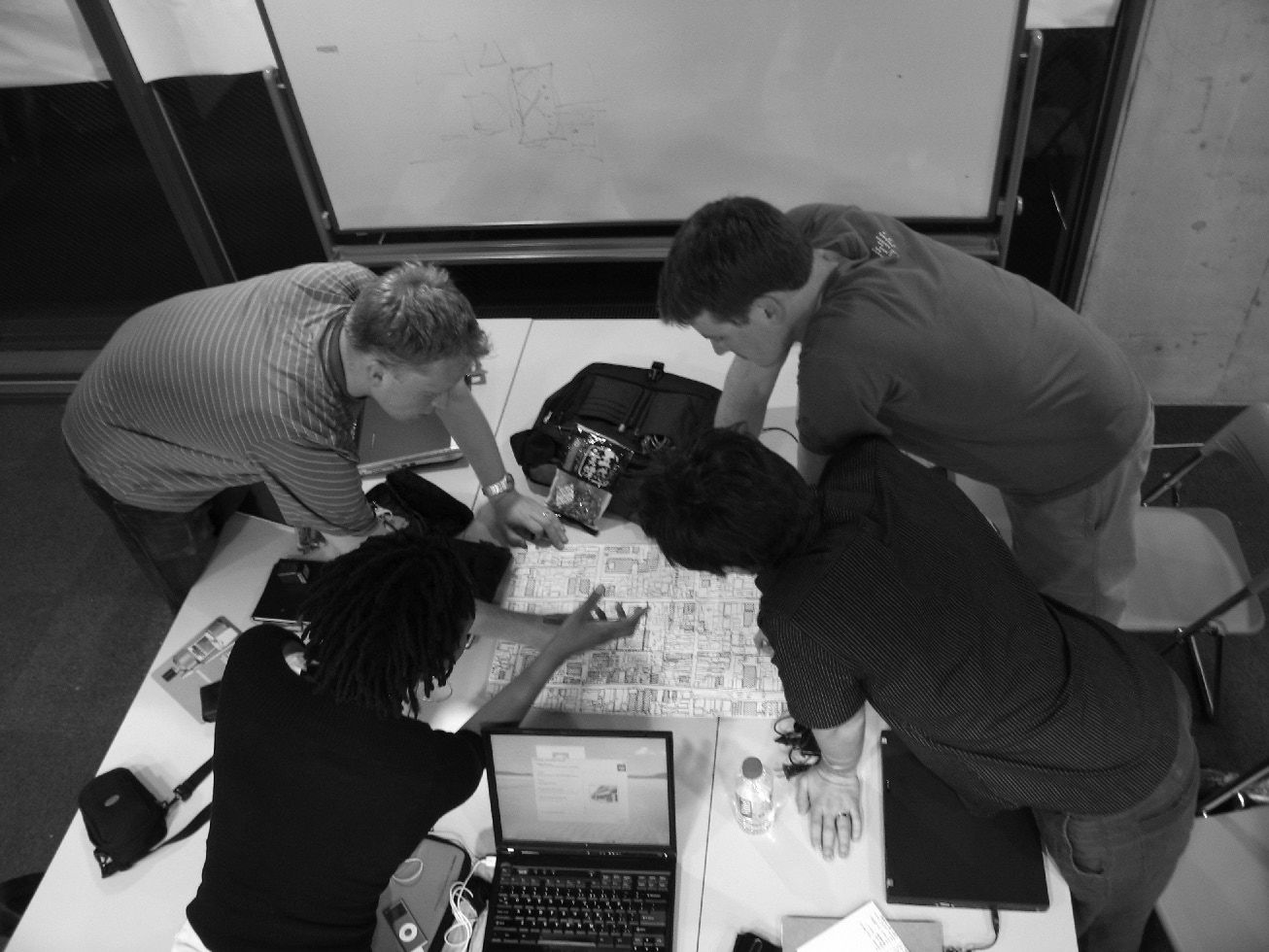
The Kyoto Charrette with Zokei students consisted of joint fieldwork, analysis, discussions with local citizens & professionals, and design propositions of a specific neighborhood in Kyoto’s historic Machiya neighborhood.
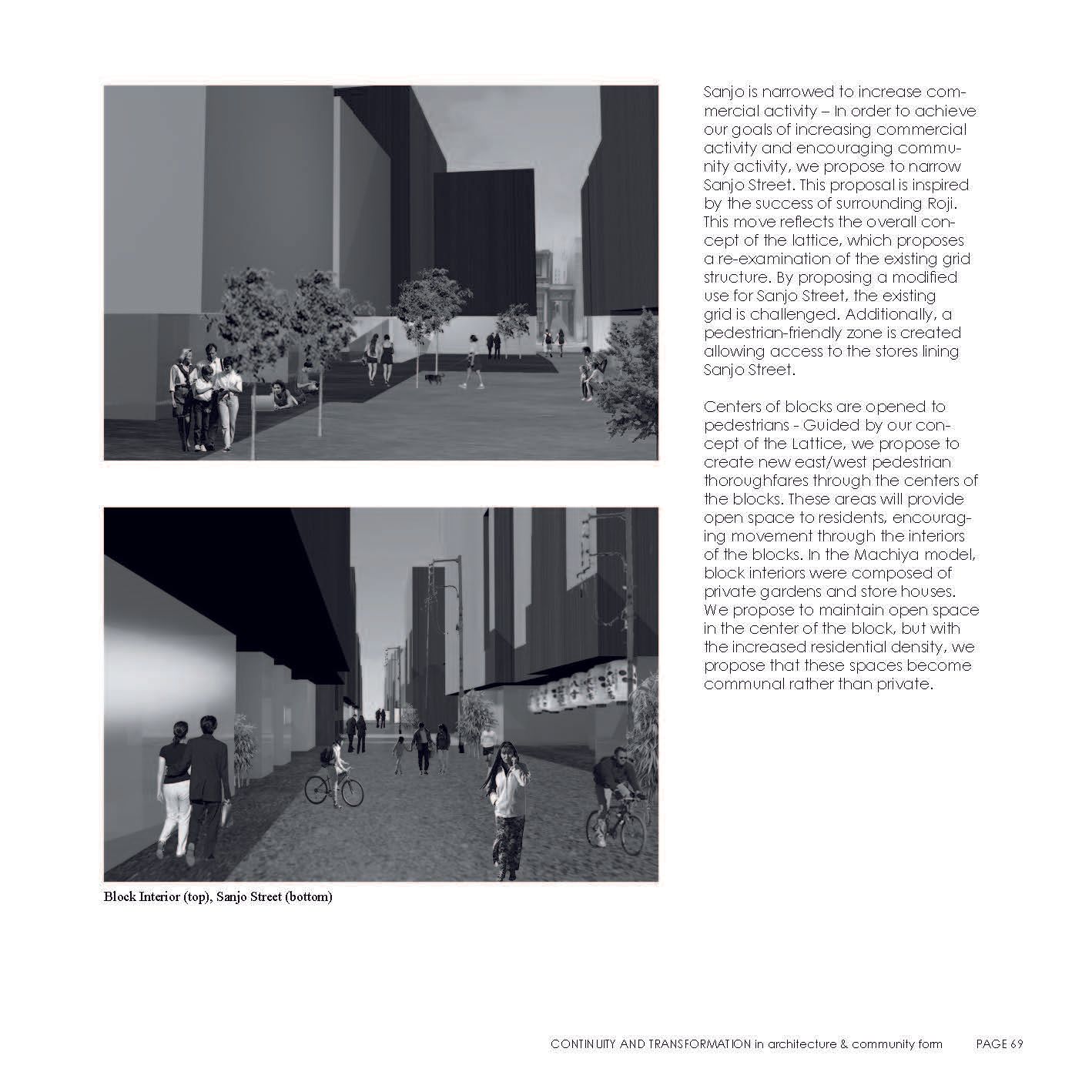
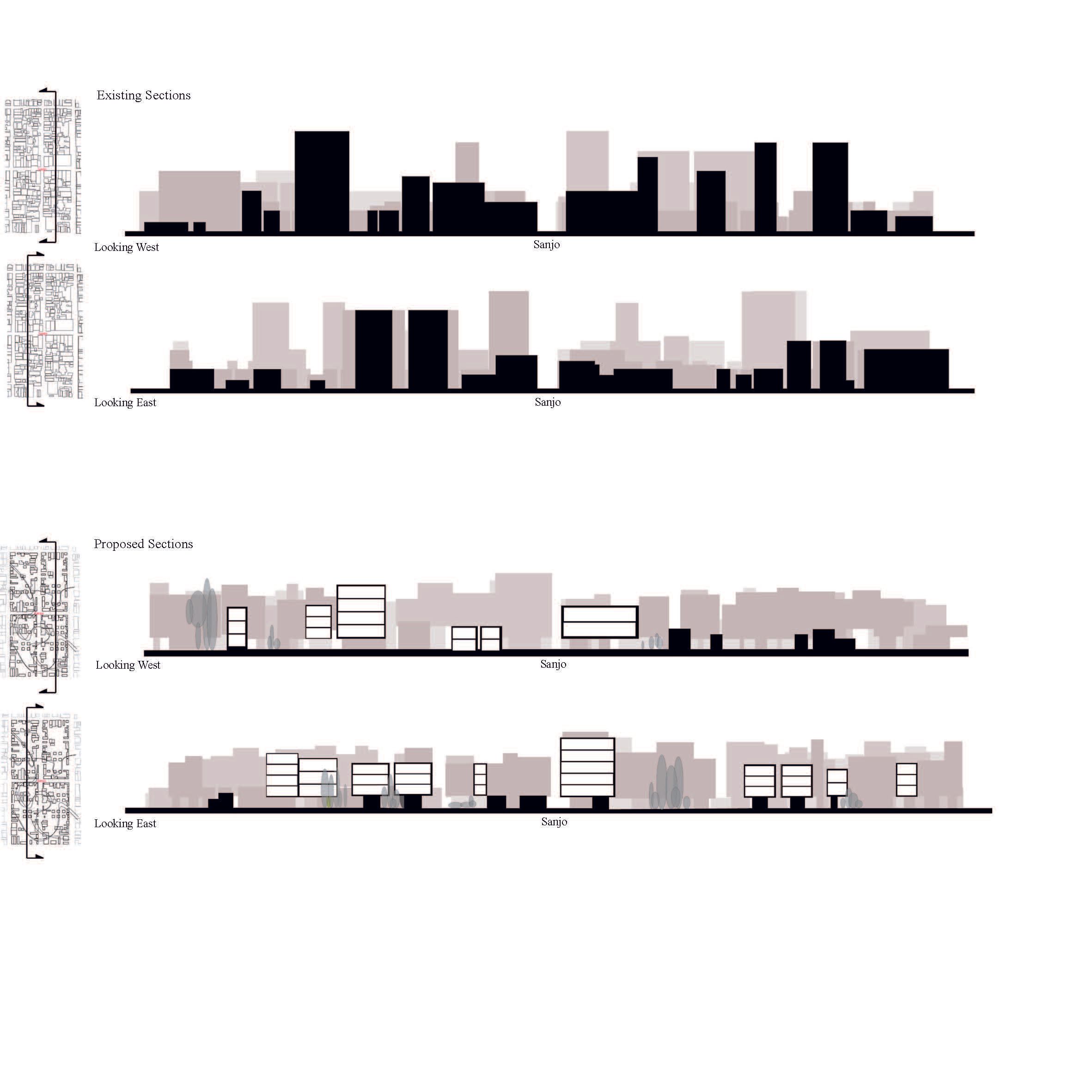
The MIT/Zokei proposals investigated the next life of these historic city blocks
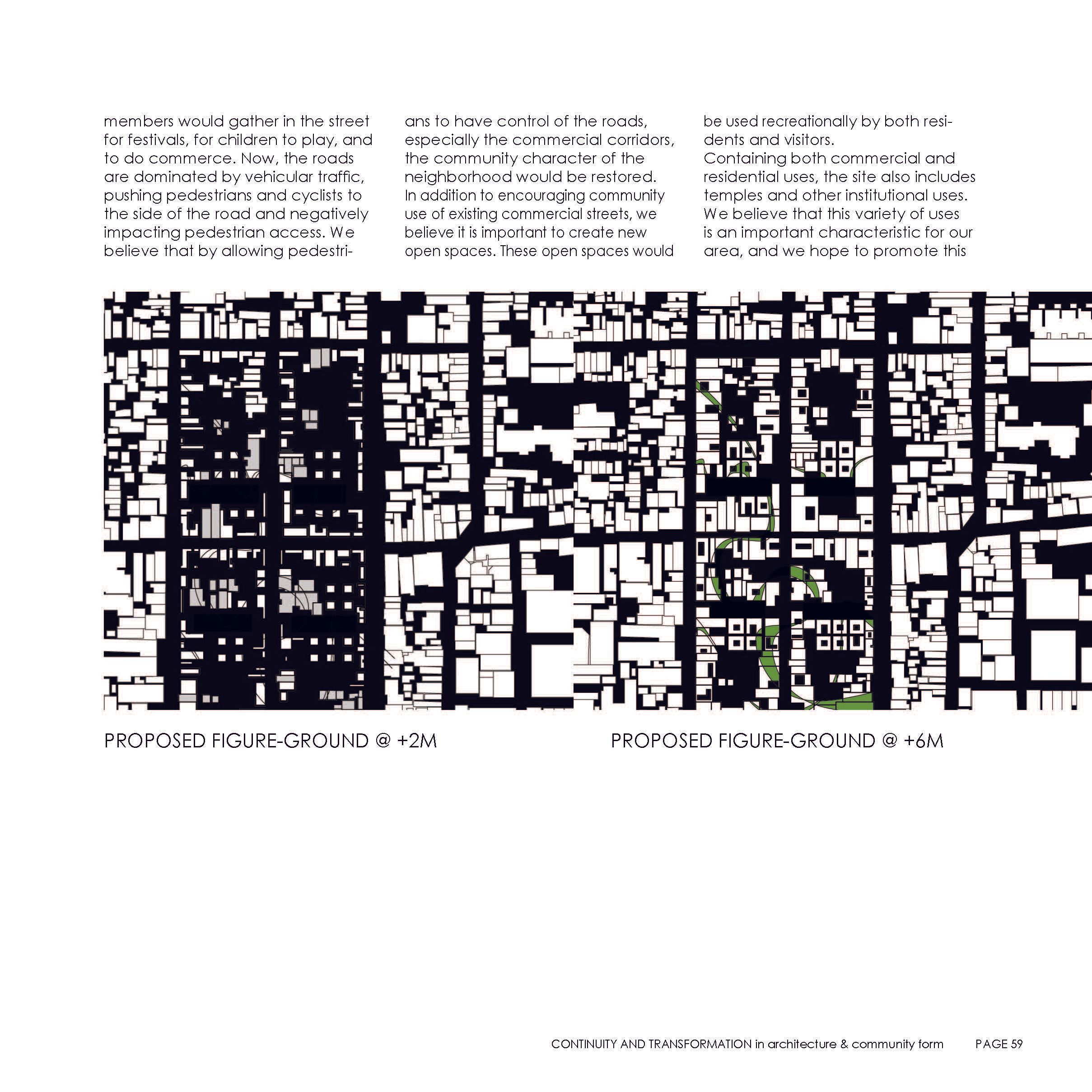
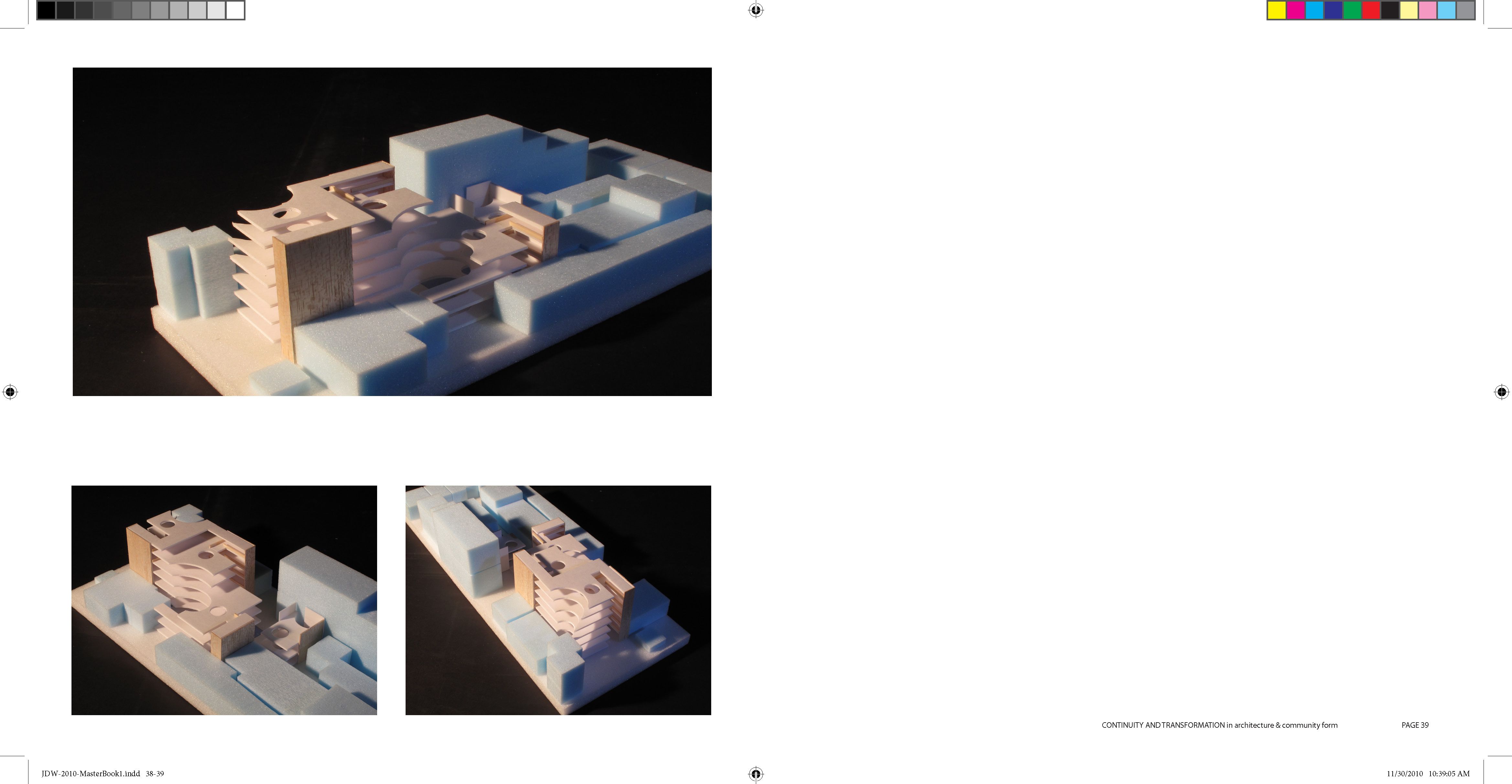
The MIT/Zokei proposals investigated the next life of these historic city blocks not purely based on architectural preservation but with transformative interventions allowing for adaptive strategies of design and planning toward sustainable resilient futures for Kyoto. The proposals were presented to the neighborhood residents, city officials, professionals, and Zokei faculty. The charrette took place on-site and in the design studios at Zokei.
PROJECT KYOTO
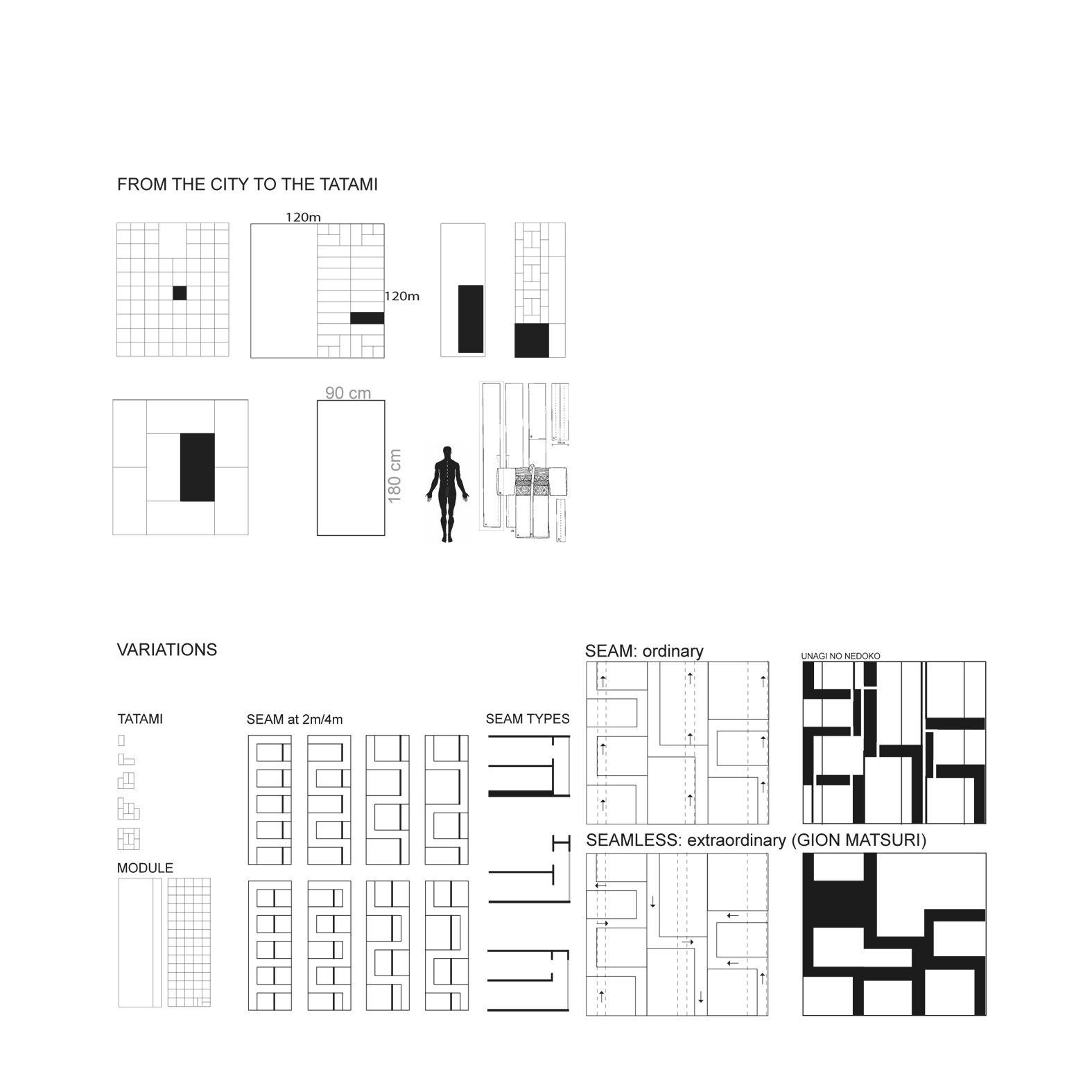
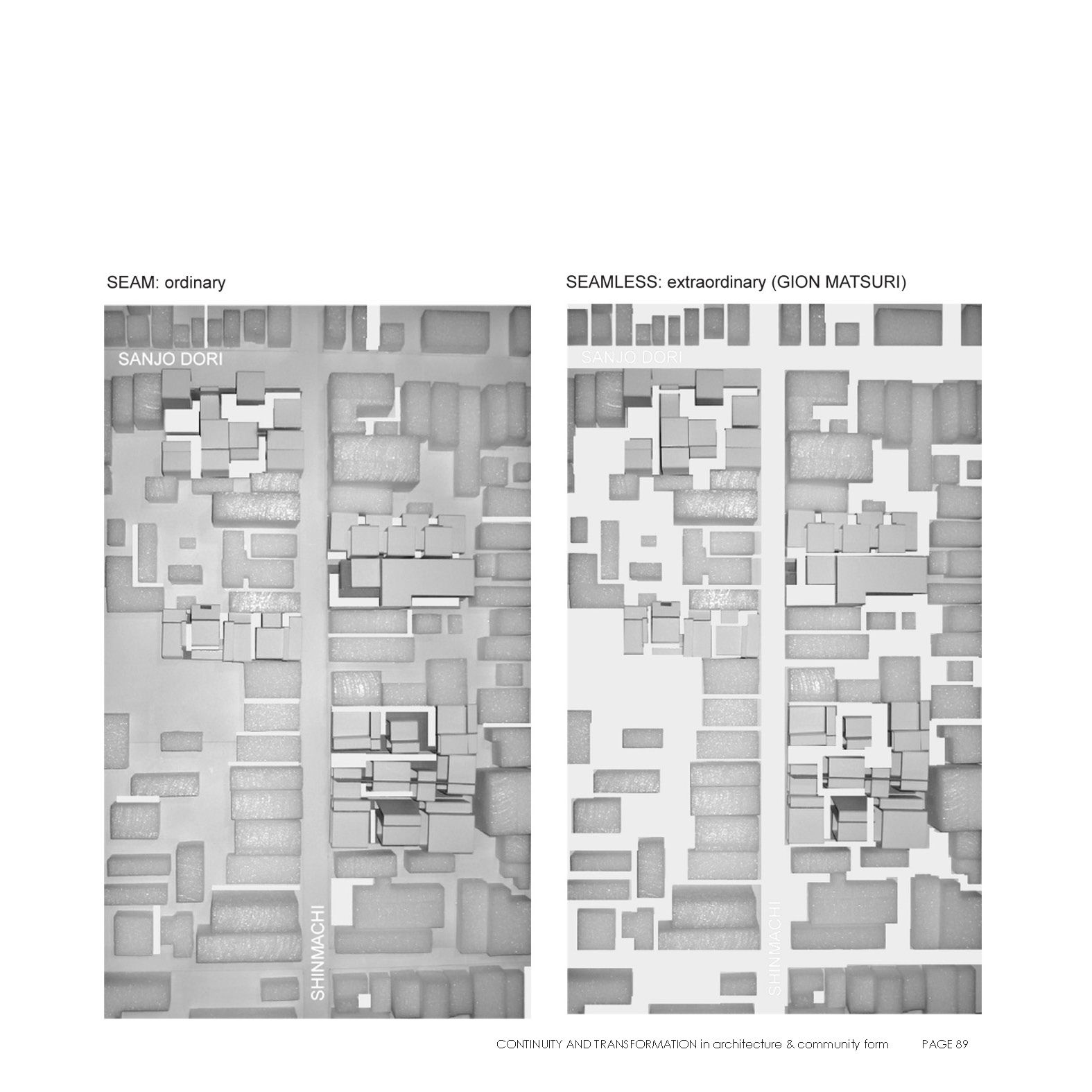
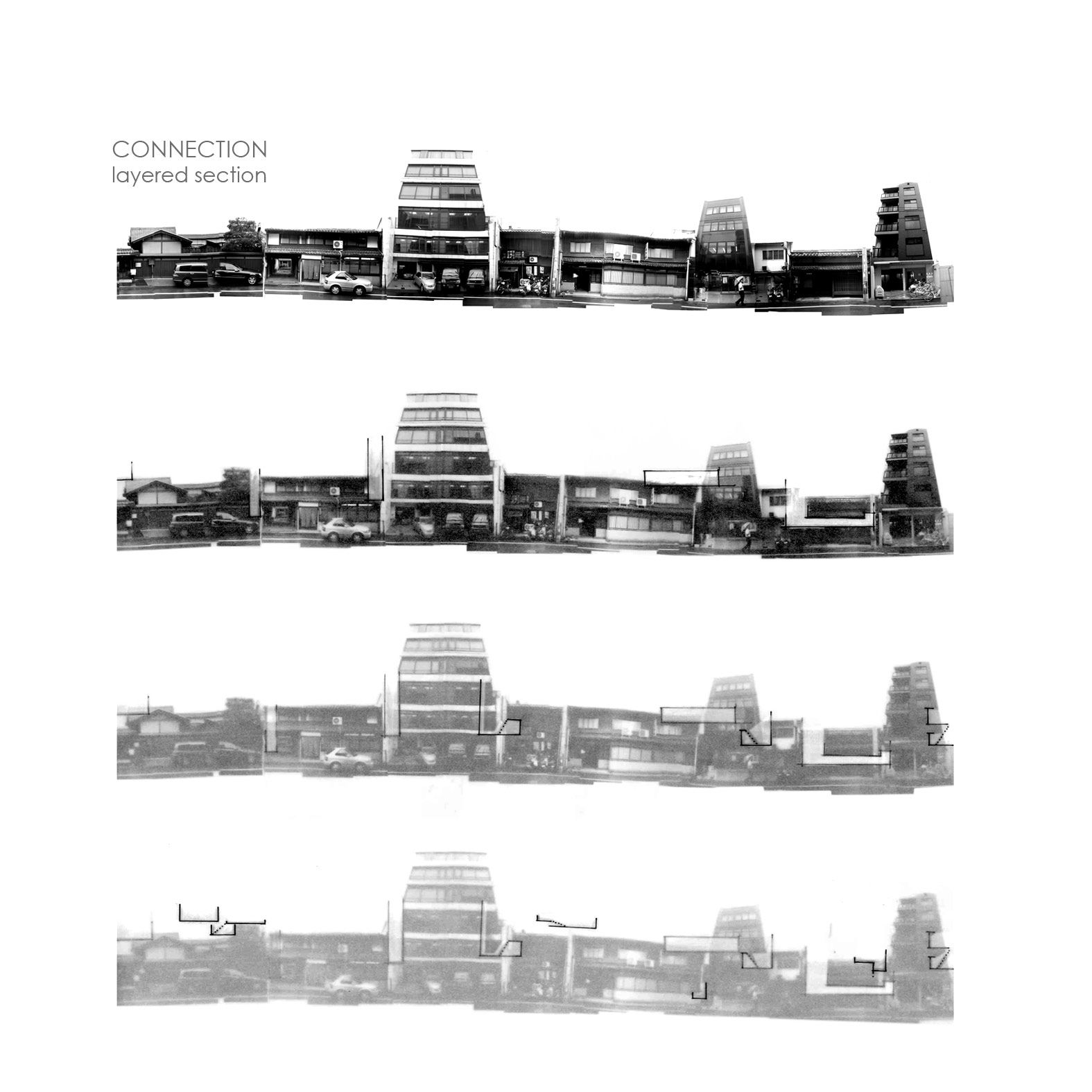
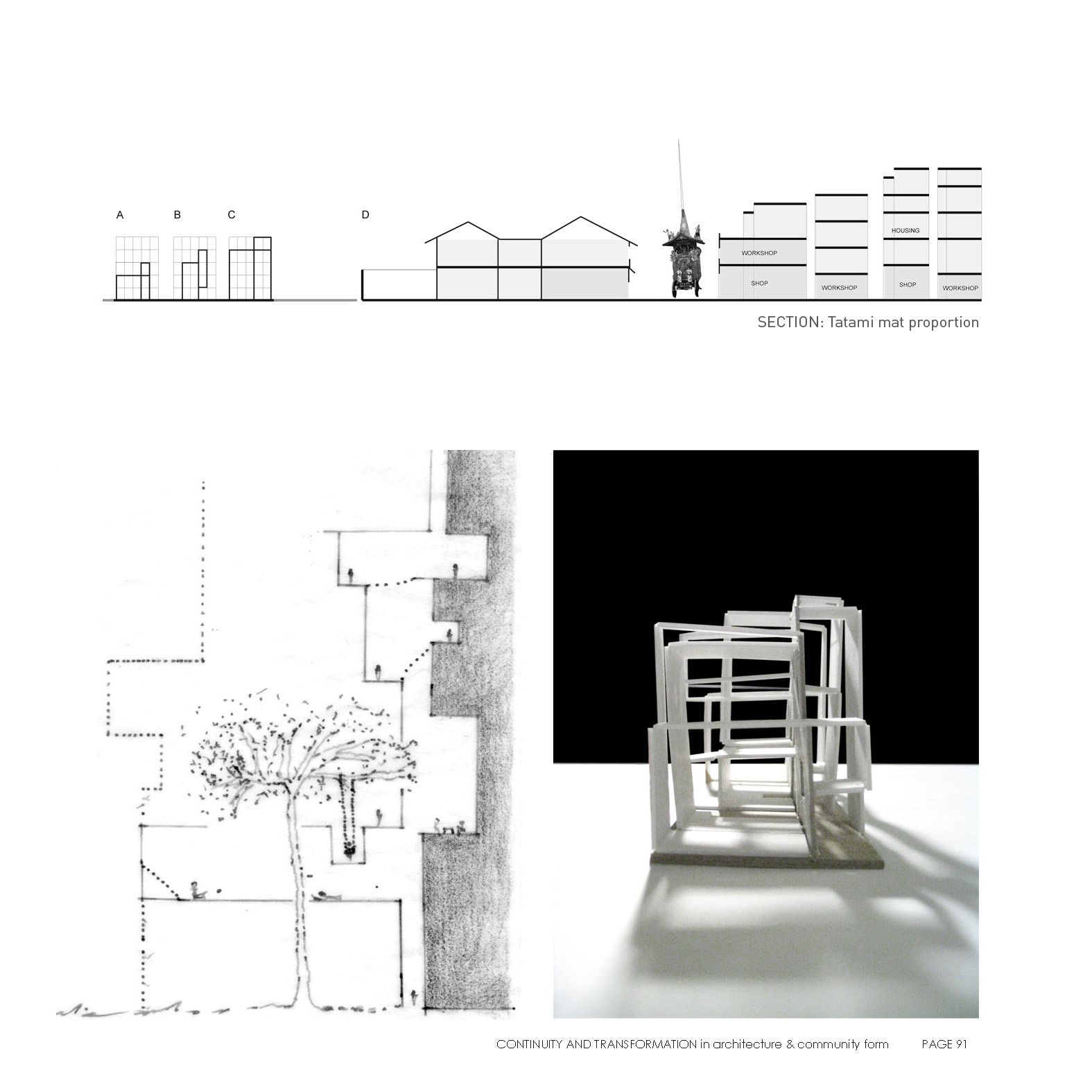
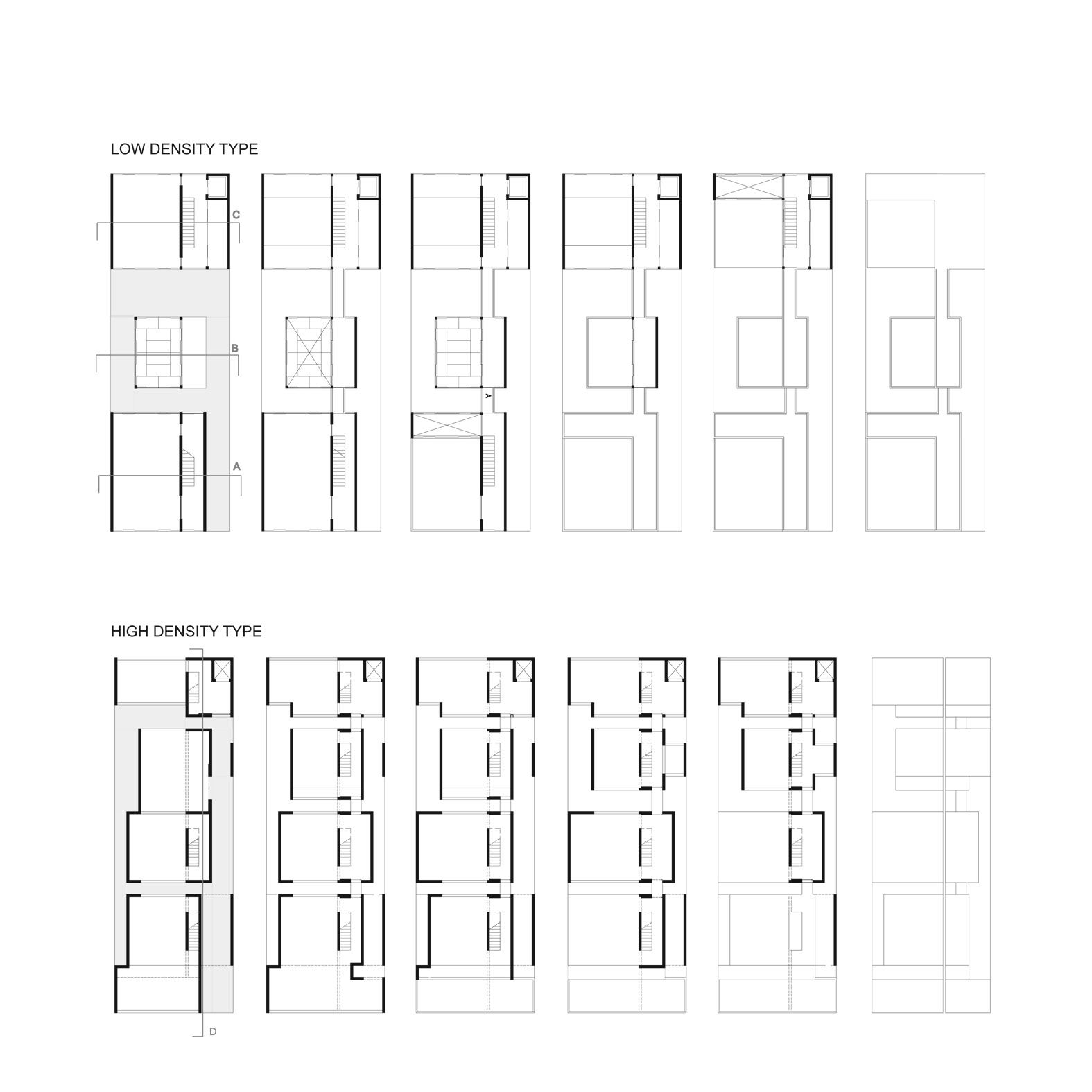
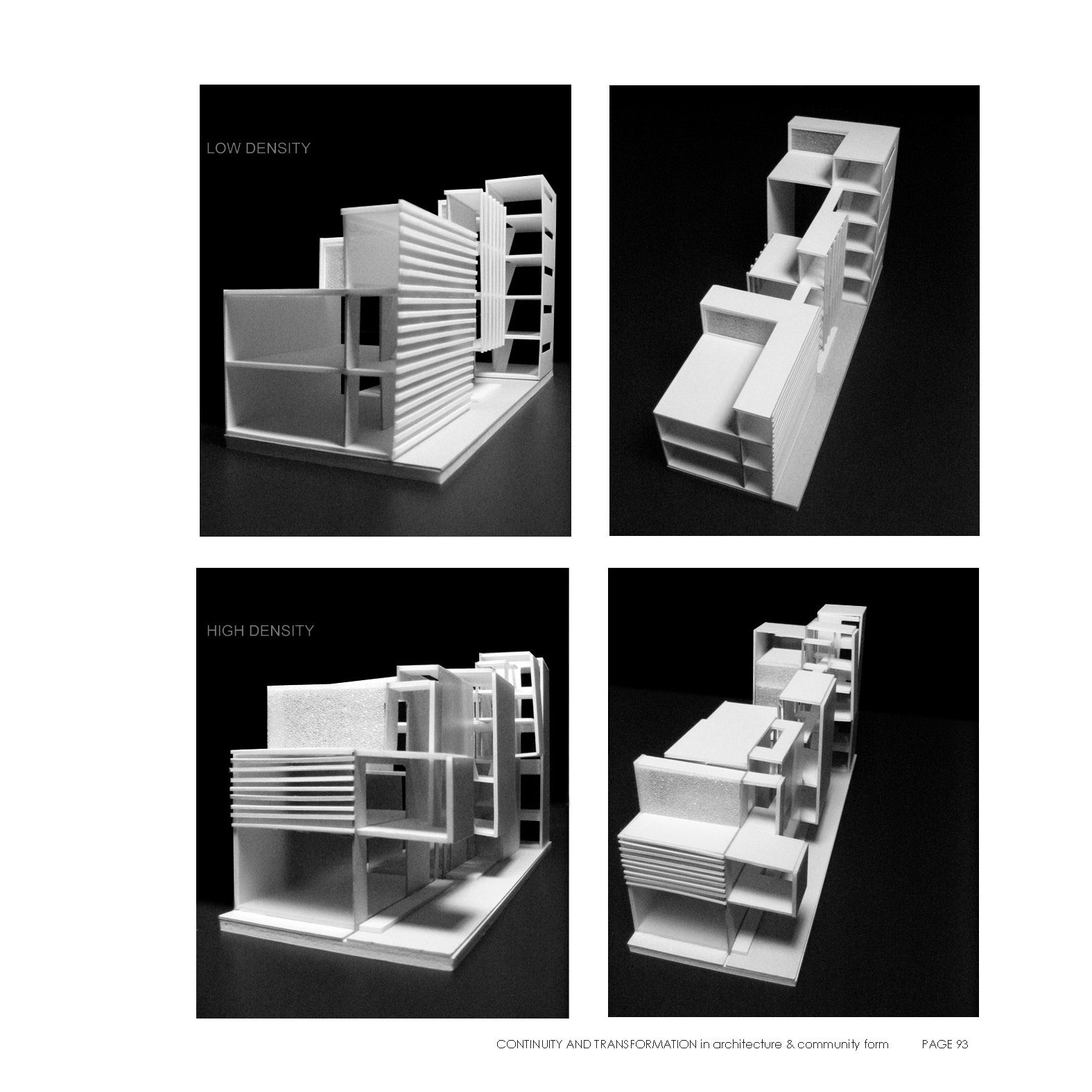
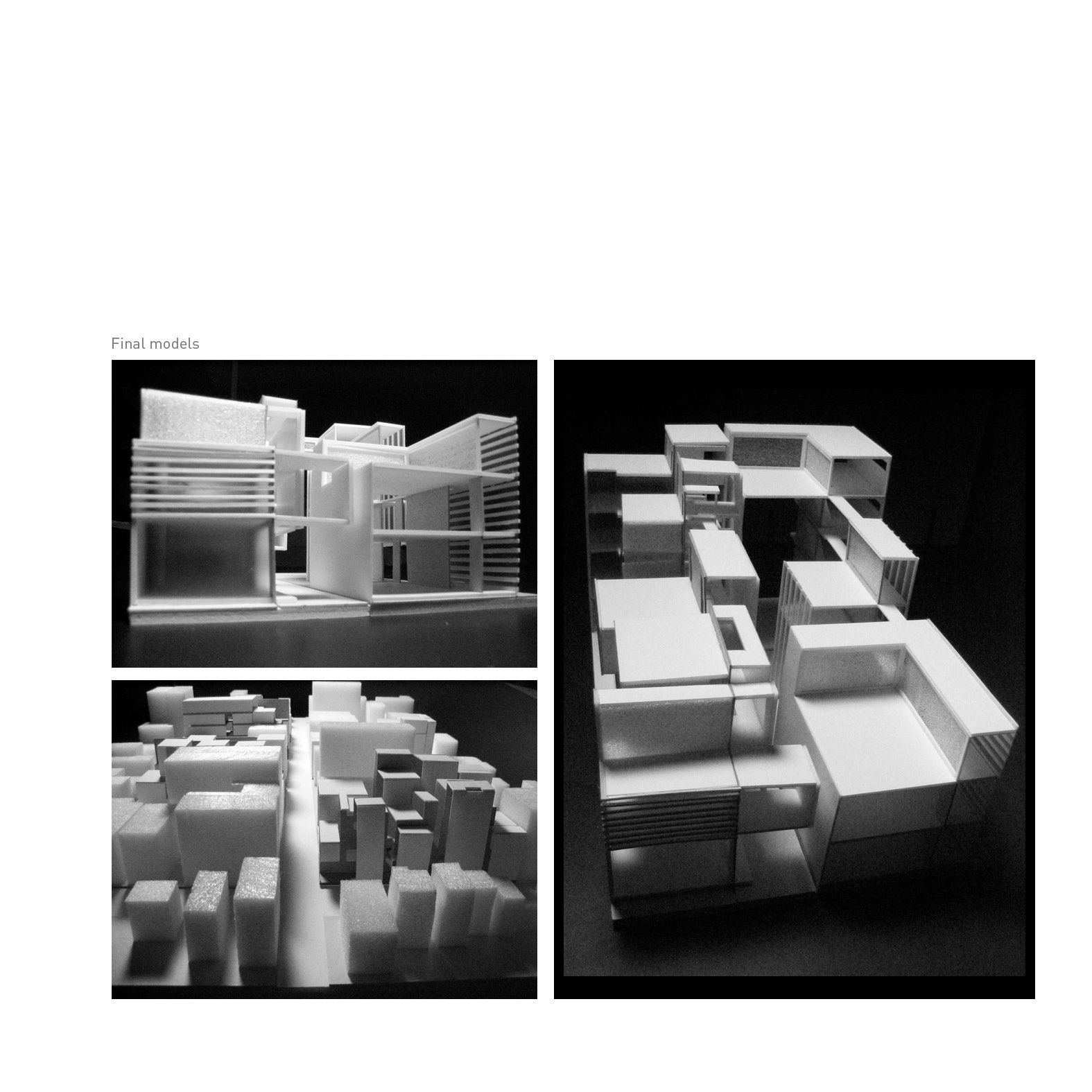
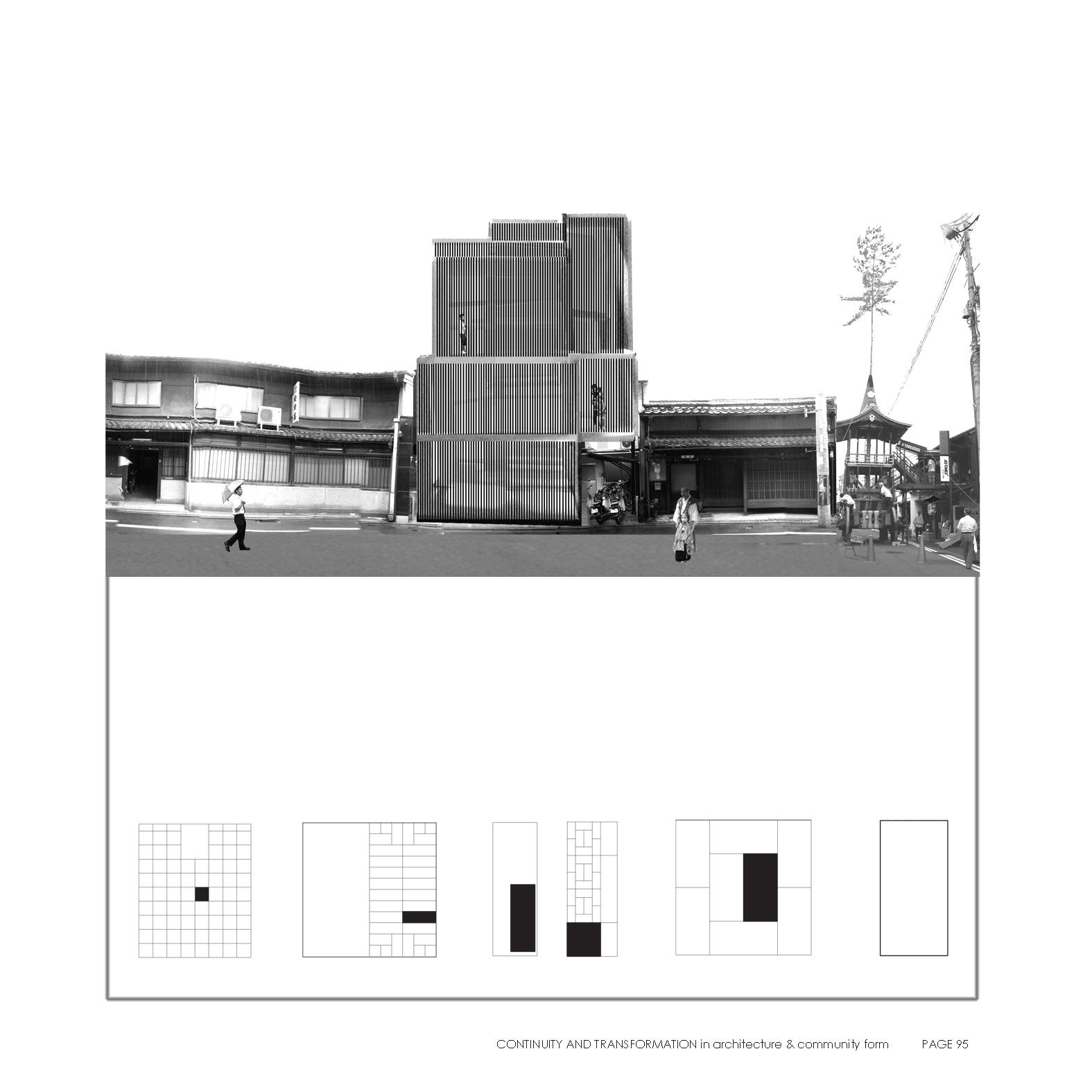
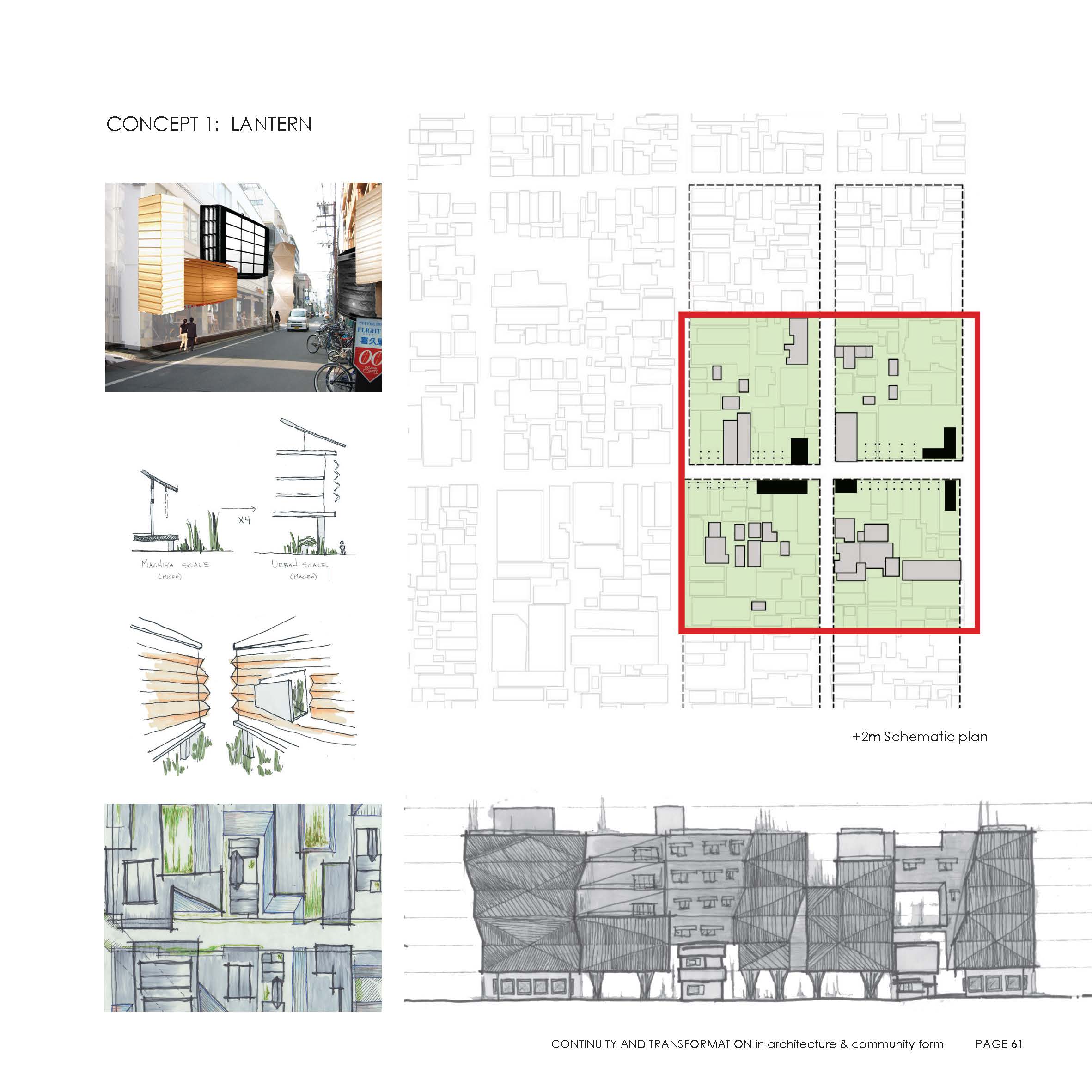
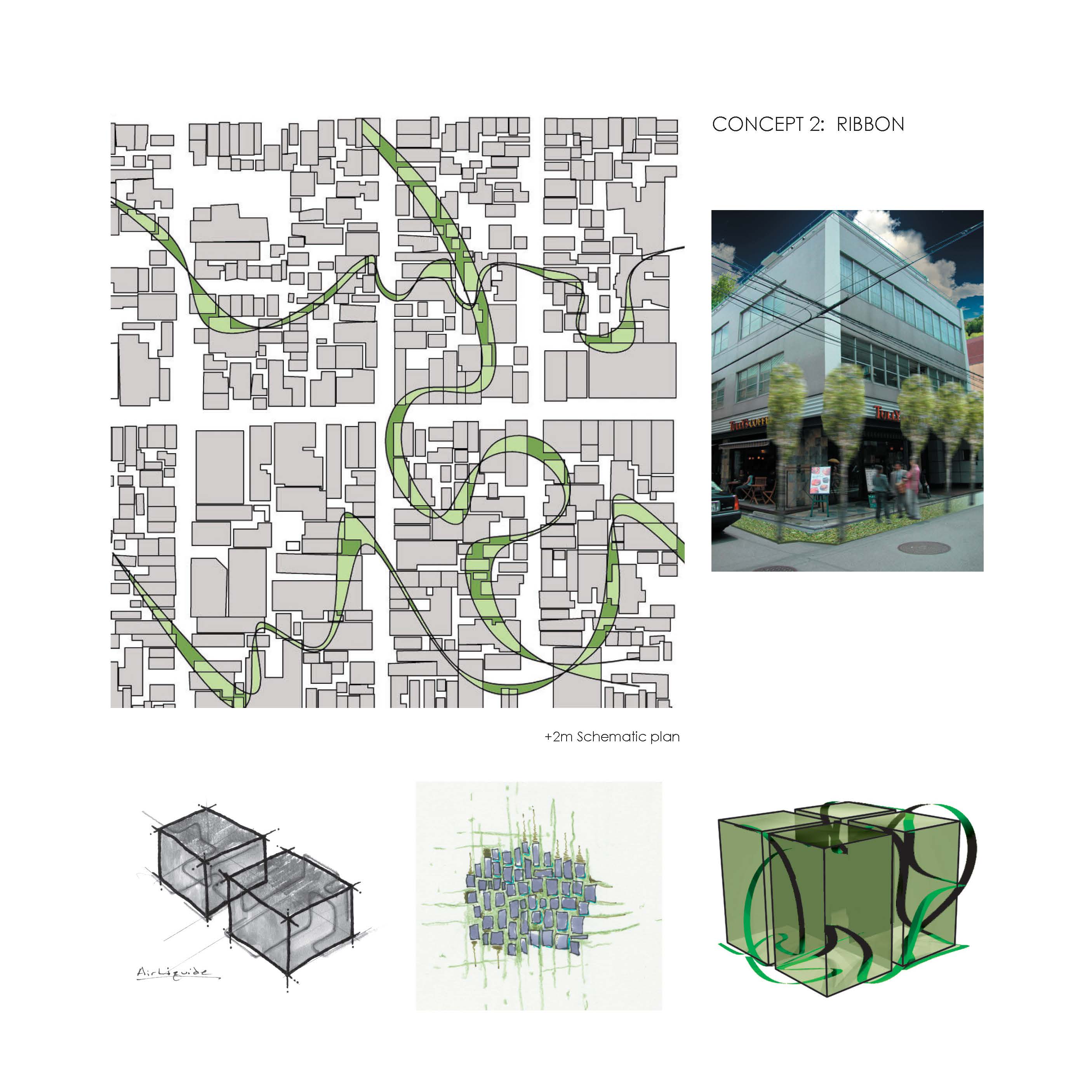
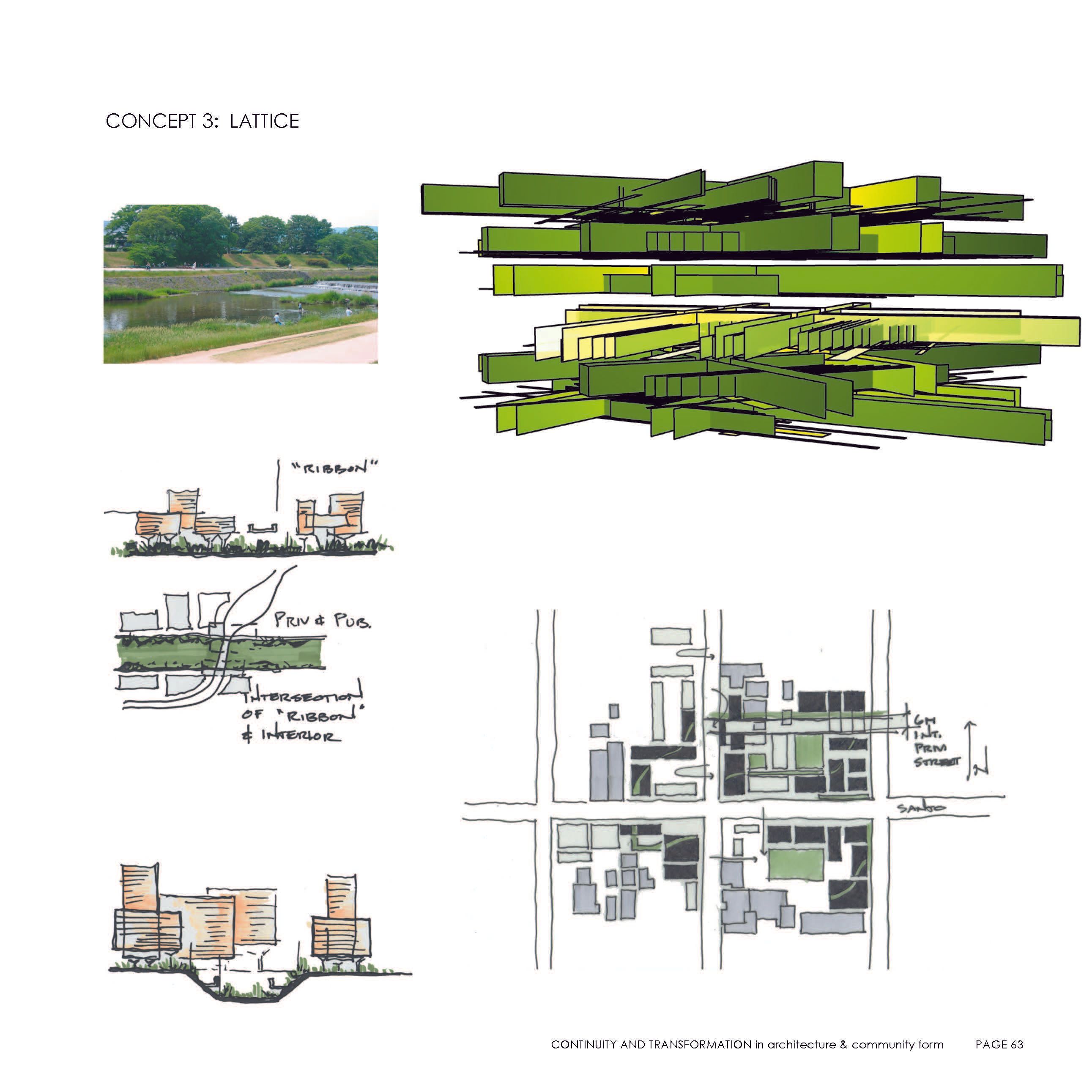
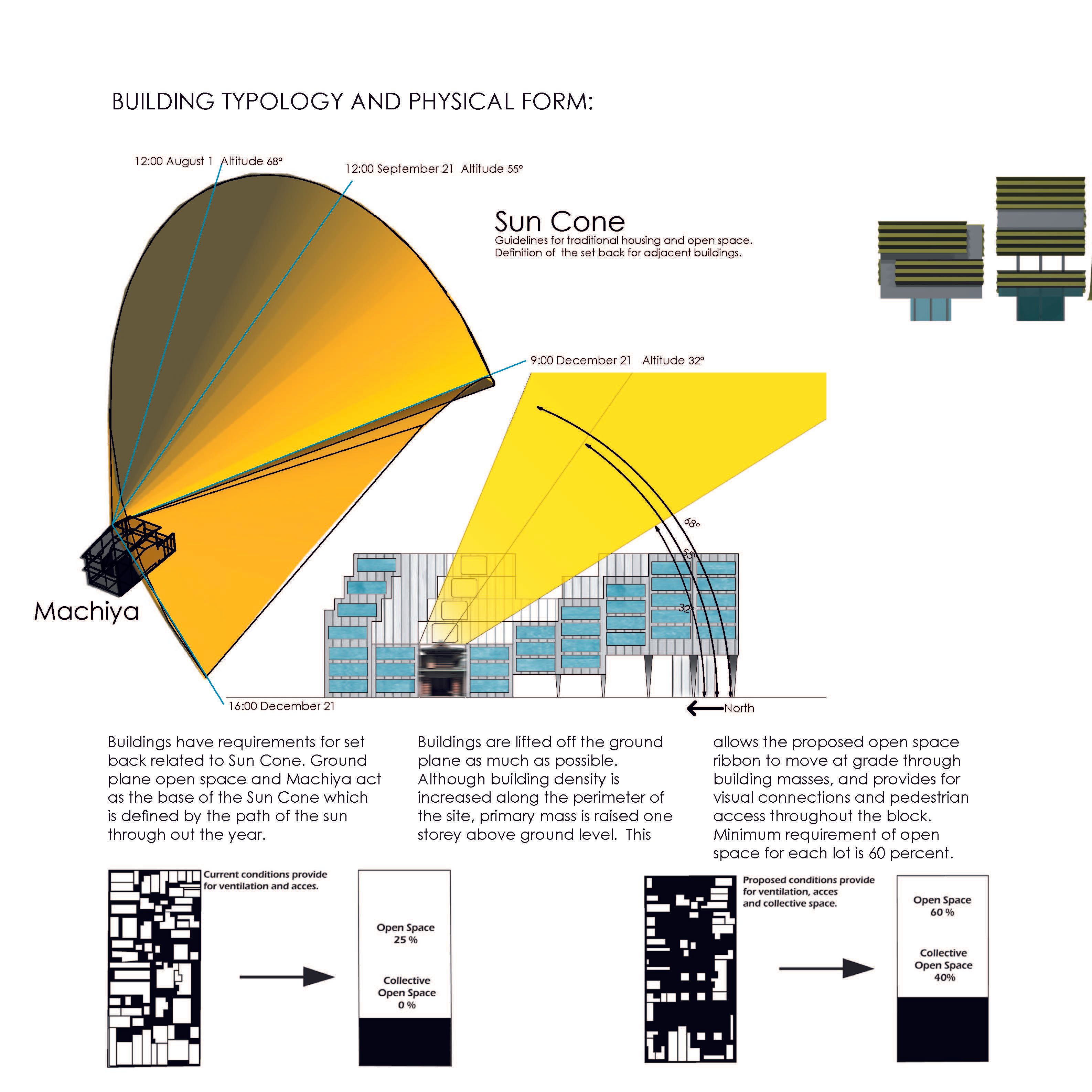
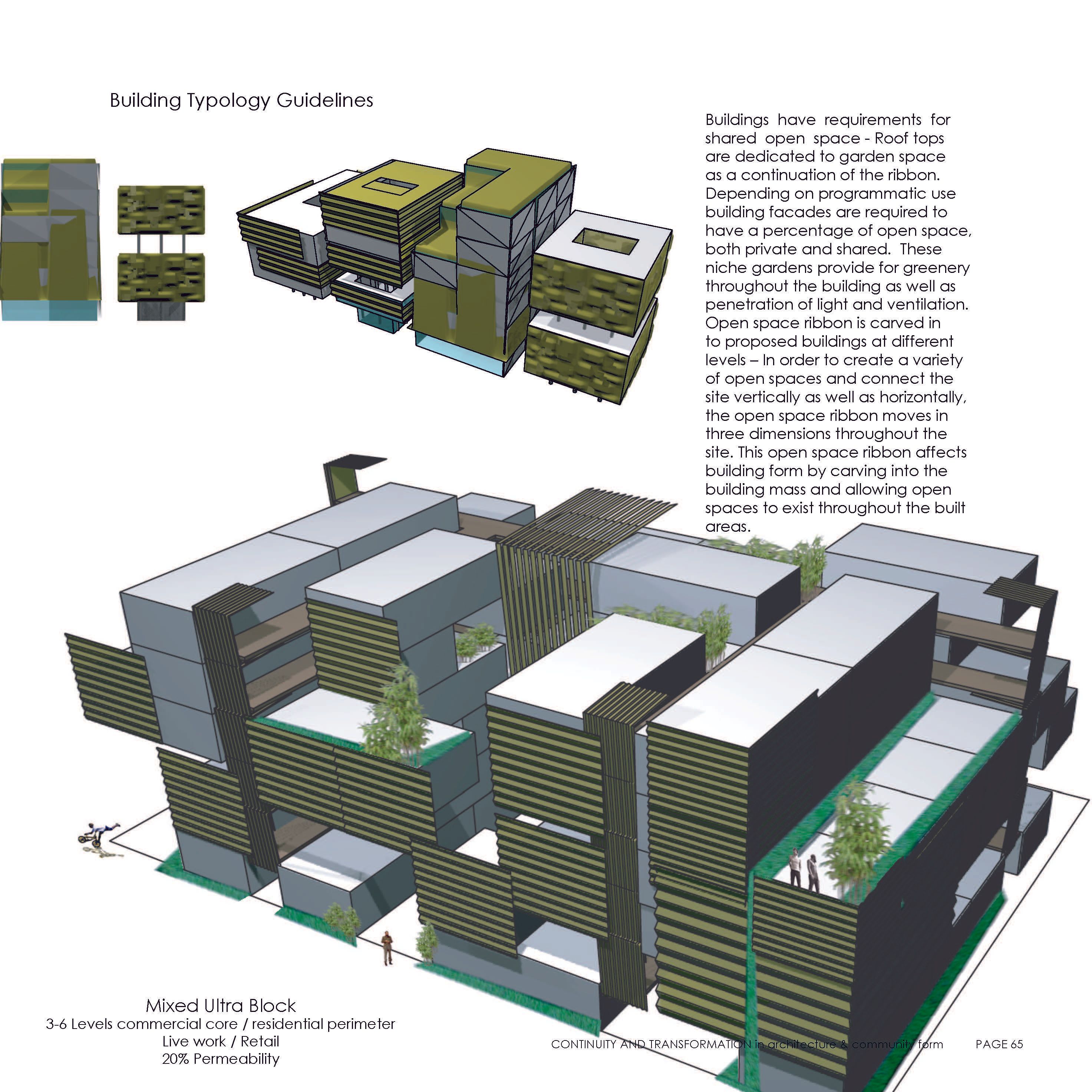
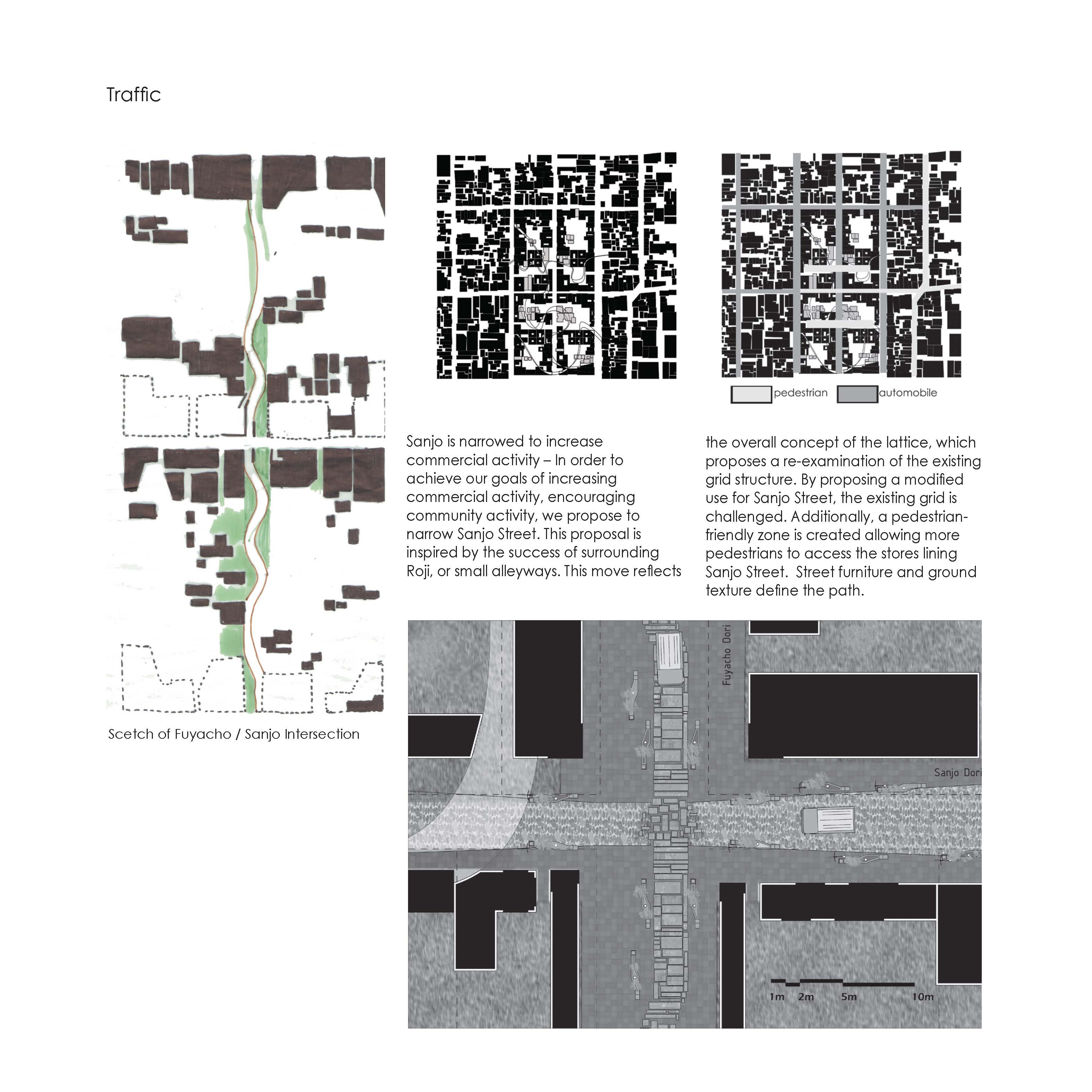
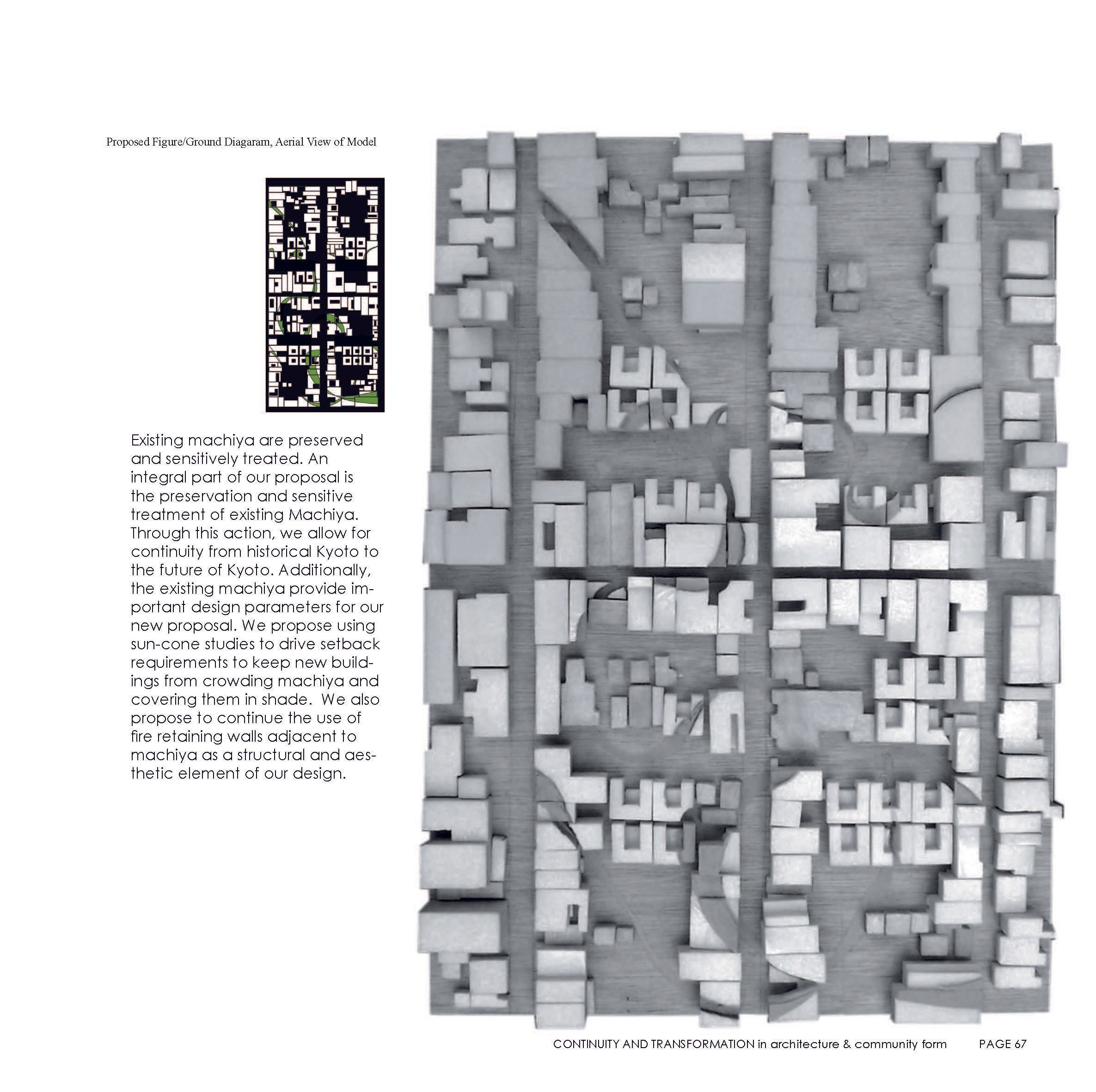
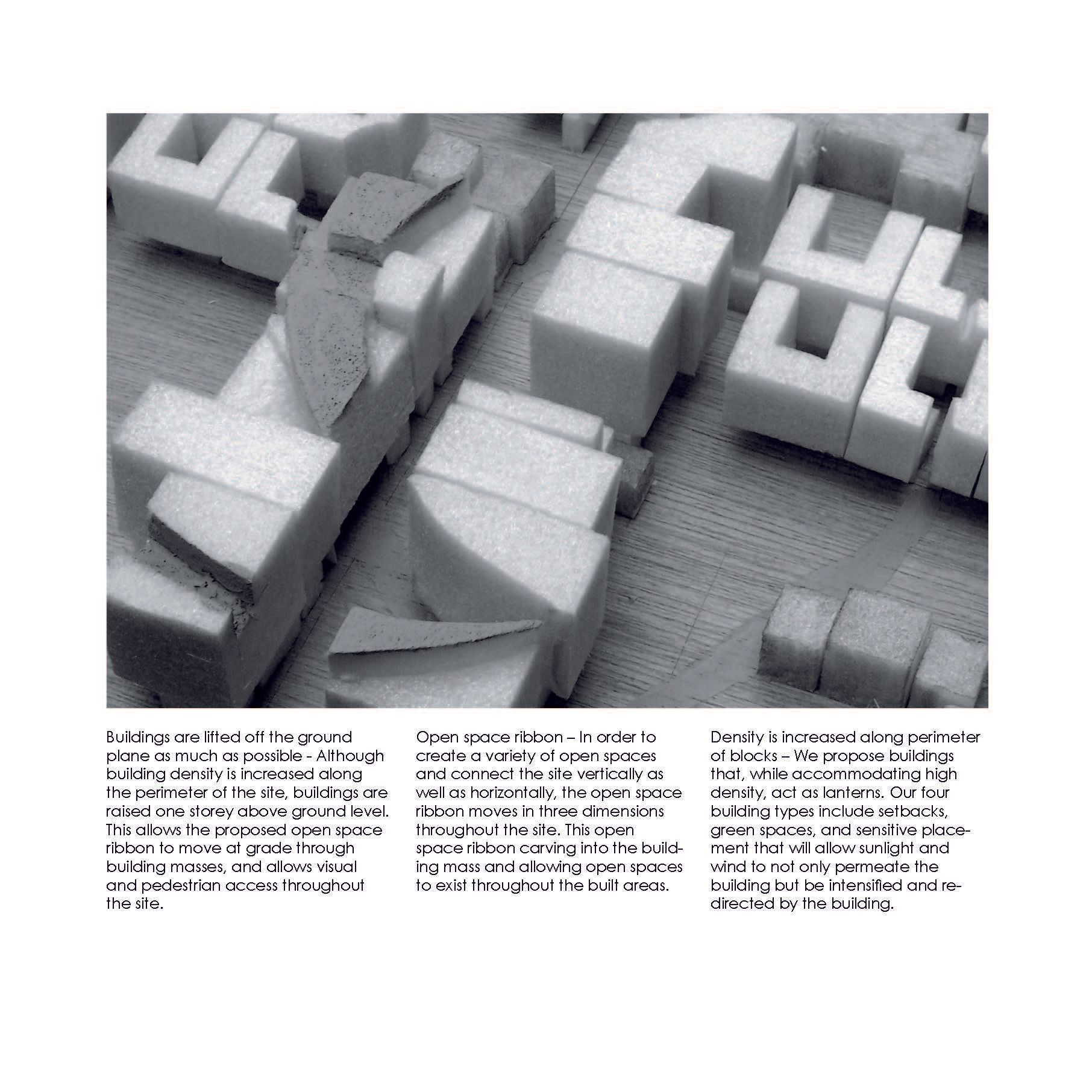
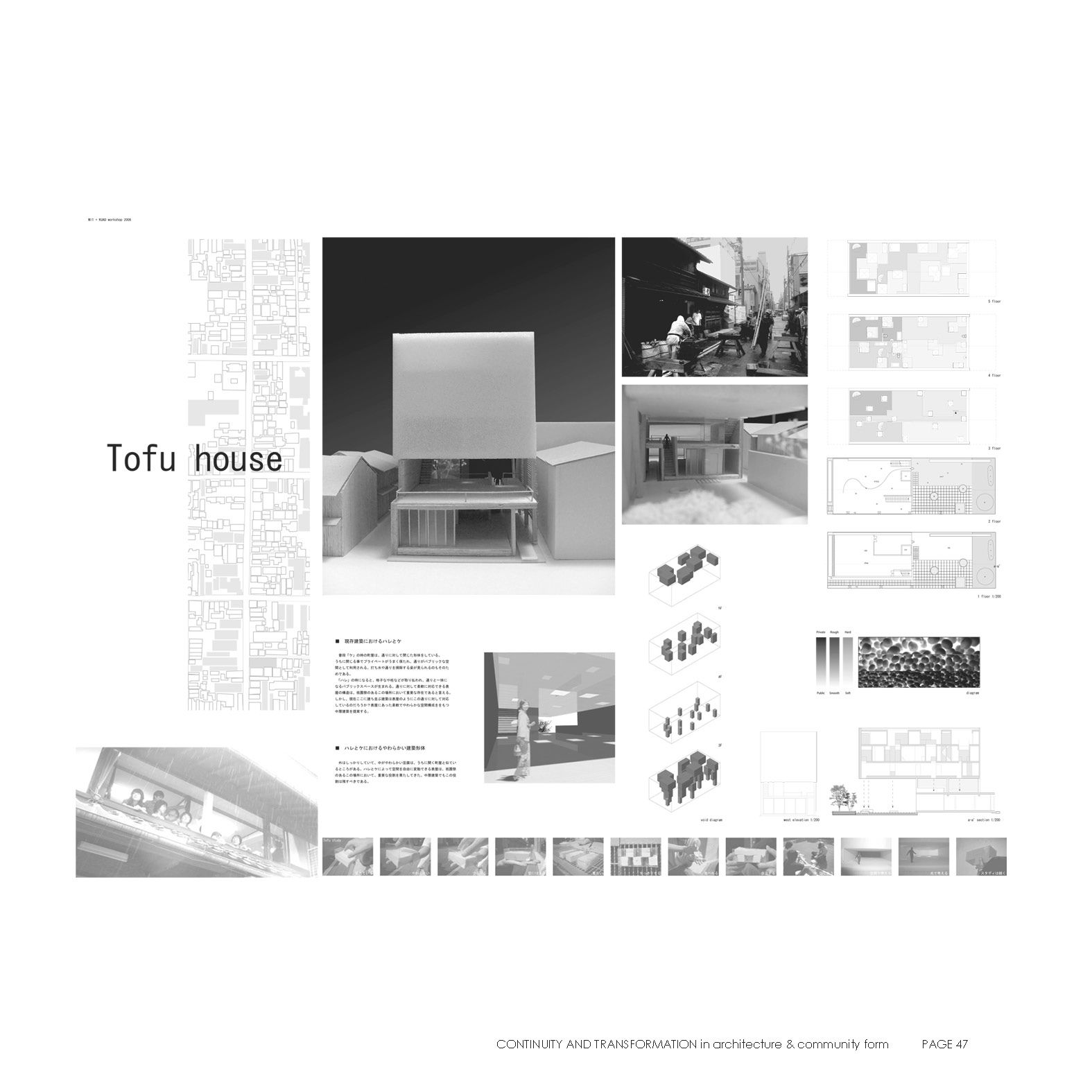
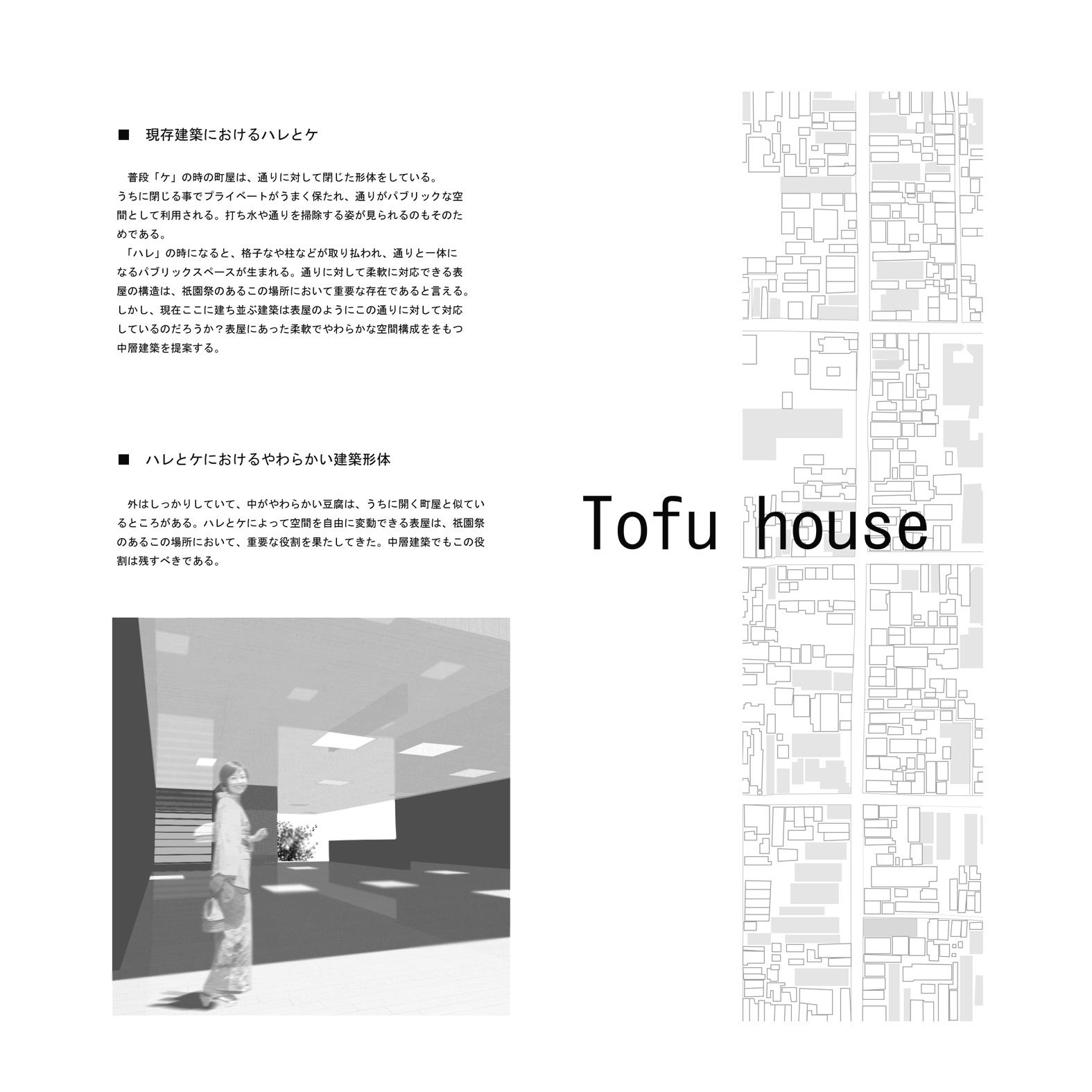
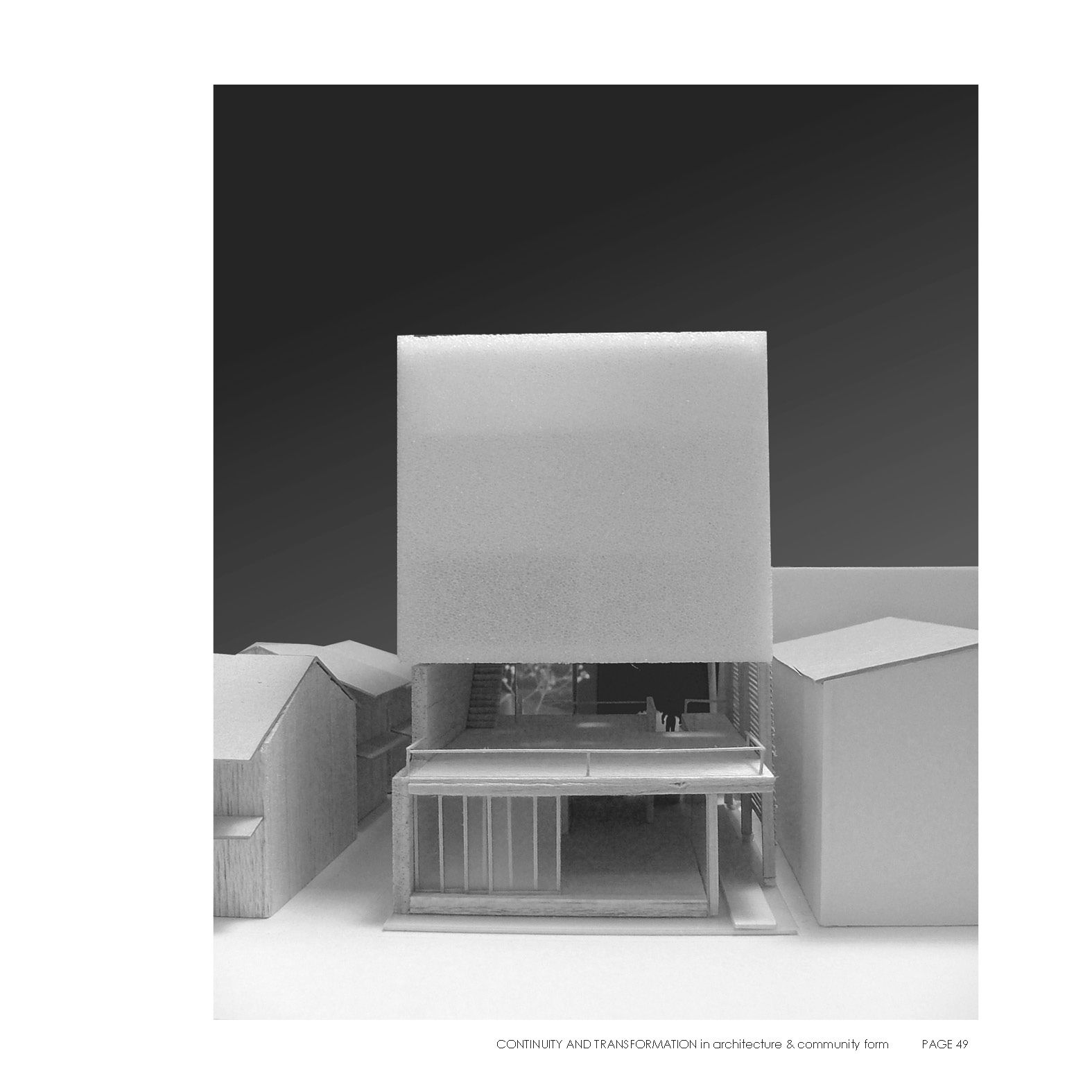
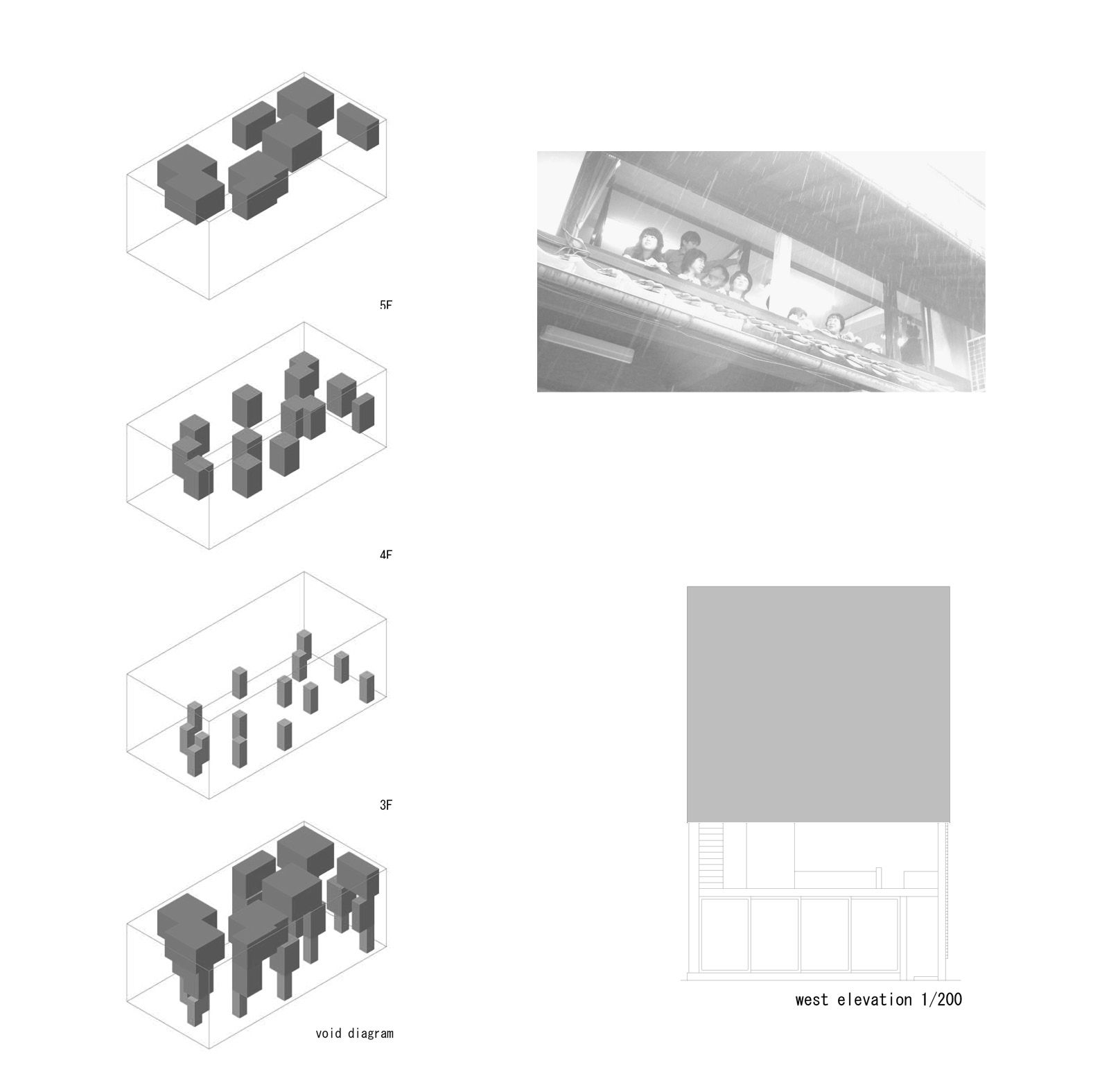
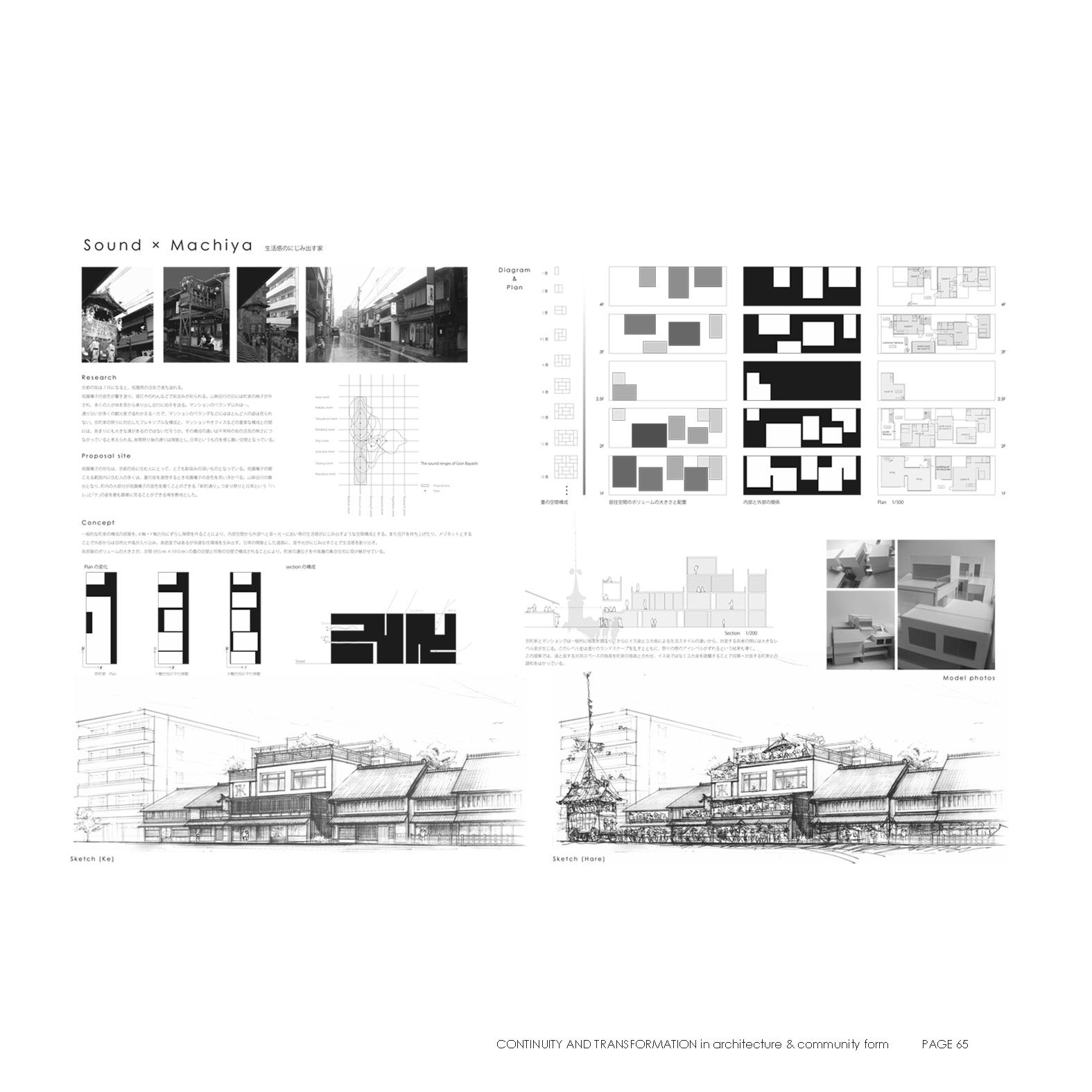
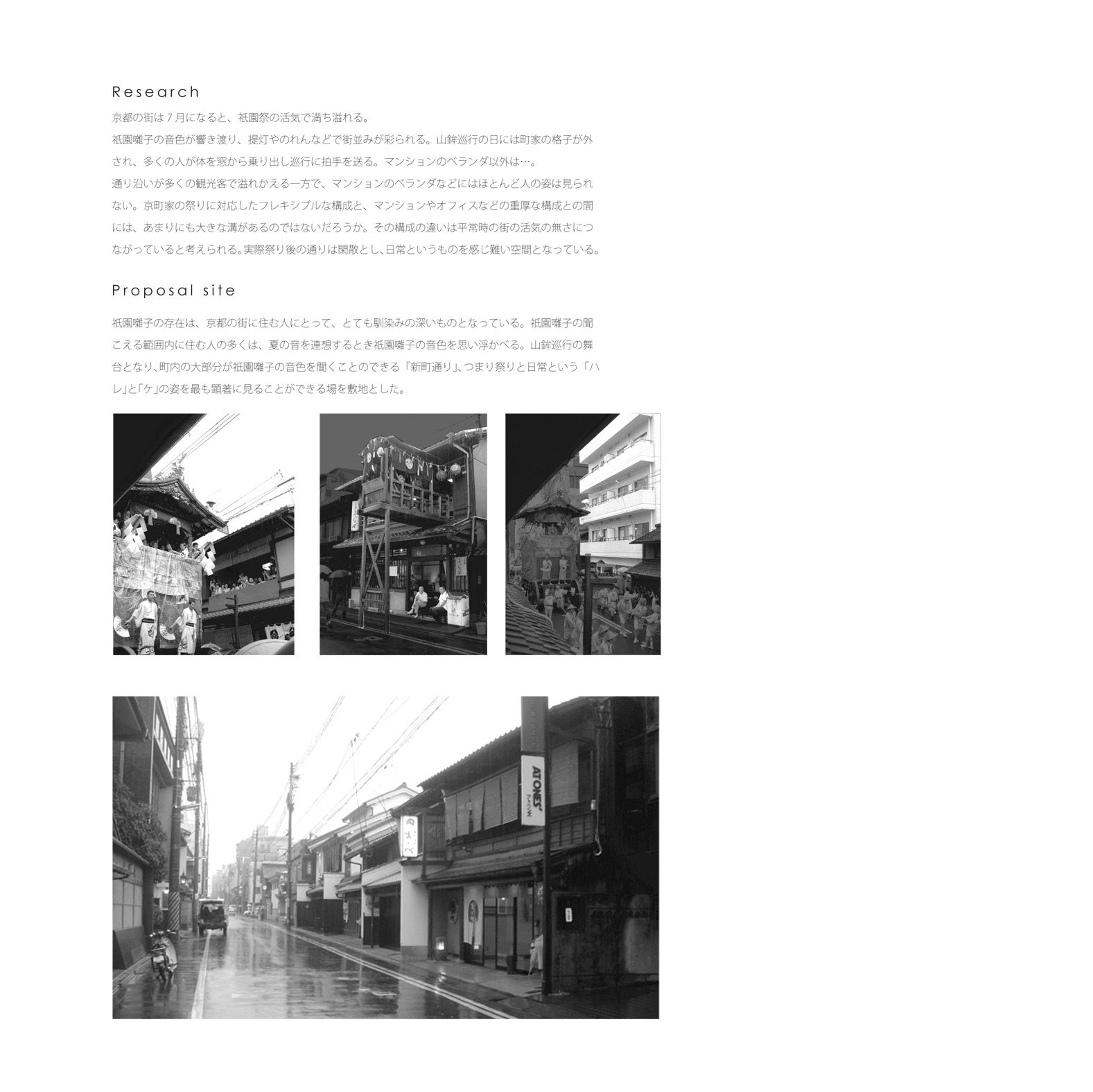
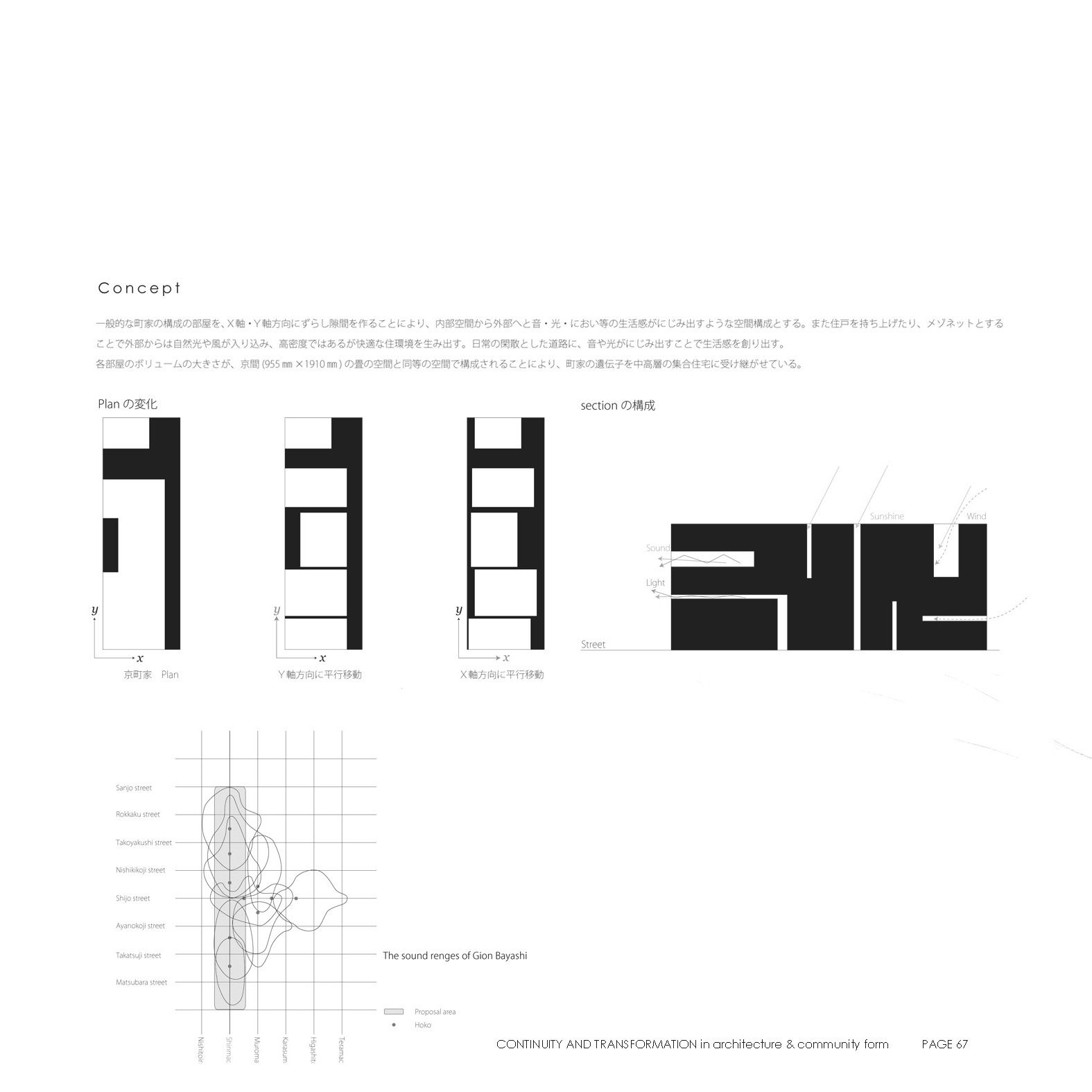
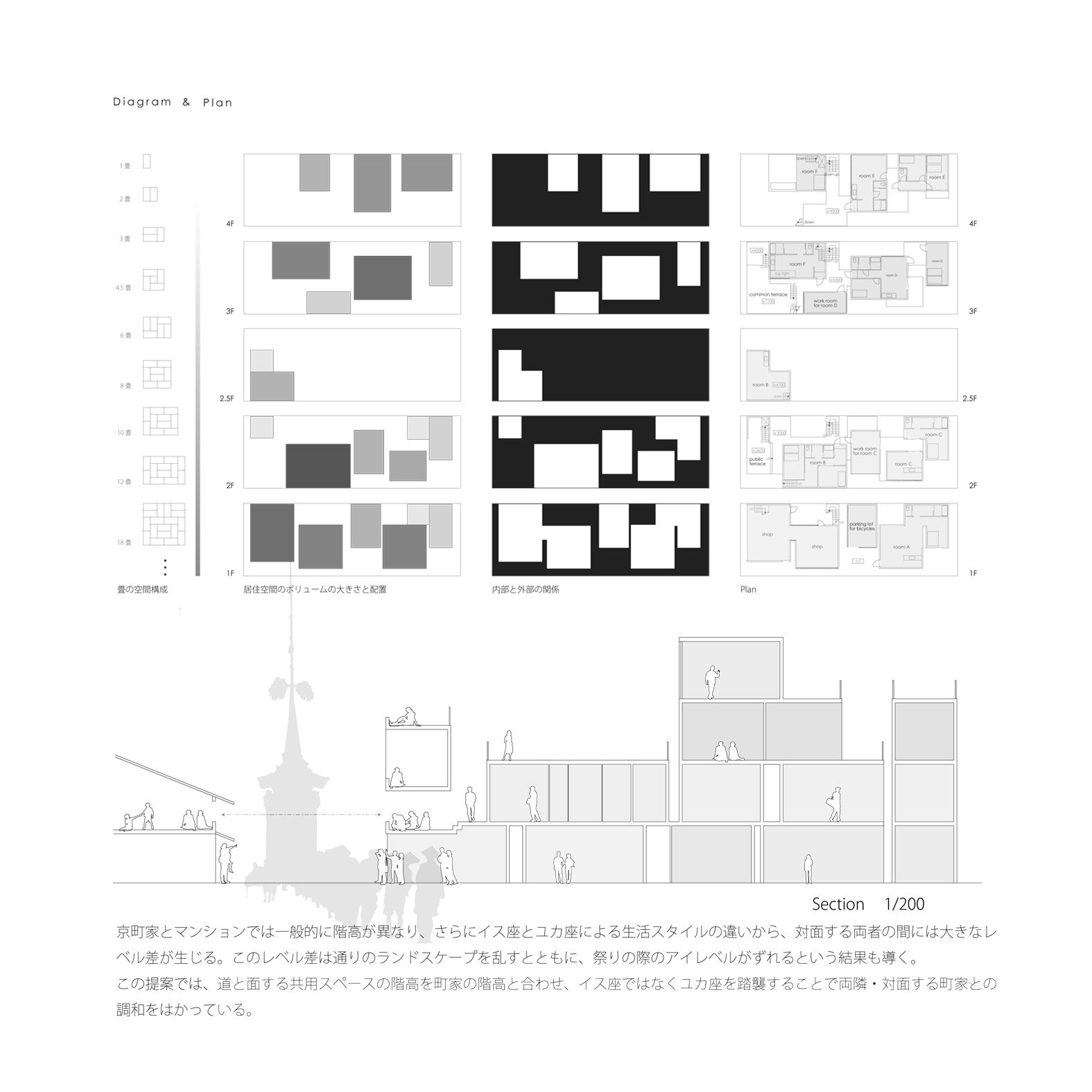
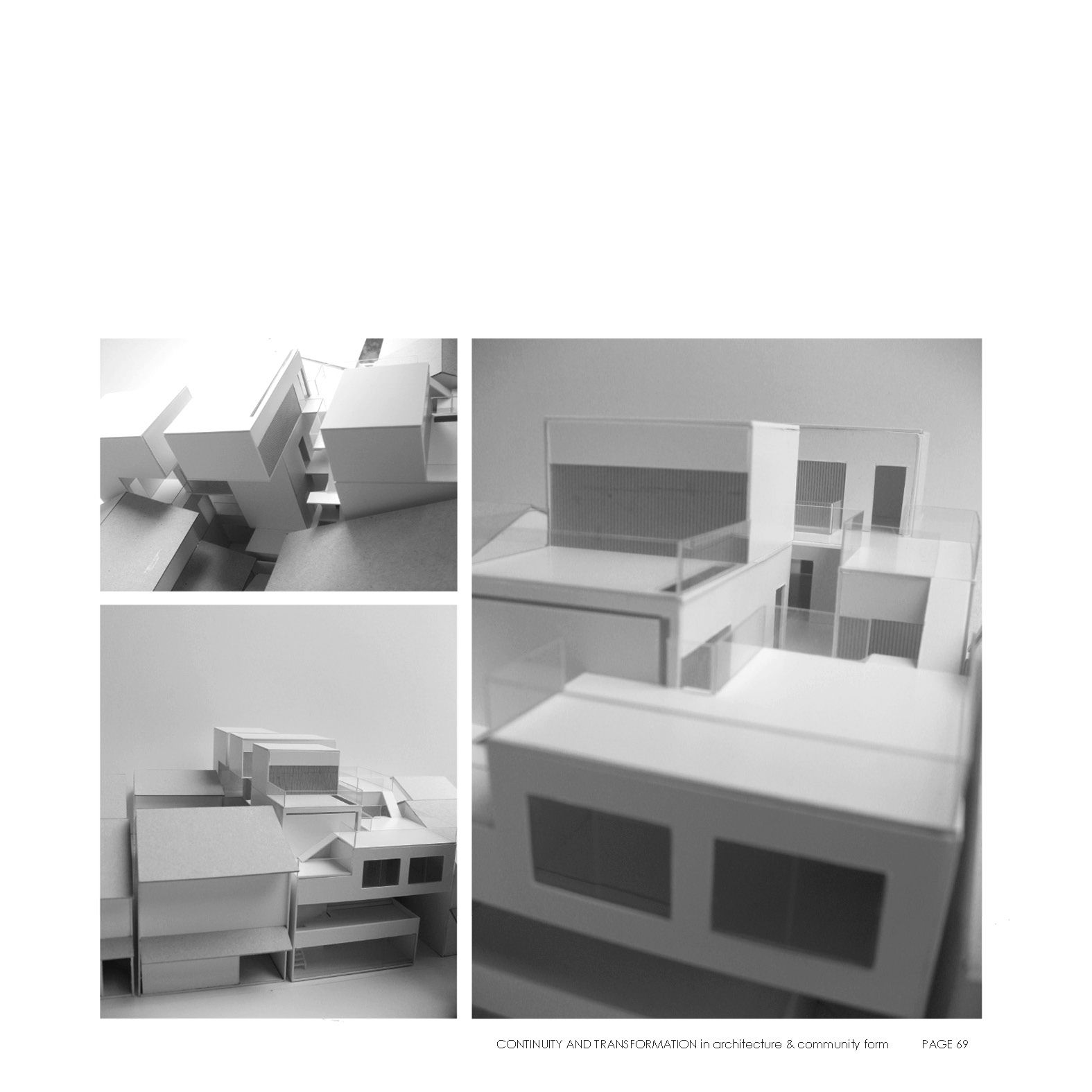
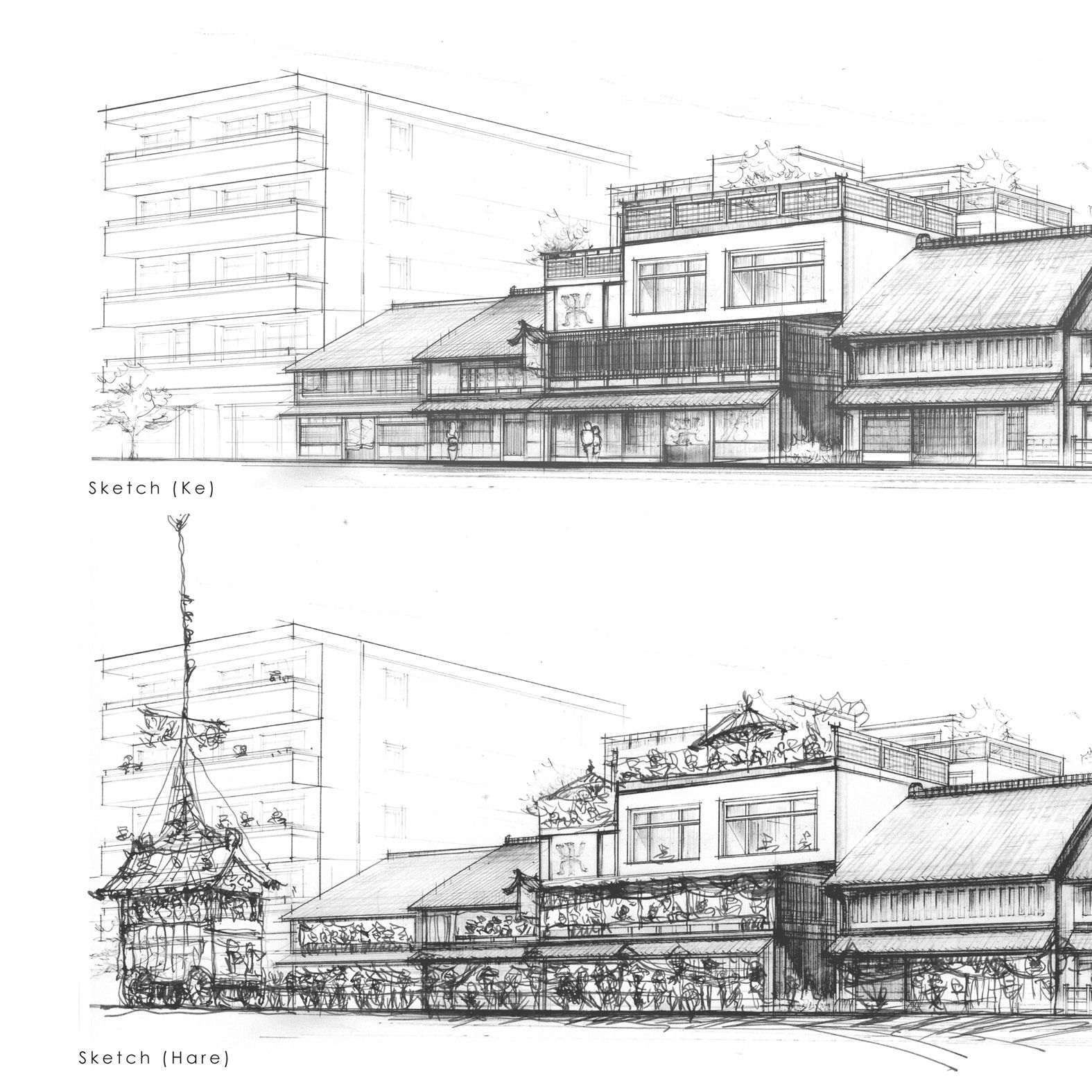
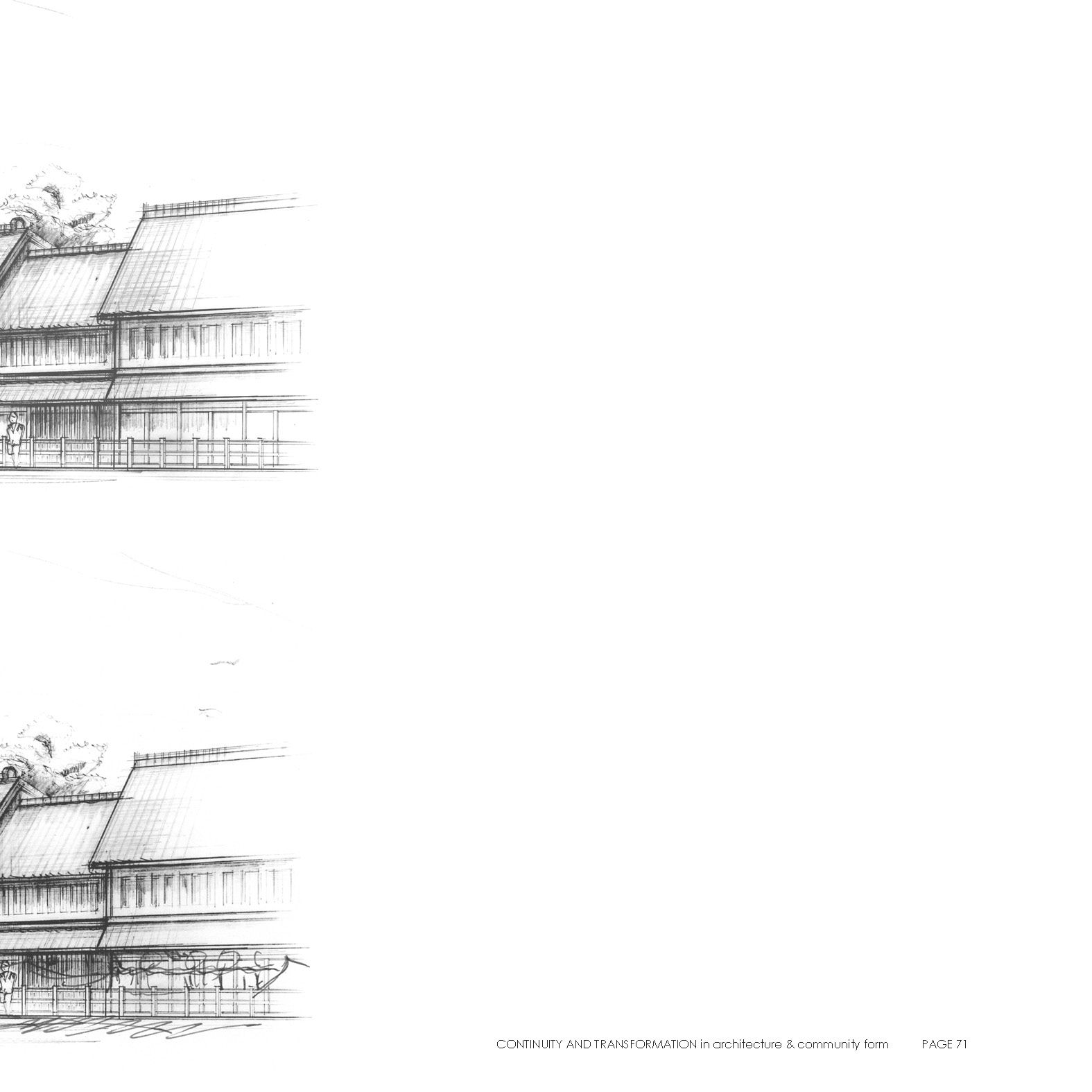
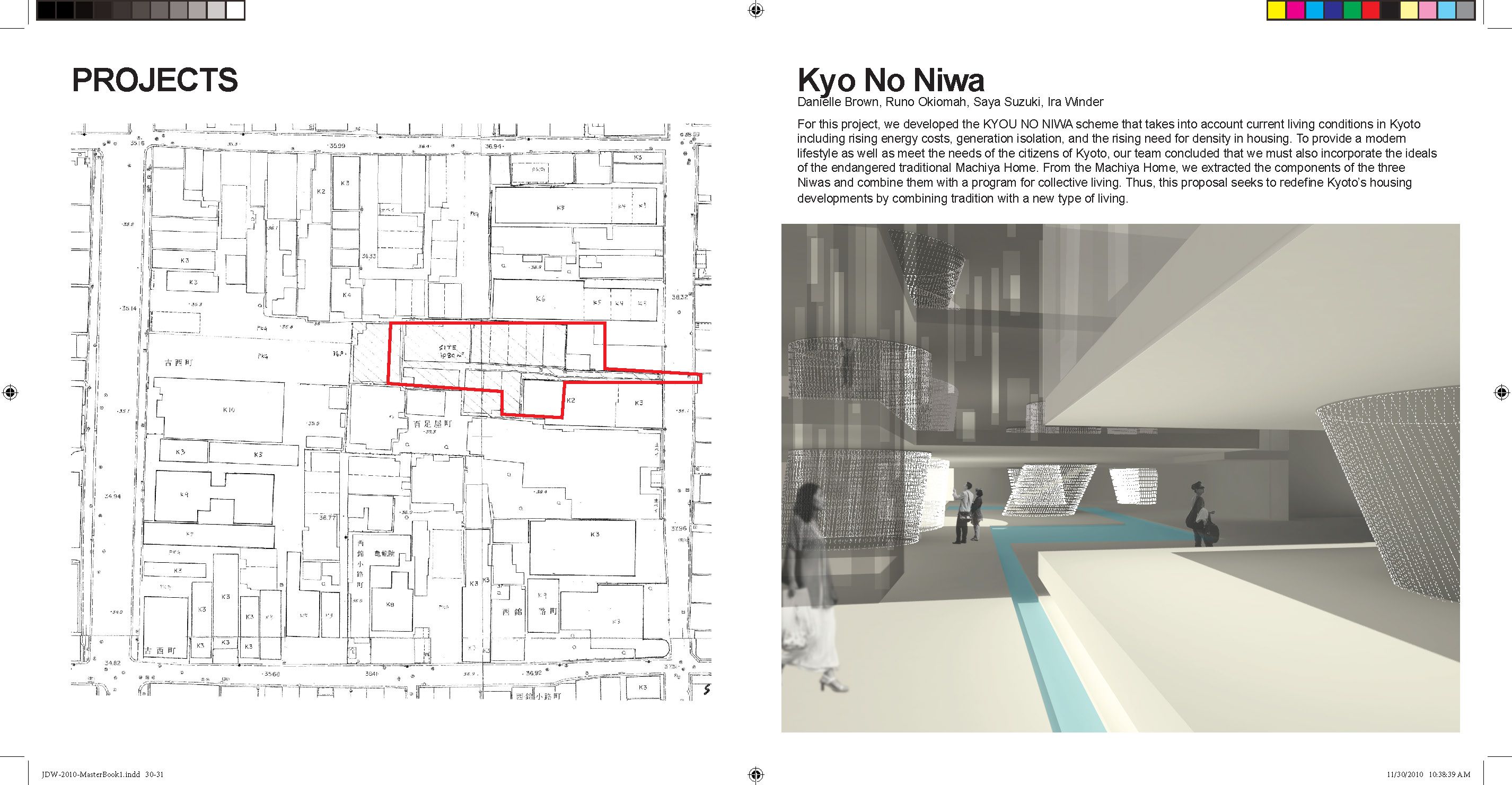
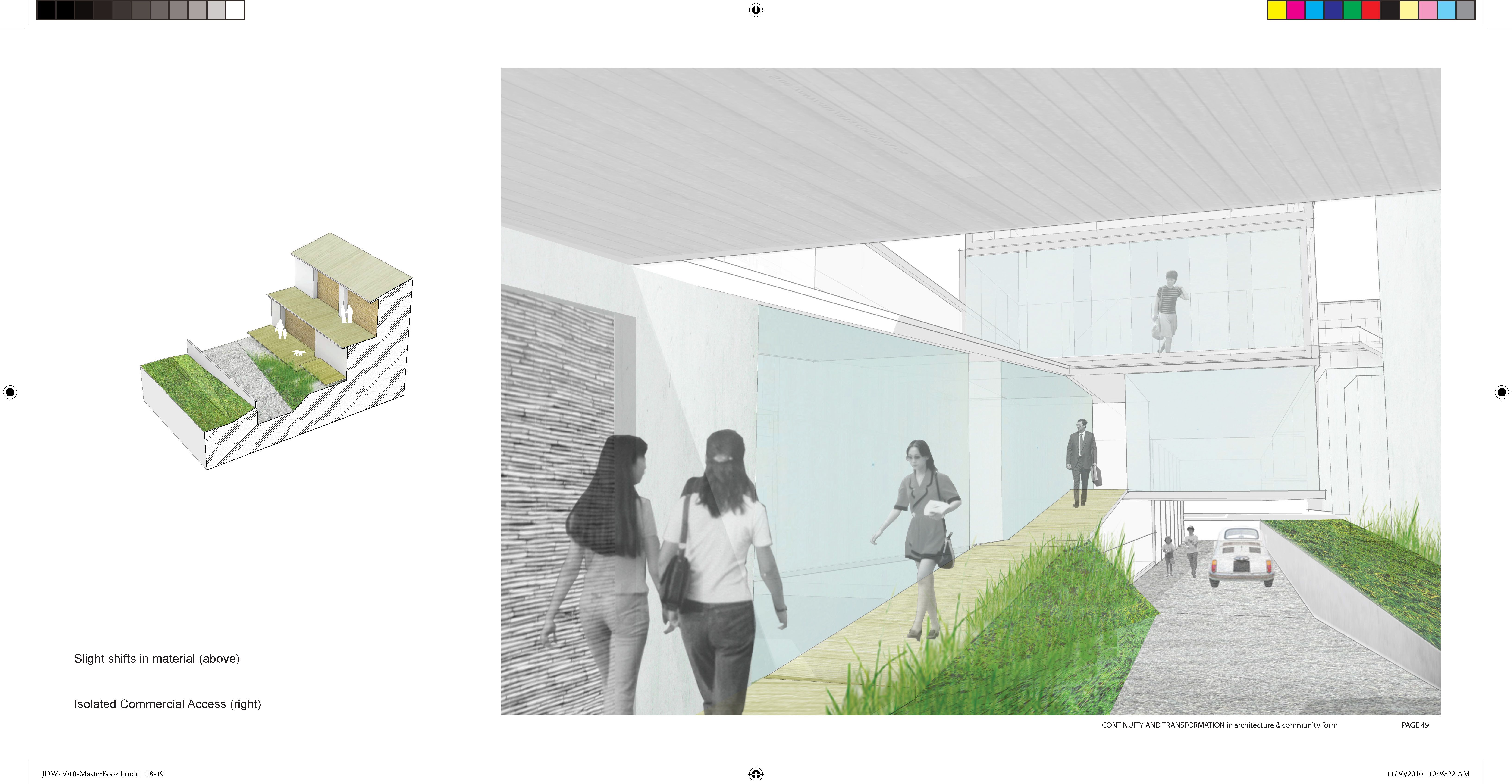
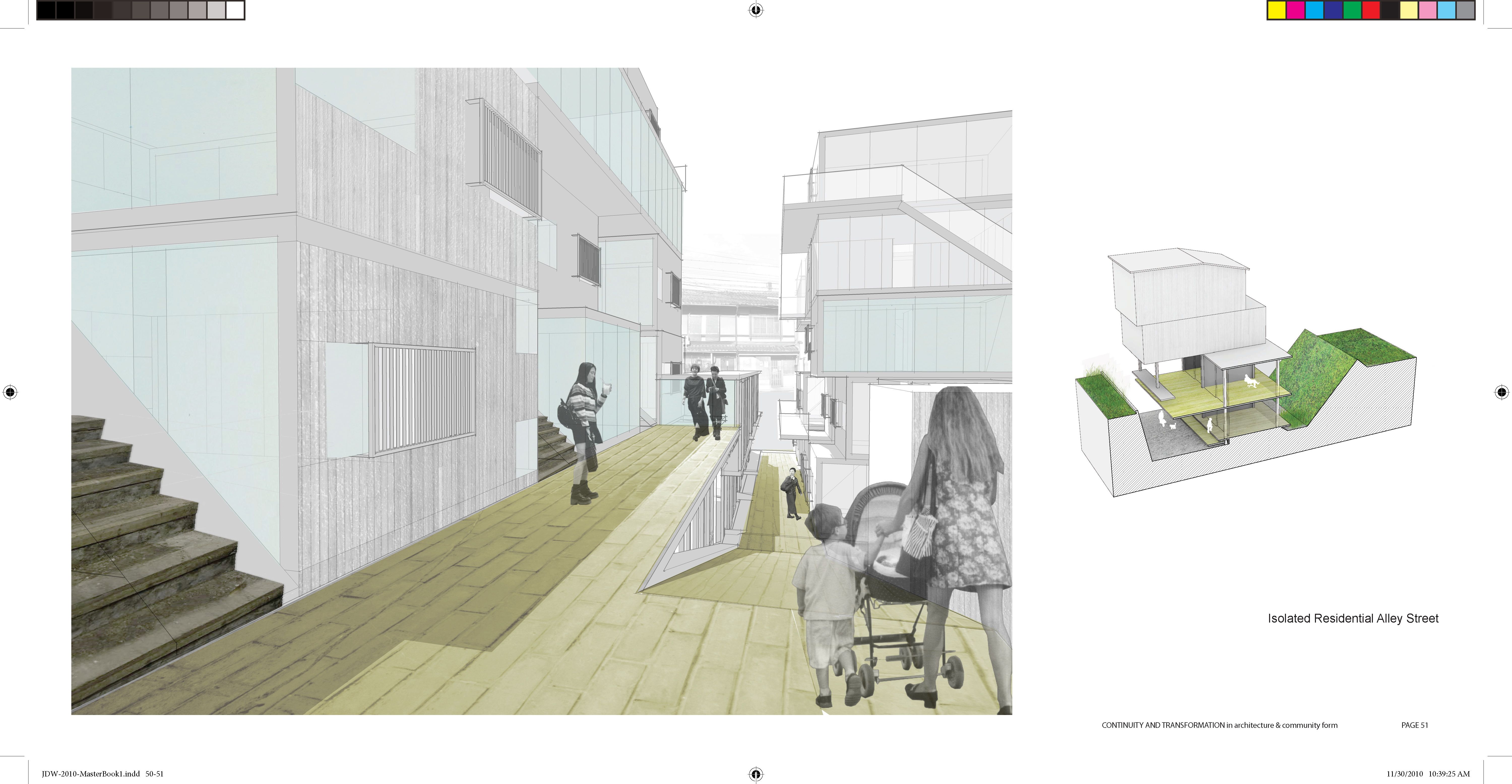
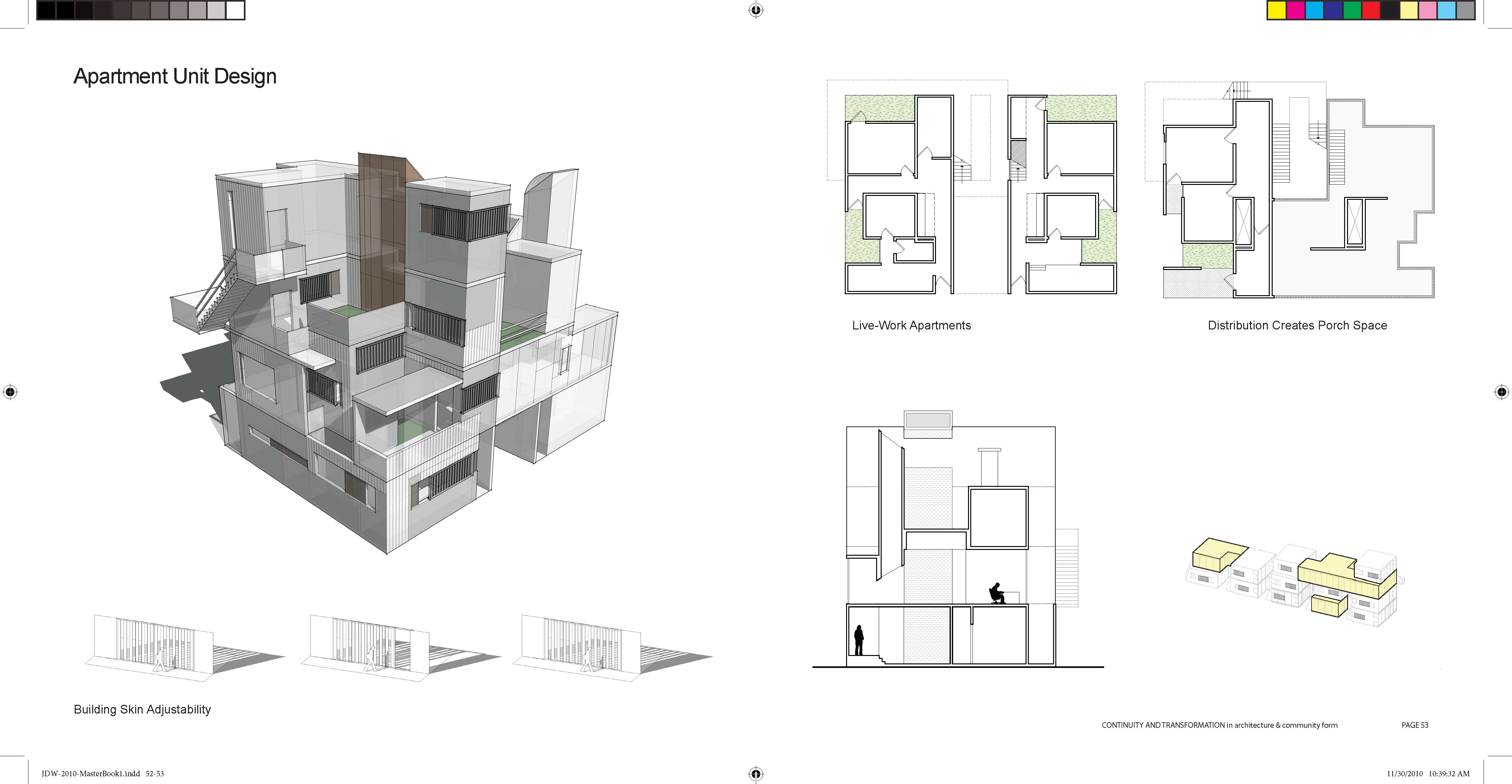
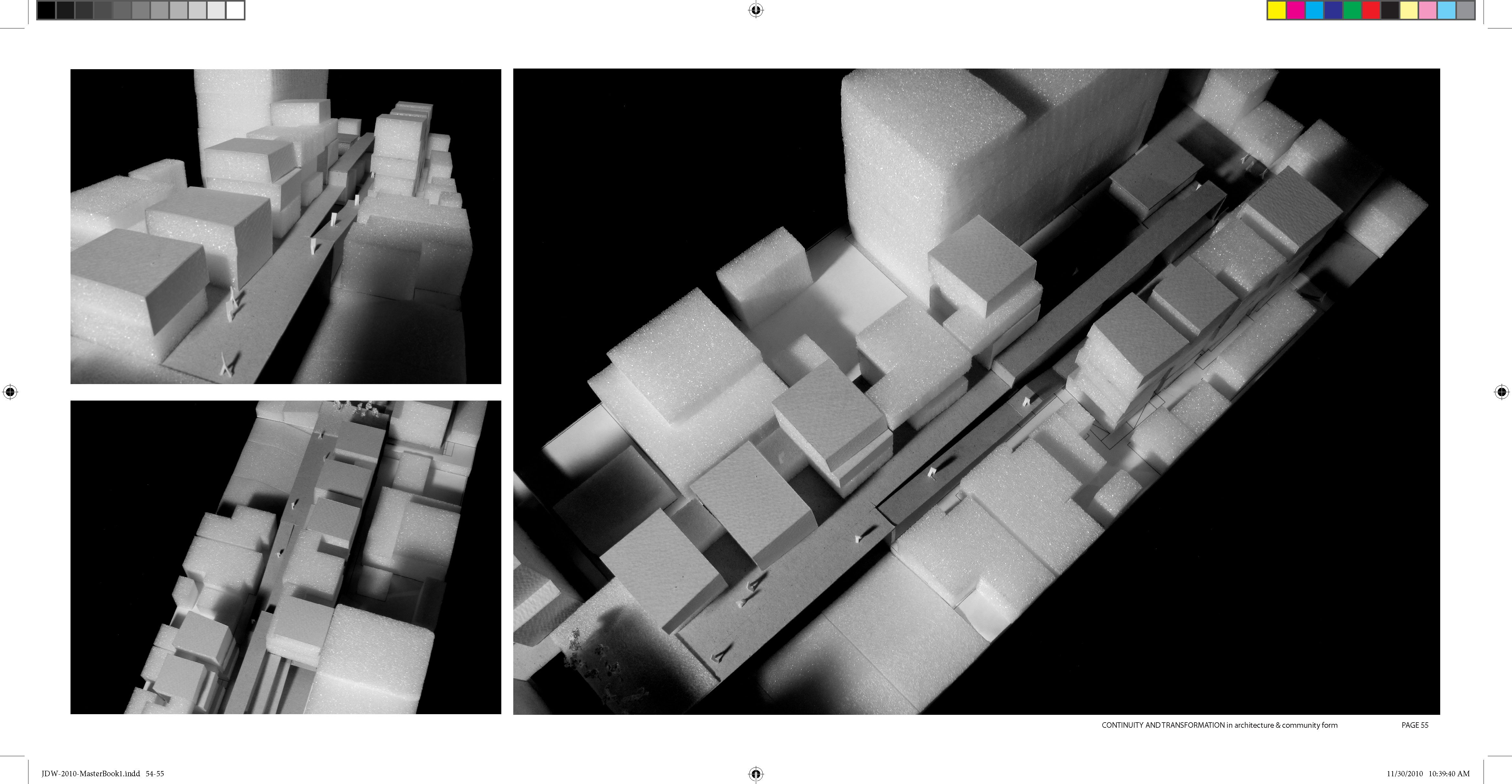
"We are interested in the physical form and spatial quality which respond to and sustain the continuity of a people's connection to their natural surrounding, climate, cultural traditions and long-established place-making."
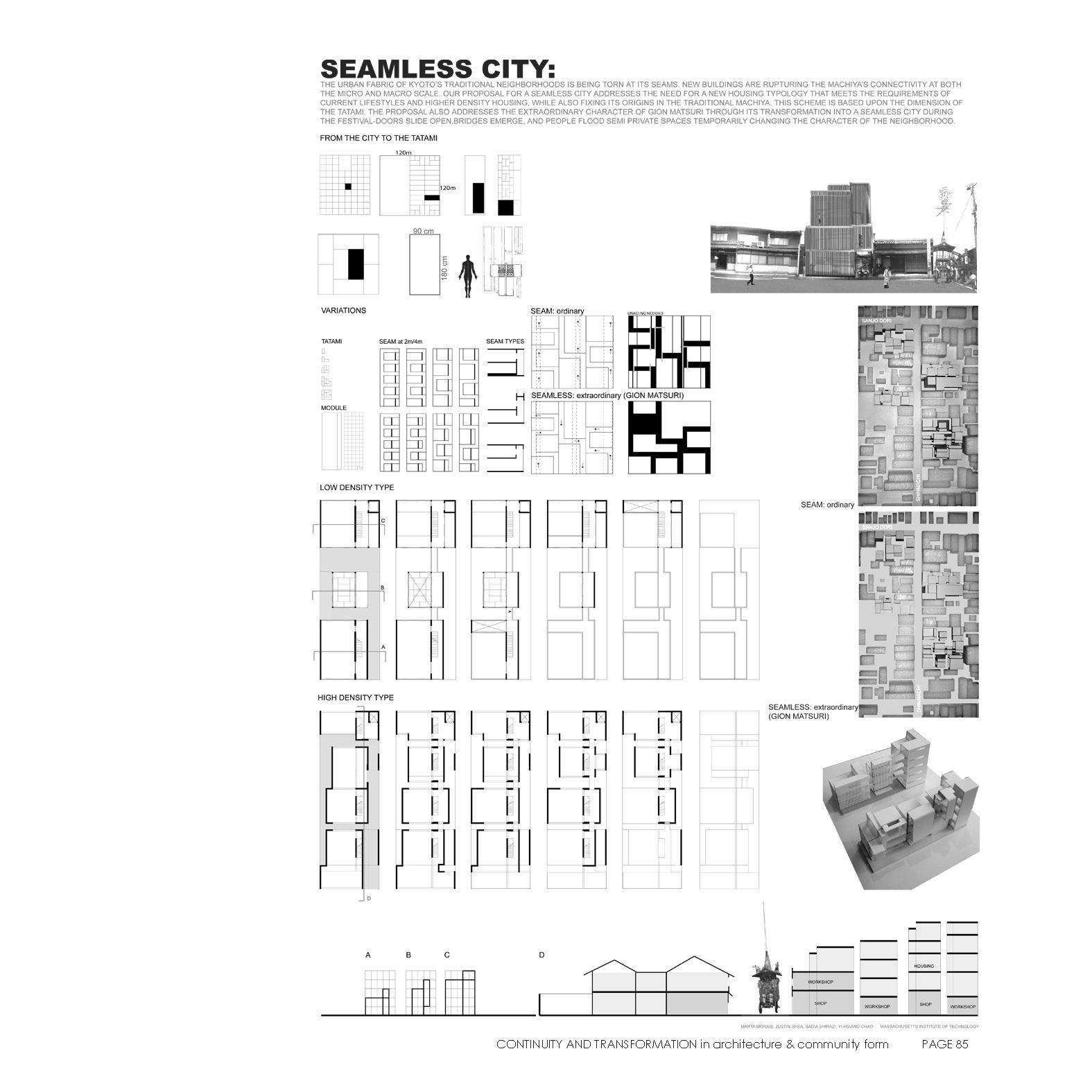
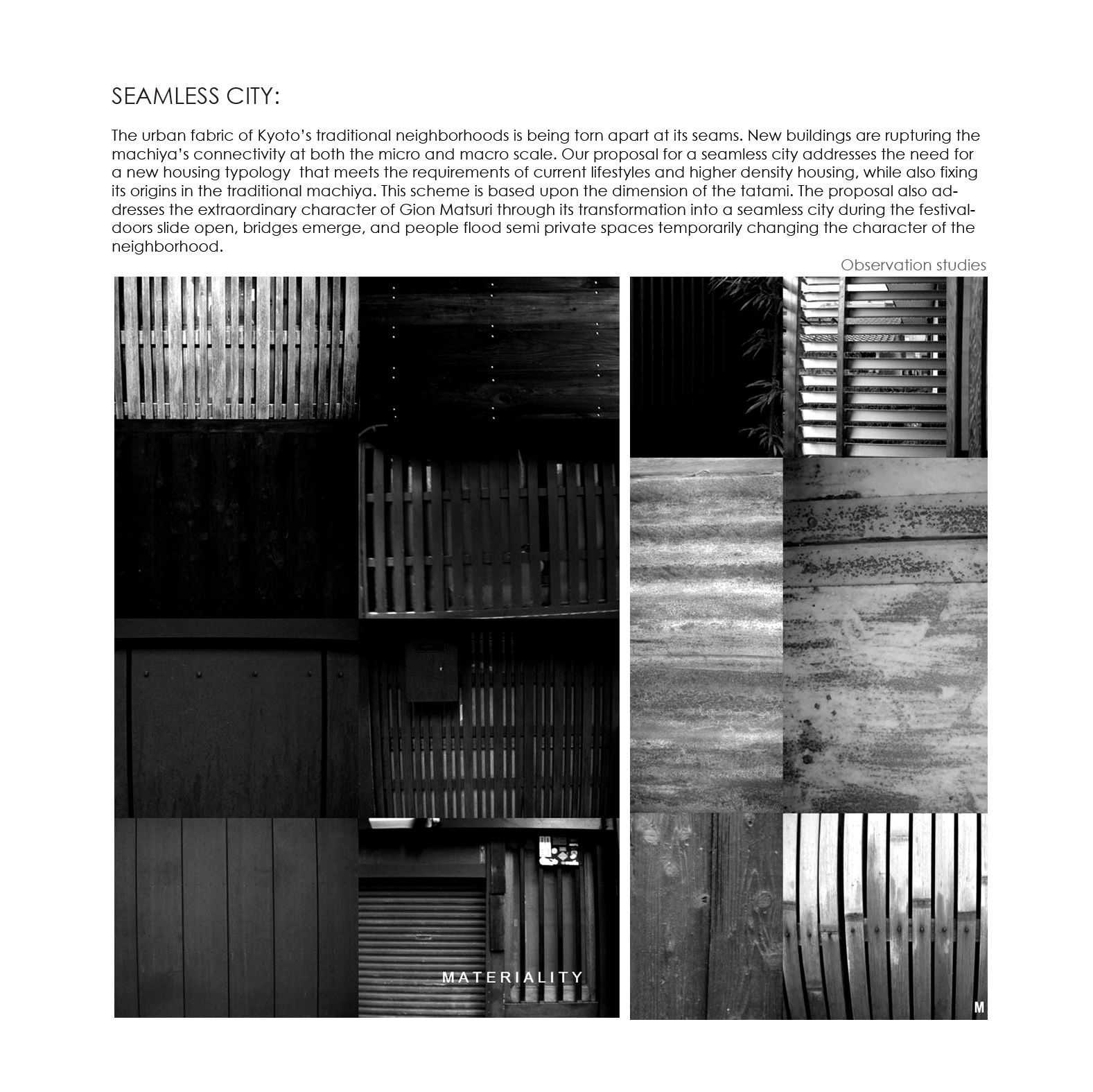
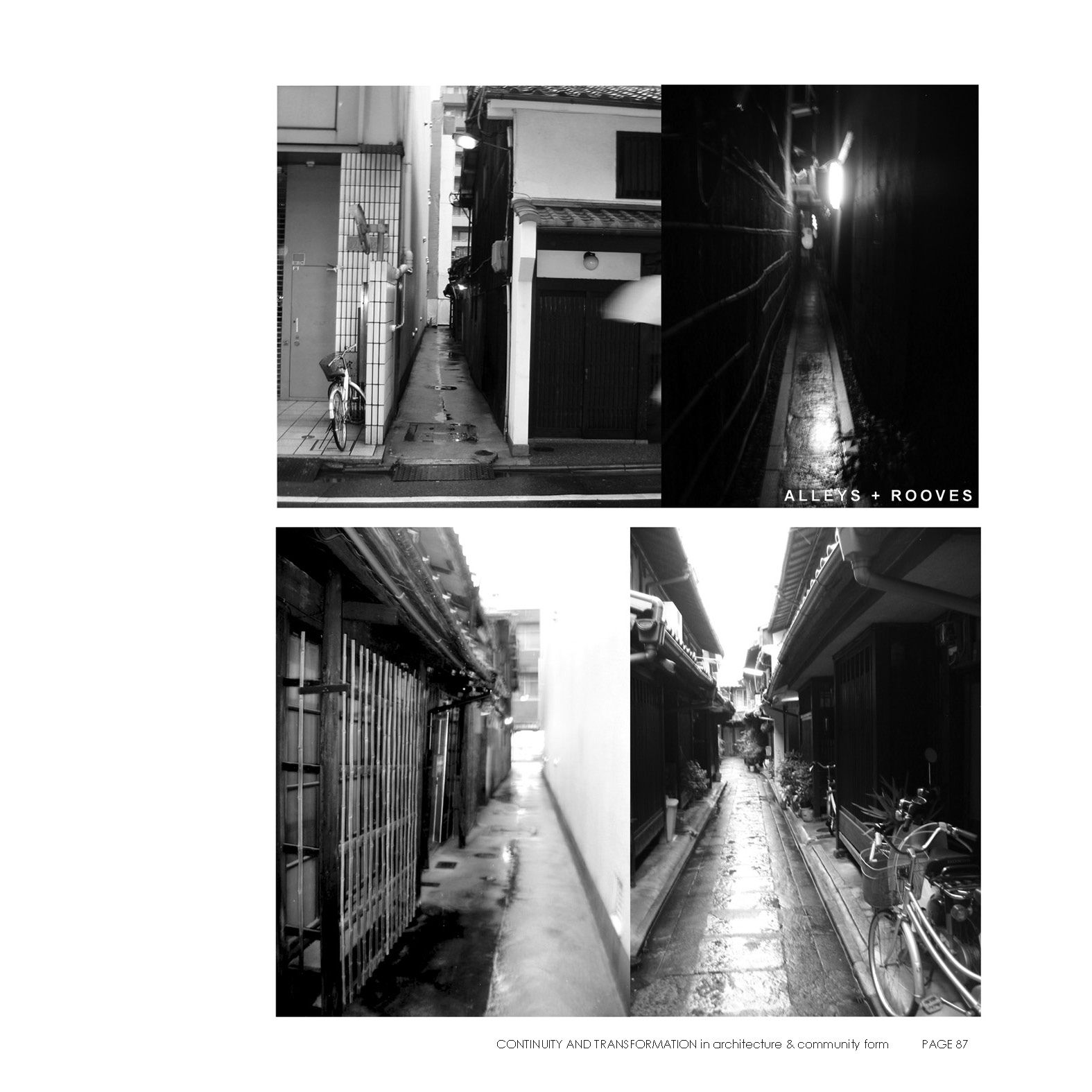
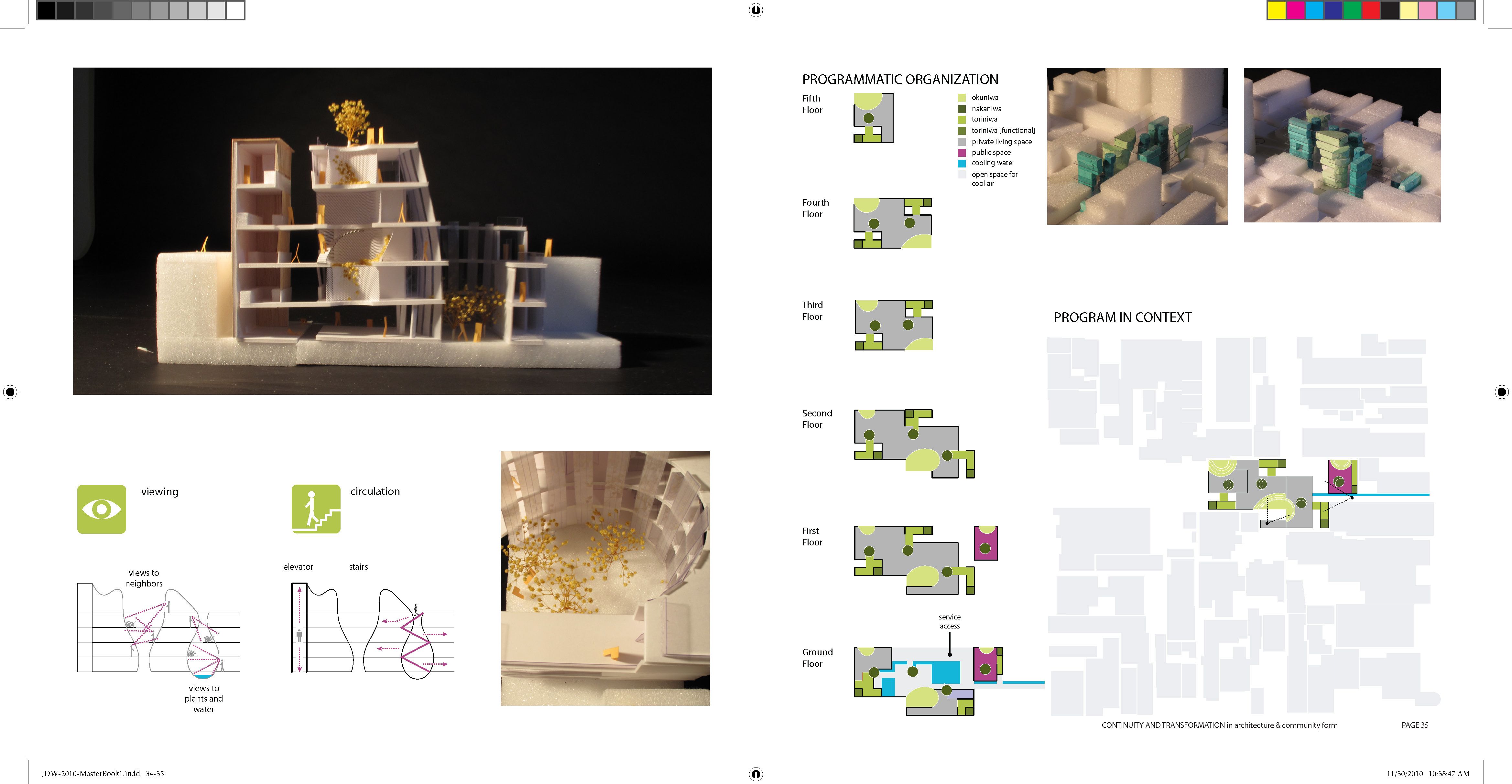
Continuity and Transformation in Architecture and Community Form is a large topic, often culturally based, yet a phenomenon that is increasingly global and universal, affecting the quality of life and the quality of environment all around us. Within this complexity, our studies would take a slice of particularity in architectural form-giving in actual context. We are interested in the physical form and spatial quality which respond to and sustain the continuity of a people's connection to their natural surrounding, climate, cultural traditions and long-established place-making. While we may value notions of continuity, we are most interested with what it is about the make-up of a sound, beautiful folk architecture or the traditional urban neighborhood which needs to be maintained/sustained. Which aspects can be transformed to incorporate the emerging technology of materials and methods of construction, of an architecture closely aligned to the shifts in lifestyle, the place of the home and work, out in the street, the public environment, and the outdoors. - Shun Kanda